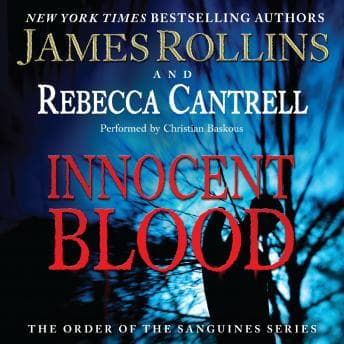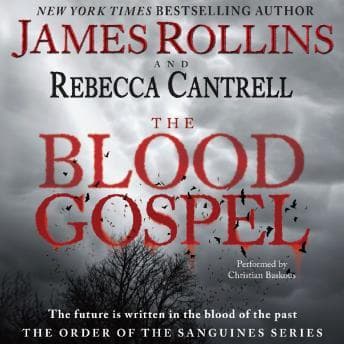
What happens when you take the guy who writes Sigma Force thrillers and pair him with a gothic suspense novelist? Apparently, you get vampire priests fighting ancient evil beneath earthquake-ravaged ruins. And honestly? I'm not mad about it.
I started Blood Gospel at 1 AM because I couldn't sleep - the wind was doing that thing where it sounds like something's scratching at the windows. Shirley was perched on my chest, completely unbothered. By hour three, I was wide awake for entirely different reasons. This book commits to its bonkers premise with such earnestness that you either buy in completely or bounce hard. I bought in.
When Dan Brown Meets Anne Rice in a Catacomb
Let's get the obvious comparison out of the way: yes, this is religious conspiracy thriller territory. Ancient texts, secret Vatican orders, archaeological mysteries - you've seen this before. But Rollins and Cantrell throw a genuine curveball by making their secret order actual vampires. Not metaphorical. Not symbolic. Honest-to-God (or, well, maybe not God) bloodsuckers who've devoted their immortal existence to serving the Church.
The Sanguinists - vampires who drink consecrated wine instead of human blood - are the kind of high-concept horror premise I live for. It's theologically messy in ways that clearly bothered some listeners (the "blasphemous" complaints make sense if you're devout), but as someone who grew up in a household where horror was forbidden fruit, I find the religious transgression genuinely thrilling. Shirley Jackson walked so these authors could run headfirst into Vatican conspiracy territory.
Christian Baskous Understands the Assignment
Here's where I need to talk about why this works as an audiobook specifically. Christian Baskous has an AudioFile Earphones Award, and after eighteen hours with him, I understand why. The narrator commits. That's rare.
The tonal tightrope this book walks - action thriller one moment, gothic atmosphere the next, theological debate somewhere in between - requires a narrator who can pivot without whiplash. Baskous manages it. His delivery during the more formal, almost liturgical passages doesn't feel stiff; it feels ceremonial. Intentional. When the action kicks in, he shifts gears cleanly. The character differentiation is solid, though I'll admit with a cast this size, some of the secondary players blur together. Golden Lion demands similar range—historical weight mixed with breakneck action—and I'm curious if he could pull off that kind of dual-timeline complexity.
My only real complaint? At nearly eighteen hours, there are stretches where the pacing drags. The story gets tangled in its own mythology occasionally - there's a lot of lore to establish, and sometimes the exposition dumps slow the momentum. Baskous keeps it listenable, but I found myself reaching for the 1.25x speed during a few of the denser explanation sequences.
The Romance That Nobody Asked For
Look, I need to be honest about something. There's a romantic subplot that feels... grafted on. Like someone in an editorial meeting said "but where's the love interest?" and the authors obliged without enthusiasm. It's not terrible, but it's not earned either. The chemistry reads as obligatory rather than organic. If you're here for the vampire priest action and ancient manuscript hunting, you'll probably feel the same mild irritation I did whenever the story paused for romantic tension.
The violence, though? That's handled well. This understands that horror isn't about gore - it's about dread. The book builds genuine menace around its antagonists, and when violence does occur, it has weight. There's a sequence involving an earthquake and ancient catacombs that had me genuinely tense - partly because I was listening in the dark like an idiot, partly because the writing actually earns the tension.
Who Gets the Fangs, Who Gets the Garlic
If you're a Sigma Force fan wondering if Rollins can do supernatural horror: yes, he can, especially with Cantrell's gothic sensibilities tempering his techno-thriller instincts. If you loved The Da Vinci Code but wished it had actual fangs: this is your book. That same willingness to bend mythology for story purposes shows up in Rise of Nine, though there it's alien lore instead of Vatican secrets.
Skip this if you're deeply religious and easily offended by creative liberties with Catholic mythology - the book treats its religious elements seriously but definitely plays fast and loose with doctrine. Also skip if you need tight pacing; eighteen hours is a commitment and not every hour earns its runtime.
Worth Burning a Credit At Midnight
I finished Blood Gospel around 4 AM. Shirley was unimpressed. I was exhausted but satisfied. This isn't perfect - it's too long, the romance is forced, and occasionally the dual-author seams show in tonal inconsistency. But Christian Baskous's performance elevates the material, and the central premise is creative enough to forgive the rough edges. My podcast listeners are going to love this - it's exactly the kind of ambitious genre-blending that makes for good discussion.
I've already got the sequel queued up. Make of that what you will.