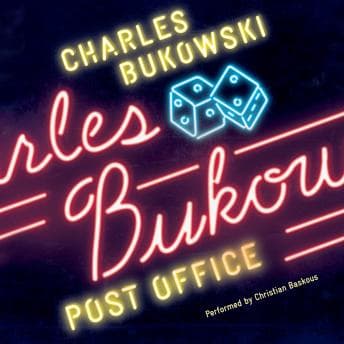

"It began as a mistake."
That's the opening line. It's also usually how I describe my decision to assign *The Sound and the Fury* to high school sophomores, but in this case, it sets the stage for Henry Chinaski—Bukowski's fictional alter ego—and his twelve-year descent into the madness of the U.S. Postal Service.
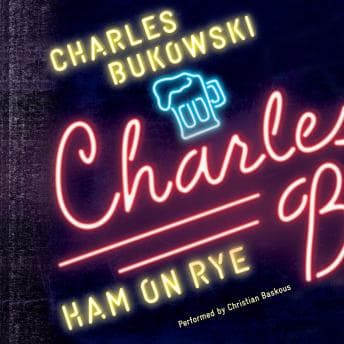
I had that same bruised, autobiographical ache with Ham On Rye: A Novel, which feels like the detention-slip origin story for this particular mess.
I listened to this while walking along Lake Michigan, trying to walk off the frustration of a faculty meeting that could've been an email. Honestly? It was the perfect soundtrack for bureaucratic burnout.
The Voice of a Three-Day Hangover
Let's talk about Christian Baskous. I checked his bio, and apparently, he's an AudioFile Earphones Award winner. Makes sense. But he doesn't sound like an "award winner" here. He sounds like he's been smoking unfiltered cigarettes since the Eisenhower administration.
(And I mean that as the highest compliment.)
Most narrators try to polish the prose. Baskous leans into the grime. He captures that specific, mumbled cadence of Bukowski himself—the sound of a guy who is tired, hungover, and completely over it. It's less like reading a book and more like getting cornered by the most interesting drunk at a dive bar at 2 AM. My mom would absolutely hate this voice. She prefers the British guys who read Dickens. But for this? A polished British accent would've ruined it. You need the grit.
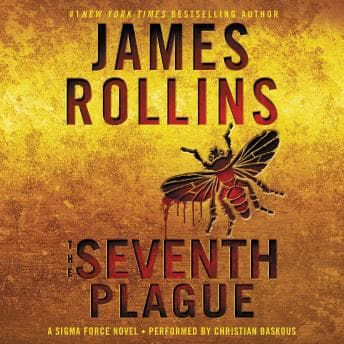
Baskous has range, too; hearing him in Seventh Plague: A Sigma Force Novel is like watching the same actor leave the dive bar and sprint into a disaster movie.
Bartleby with a Beer Gut
As an English teacher, I'm legally required to make a literary comparison here. If you remember Melville's *Bartleby, the Scrivener* (the guy who just says "I would prefer not to"), Chinaski is basically Bartleby's angry, lecherous spiritual successor.
Where Bartleby quietly gives up, Chinaski rages. He drinks, he gambles on horses, he chases women (in ways that are, let's be real, pretty problematic by modern standards—major content warning there), and he carries mailbags up mud-soaked hills while hungover.
The narrative is repetitive. Sort of like *The Jungle* by Upton Sinclair, but without the socialism or the meat-packing. Just endless, soul-crushing letters. Some reviews complain that the plot drags or feels circular. But look—that's the point. Work *is* repetitive. The drudgery is the texture. If the book moved fast, it wouldn't be honest.
Who's Getting an A, Who's Getting Excused
Listen if you've ever had a job that made you question your will to live, or if you want to hear a narrator who completely dissolves into the character. Skip if Bukowski's 1971-era misogyny and relentless profanity will ruin the experience for you—this one doesn't pull punches.
Back to the Essay Stack
This isn't a "nice" book. It's ugly. It smells like stale beer and wet wool. My students would probably try to get me fired if I played this in class because of the language and the misogyny (which, yeah, it's 1971 Bukowski, so brace yourself).
But Baskous turns a grim memoir of labor into a performance piece. The kind of audiobook you finish and immediately want to recommend to that one coworker who gets it.
Now, back to these essays on *The Great Gatsby*. God help me.