
Chris Colfer wrote himself a love letter to storytelling, and I'm honestly here for it.
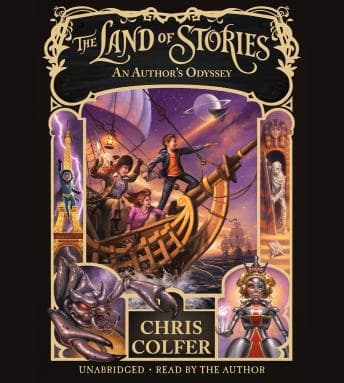
Book five of The Land of Stories hits different when you understand what Colfer's actually doing here. He's not just throwing pirates and cyborgs and mummies at the wall - he's making a meta-commentary about the power of imagination as a literal weapon. Conner has to dive into his own stories to recruit characters he created to fight literary villains. That's Sanderson-level conceptual work, just aimed at a younger audience. My D&D group would absolutely steal this premise for a campaign.
When Your Homebrew Characters Join the Fight
Look, I should've been working on my thesis. Instead I was sitting in my apartment surrounded by board game boxes, listening to Chris Colfer voice an army of cyborg superheroes battling the Queen of Hearts. No regrets. The premise alone - that Conner's imagination becomes his greatest weapon - scratches the same itch as progression fantasy. You're watching a character level up, except his XP comes from creative writing instead of killing goblins.
The magic system here (and yes, I'm calling it a magic system because that's what it is) operates on internal logic that actually holds up. Stories have power. Characters can be summoned. The Masked Man's villain army pulls from public domain literature, while Conner's forces are original creations. There's something genuinely clever about the copyright implications of that setup - Colfer's basically saying "your imagination is more powerful than all the classics combined." Bold move. I respect it.
Colfer Narrating Colfer
Here's the thing about author-narrated audiobooks: they're either transcendent or painful. Colfer lands firmly in the transcendent category. He wrote these characters. He knows them. When he voices Alex and Conner, there's this intimacy you just can't fake - like he's personally guiding you through his own imagination. The twins sound distinct without being cartoonish, and his villain work has genuine menace without going full ham.
The Wicked Witch of the West, Captain Hook, the Queen of Hearts - these are characters we've heard interpreted a thousand ways. Colfer doesn't try to compete with iconic performances. He finds his own lane, keeping the energy consistent with his world rather than trying to out-Disney Disney. Smart choice.
At just under ten hours, it's a solid middle-grade commitment. Not the 40-hour epics I usually champion, but the pacing earns every minute. The narrative complexity has ramped up significantly from earlier books - this isn't entry-level stuff. That same layered storytelling shows up in Mother, though with considerably darker stakes. You really need the previous four books for full emotional payoff. Walking in cold would be like starting Stormlight Archive at book three. (Don't do that. Ever.)
The Meta-Narrative Hits
What got me - and I'll admit this caught me off guard - were the emotional beats. There's genuine character development happening between the adventure set pieces. Moments that made me pause my thesis procrastination to actually feel things. Colfer's delivery during the heavier scenes has this emotional weight that elevates the material beyond typical middle-grade fare.
The action sequences with pirates and superheroes and mummies teaming up? Pure joy. It's the kind of imaginative chaos that would've made twelve-year-old me lose my mind. Current me still lost his mind a little bit. Sometimes you need a story that reminds you why you fell in love with fantasy in the first place.
Who Should Listen (And Who Should Skip)
If you've been following the series, this is essential listening. If you're new, go back to book one - the payoff here depends on investment. Parents looking for something to share with kids who've aged out of picture books but aren't ready for grimdark? This is your answer. The violence exists but stays age-appropriate, and the suspense never crosses into nightmare territory. Skip this if you haven't read the earlier books or if meta-storytelling concepts make your eyes glaze over.
Adults who secretly still love fairy tale mashups? (I see you. I am you.) This works. The meta-commentary on storytelling gives it enough intellectual meat to justify the listening time.
Roll for Imagination
Colfer did something genuinely clever here. He took the "author as god of their fictional world" concept and made it literal, accessible, and emotionally earned. The progression is satisfying, the world-building holds up to scrutiny, and the narration transforms what could've been a simple kids' adventure into something with real staying power.
My thesis remains unwritten. The Masked Man has been defeated. Worth it.