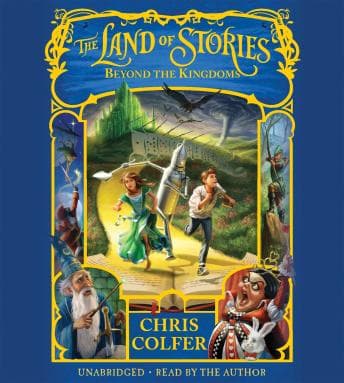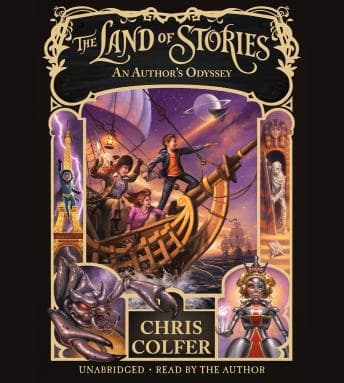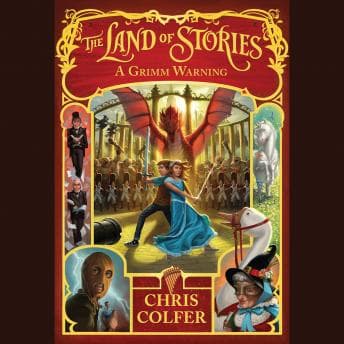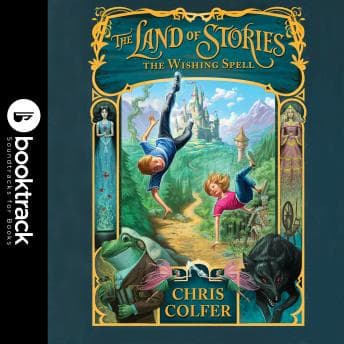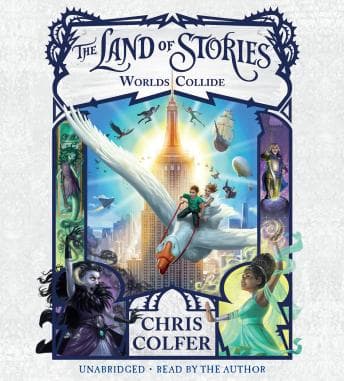

"We're not just characters in a story anymore." That line hits different when you hear Chris Colfer deliver it himself, somewhere past the midpoint when fairy tale chaos has fully consumed the Big Apple. It's the kind of meta-awareness that defines this entire finale—the fourth wall doesn't just crack, it explodes into glittering shards scattered across Times Square.
I finished this one during a particularly long Saturday of errands, and I'll admit something: I got a little misty at the end. Not because the writing is particularly sophisticated—it isn't—but because Colfer's voice carries six books worth of emotional investment, and you can hear him saying goodbye to characters he genuinely loves.
Here's what makes this audiobook work where it easily could have failed: Colfer knows these characters because he built them from scratch. When Conner fires off a sarcastic quip, the comic timing lands with surgical precision because the author wrote the joke and knows exactly where the laugh belongs. When Alex faces down impossible odds, the emotional weight in Colfer's delivery feels earned rather than performed. That authenticity gap you sometimes get between author intent and narrator interpretation? It doesn't exist here.
Voices That Actually Sound Like Different People
The character differentiation is genuinely impressive. You'll never confuse the twins, and Colfer gives each fairy tale character—hero and villain alike—a distinct vocal identity without tipping into cartoon territory. Little Red Riding Hood navigating Manhattan traffic? The fish-out-of-water comedy works beautifully in audio because Colfer can shift between storybook cadence and contemporary speech patterns with real agility. The villains get appropriately menacing treatment, but he knows when to pull back before things get too dark for the target audience.
I should be honest about the trade-offs. Colfer is an actor and author, not a career audiobook narrator. Listeners who've been spoiled by the Jim Dales and Kate Readings of the industry will notice the difference. There's an intangible polish factor that comes from years of booth work, and Colfer hasn't quite developed that particular muscle. Some of the quieter passages don't flow with the same ease you'd get from a seasoned professional.
But here's the thing—and this is crucial for understanding who should actually press play—kids don't care about technical narrator training. They care about whether the story grabs them, whether the voices are fun, whether the action sequences feel exciting. Colfer's spirited delivery accomplishes all of that with room to spare.
Fairy Tales Meet Times Square
The premise is essentially a high-concept pitch that writes itself: fairy tale characters loose in modern New York City. The fish-out-of-water setup reminded me of Jungle Book, though Kipling's version trades Manhattan for the Indian jungle and swaps the culture clash comedy for something darker. Sibling dynamics, magical confrontations, culture clash comedy. The audio format amplifies everything because you're not just reading about the chaos—you're hearing it unfold through Colfer's increasingly frantic delivery as the stakes escalate.
The writing itself leans on familiar fantasy architecture. Chosen-one dynamics, predictable plot turns, dialogue that occasionally reaches for well-worn phrases. Adult listeners will spot these patterns within the first hour. But middle-grade readers are encountering these tropes for the first time. What feels formulaic to seasoned fantasy consumers feels fresh and magical to a ten-year-old. The target audience matters here, and Colfer knows exactly who he's writing for.
Production quality is clean throughout—no background noise, consistent audio levels, professional mastering. The technical foundation is solid even when the performance occasionally shows its amateur edges.
Don't Start Here
This is absolutely not a jumping-on point. Walking into Worlds Collide without the previous five books is like showing up to the series finale of a TV show you've never watched. You'll be lost, the callbacks won't land, and the farewell scenes will feel hollow instead of bittersweet. The emotional payoffs here compound specifically because listeners have spent hours with these characters across multiple installments.
For families who've followed the series, this audiobook represents the logical completion of that journey. Group listening scenarios work particularly well—car rides, bedtime routines, household chores—because Colfer's distinct character voices make it easy to track multiple speakers even when you're only half paying attention. The content stays firmly in the middle-grade lane: fantasy violence, mild peril, nothing that should concern parents.
Compared to other author-narrated children's audiobooks, Colfer falls somewhere between the polished accessibility of Neil Gaiman reading his own material and the raw enthusiasm of newer authors still finding their audiobook voice. That same balance of polish and heart shows up in Dream Thieves, where Maggie Stiefvater's narrator brings genuine emotional weight to fantasy that could easily tip into melodrama. He's been doing this across six books now, and the experience shows. The performance has matured considerably since the first installment.
Who Gets Value Here (And Who Doesn't)
The farewell factor matters more than I expected. Hearing an author genuinely say goodbye to characters he created translates into emotional weight that a standard text read can't replicate. When the final chapter wraps up, you're not just finishing a story—you're closing a door alongside someone who built that door in the first place.
For polish purists who require flawless diction and neutral delivery, sample a chapter first. Your mileage may vary. For everyone else with kids who need entertainment during long drives, or families looking to close out a beloved series together? This delivers exactly what it promises. Skip it if you haven't read the previous five books or if you're an adult without kids looking for sophisticated fantasy—the ROI just isn't there.