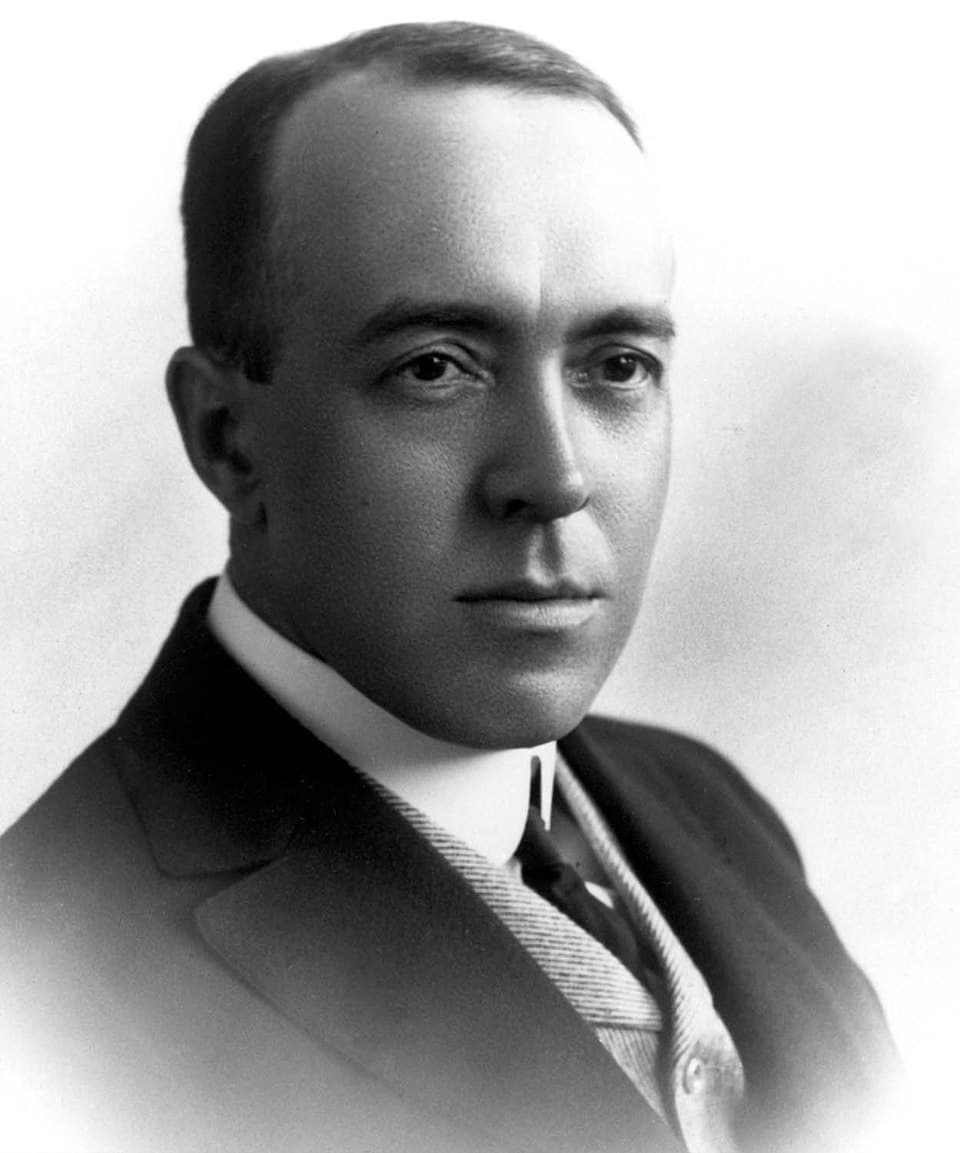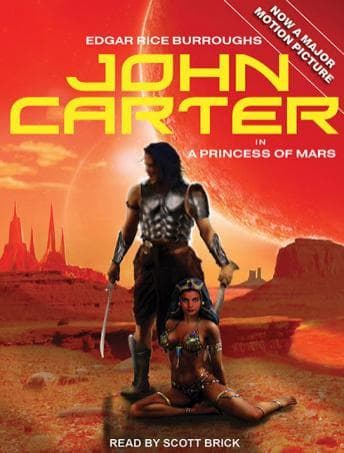

Edgar Rice Burroughs didn't write literature. He wrote adrenaline. And honestly? After twenty years of teaching Hemingway and Fitzgerald and explaining to teenagers why symbolism matters, sometimes you just need a Confederate veteran to wake up naked on Mars and start punching things.
I finished this one during a Saturday morning walk along the lakefront with Denise, and she could tell something was happening because I kept stopping to stare at the water with this ridiculous grin on my face. "You're listening to something dumb, aren't you," she said. She wasn't wrong. She wasn't entirely right either.
The Book That Launched a Thousand Guilty Pleasures
Let's talk about what Burroughs is really doing here — because there IS something worth examining underneath all the sword fights and four-armed green warriors. Published in 1911, this thing basically invented the "stranger in a strange land" template that science fiction has been strip-mining for over a century. John Carter arrives on Barsoom (that's Mars, for you non-nerds) and discovers that the lower gravity gives him superhuman strength and the ability to leap enormous distances. It's wish fulfillment, sure. But Burroughs structures it as a civilization study — the dying planet, the decaying empires, the tribal Tharks with their brutal social hierarchy versus the more "civilized" red-skinned humanoids of Helium. There's a genuine anthropological imagination at work beneath the pulp.
And then Carter rescues the beautiful Dejah Thoris and you remember — oh right, this is the guy who created Tarzan. I actually went back and listened to Tarzan the Terrible a few months ago, and the same adventure-muscle is on display there, just transplanted to the jungle instead of the red planet. The gender dynamics are about what you'd expect from 1911, and I should be upfront: there's racial coding baked into the worldbuilding that modern readers will notice and should notice. The book is a product of its time in ways that are uncomfortable. I'd never assign this to my students without a conversation about colonialism and the adventure-fiction tradition that glorified it. But as a historical artifact and as the foundation stone for an entire genre? It matters.
At six hours and forty-six minutes, the pacing is relentless. This is not a slow burn. Burroughs moves from set piece to set piece — captivity among the Tharks, arena combat, aerial battles between Martian airships, a climactic race against planetary catastrophe — with the kind of breathless momentum that makes you realize modern blockbusters learned everything from stories like this one.
Scott Brick Goes Full Opera (For Better and Worse)
Here's where things get interesting. Scott Brick narrates this with a dramatic intensity that I can only describe as "Shakespearean actor who wandered into a pulp magazine." His introspective delivery during Carter's early chapters — the loneliness of a man displaced across worlds — genuinely adds dimension to what could've been flat adventure prose. When Carter reflects on Earth, on what he's lost, Brick slows down and lets the weight of it land.
But then the action kicks in and Brick cranks the dial to eleven. And sometimes past eleven. There's a theatricality to his performance that either works for you or it doesn't. I found myself occasionally thinking he was narrating an ancient epic rather than a pulp novel — which, look, maybe that's the right instinct? Burroughs wrote in a style that was already heightened and melodramatic. Brick matches that energy. Whether you want that energy matched or tempered is a matter of taste. I've heard Brick dial it back effectively elsewhere — his work on Saboteurs has a more measured intensity that might sit better with listeners who find his pulp performance a bit much.
I'll say this: at 1.0x speed (because the author chose those words), Brick's pacing feels deliberate and controlled. I could see someone at 1.25x finding it even more propulsive. But I wouldn't go faster than that — you'd lose the texture of his quieter moments, and those moments are what separate a solid narration from mere reading-aloud.
Who Should Wander Onto Barsoom
If you loved H.G. Wells or Jules Verne and want to see what happened when adventure fiction collided with science fiction at the turn of the century, this is essential listening. If you're a Ray Bradbury fan — and Bradbury himself worshipped Burroughs — you owe it to yourself to hear the source material. My students would hate this. I love it. (Though I'd argue with them about why it still matters, and those arguments would be the best part of the unit.)
If you need psychological complexity in your protagonists, look elsewhere. John Carter is a blunt instrument — brave, honorable, capable of punching literally everything on Mars — and Burroughs doesn't waste time on interiority beyond the broadest strokes. And if dramatic narration sets your teeth on edge, Brick's approach might not be for you.
But if you want to understand where modern sci-fi adventure started? If you want to hear the DNA of everything from Flash Gordon to Star Wars to Avatar? This is the source code. Six hours and forty-six minutes of pure, unapologetic, pre-modern pulp imagination.
Worth pausing the faculty meeting for. Definitely worth a walk along the lake.