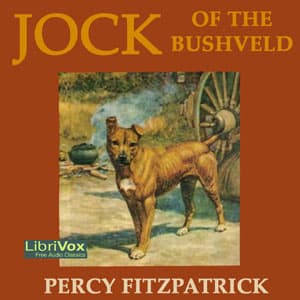

He was the runt of the litter. Destined for a bucket of water—literally, to be drowned—until a young Percy Fitzpatrick intervened and claimed the "ugly little mongrel" for himself. That's how we meet Jock.
I was listening to this opening sequence while walking the Chicago lakefront with Denise. The wind was doing that thing where it cuts right through your scarf, but in my ears, I was sweating in the 1880s Transvaal. Jarring contrast. But maybe not as jarring as the production format here.
## About Those "Various Readers"Let's address the elephant—or rather, the ox-wagon—in the room. This edition is narrated by "Various Readers." If you're used to the polished, singular voice of a Simon Vance or a Juliet Stevenson, this is going to feel like a shock to the system. It's essentially a compilation, likely a LibriVox recording or similar volunteer effort. Chapter 1 might be a distinguished British gentleman recording in a professional booth; Chapter 2 might be someone recording in their kitchen with a slight hum in the background.
I ran into the same patchwork-quilt situation with Toilers of the Sea, and that one also asked more of me than a standard single-narrator production.Does it ruin the book? Not necessarily. But it requires a different kind of listening patience. It feels less like a performance and more like a series of campfire stories told by different travelers passing through. My students would hate this inconsistency. They'd claim it "breaks the immersion." They're not wrong, but there's a scrappy charm to it that fits the rugged subject matter.
## History in a Dog CollarAnd the subject matter is worth the audio hurdles. This isn't the sanitized Disney version of a dog story. Fitzpatrick wrote this in 1907 for his own children, but back then, kids were apparently made of sterner stuff. The prose is dense, filled with the specific vernacular of the South African bush—"kloofs" and "kopjes" and the mechanics of ox-wagon transport. It's historical nonfiction wearing a dog collar.
Jock isn't a cartoon character. He's a Staffordshire Bull Terrier who fights baboons, hunts kudu, and navigates a brutal frontier. The bond between man and dog here isn't sentimental; it's survival. There's a scene involving a fight with a sable antelope that had me actually stopping on the path, ignoring the freezing spray from the lake, just to hear how Jock maneuvered.
That same pull—where the action locks you in place and you forget you're standing on a sidewalk—hit me hard with 47 Ronin, another story about loyalty and survival in a world that doesn't reward either.Warning for the soft-hearted (including myself): This is a true story from a harsh era. If you know anything about classic dog literature—Old Yeller, Where the Red Fern Grows—you know you need to emotionally prepare yourself for the ending. I won't spoil the specifics, but let's just say I needed a minute before I could go back to grading papers on The Great Gatsby.
## Who's This For (And Who Should Skip)If you want a polished, consistent audio experience, look elsewhere. But if you're a history buff who can tolerate production quirks, or a dog lover who wants something grittier than modern pet memoirs, this delivers. Skip it if inconsistent narration genuinely ruins your listening—no shame in that.
## Class DismissedThis is a slow burn. It takes a while to get going—the first chapter is heavy on human biography before we get to the dog—but once Jock takes center stage, it's a fascinating window into a vanished world. Just be ready to adjust your volume dial every time a new narrator tags in.