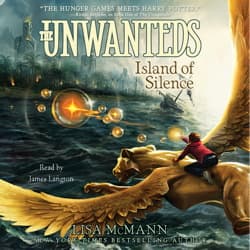

Jenny's been on a mission to expand my audiobook diet beyond business books. Last Saturday she handed me her phone while I was doing dishes and said, 'Just try it. Eight hours. For the kids we don't have yet.' That's how I ended up listening to Island of Silence while scrubbing a cast iron pan - and honestly? It held my attention better than three business books I finished this month.
Let me be clear about what this is: middle-grade dystopian fantasy. Book two in the Unwanteds series. I went in cold - hadn't listened to book one - which is probably not how McMann intended it, but I've done worse due diligence on actual investments.
The Business Case for Artimé
Here's the setup that actually got me: Quill is basically a command economy that culls its creative class. Kids who show artistic talent get labeled 'Unwanted' and sent to die - except they don't die, they end up in Artimé, a magical world where art is literally weaponized. Spells cast through music, painting, sculpture. By book two, the old regime has collapsed and now both societies are figuring out how to coexist.
This is what my parents did instinctively. Now it has a TED talk. The creative-class-as-threat dynamic, the survivor's guilt of the 'Wanteds' who benefited from the old system, the political maneuvering of Aaron Stowe trying to claw back power after losing status - McMann is running real organizational behavior concepts through a twelve-year-old's story. I've seen Aaron's archetype at three different companies. The guy who was a star under the old leadership, watches the regime change, and immediately starts plotting instead of adapting. He's every middle manager who survived one restructuring and is determined to sabotage the next one.
The twin dynamic between Alex and Aaron is the actual engine here. Alex is learning to lead something he never asked to lead. Aaron is learning that resentment is a full-time job with terrible ROI. McMann runs these storylines in parallel and the collision at the end is genuinely earned - not just a plot mechanism.
The Narrator Situation (We Need to Talk)
James Langton is fine. Technically proficient, Earphones Award winner, the word 'Artimé' rolls off his tongue without the awkward pause you get when narrators hit fantasy proper nouns cold. His tone is steady and clear - good for a young audience that needs to track multiple characters without getting confused.
But I listened to enough reviews to know there's a narrator change controversy here. The first book had a different voice, and some listeners felt the switch broke immersion coming into book two. I can't speak to that comparison directly since I came in fresh. What I can say is that Langton doesn't differentiate characters dramatically - Aaron's scheming doesn't sound particularly different from Alex's anxiety, which matters when you're tracking a twin story where the psychological distance between two people is the whole point. A darker edge for Aaron, something more uncertain for Alex, would've sharpened the stakes considerably.
My 2.0x speed worked fine here. This isn't dense prose. It's well-paced middle-grade storytelling - McMann respects the genre's contract with young readers, which means actual plot movement, not world-building padding.
Who This Is Actually For
If you have a kid aged 9-13 who's burned through Percy Jackson and needs something next - this is a legitimate recommendation. My review of Battle of the Labyrinth gets into why that series set such a high bar for this age group in the first place. The series has a clean premise, real stakes, and doesn't condescend.
If you're an adult listener who came here from the business section of Audible - look, I'm not going to pretend this is a business book. But the organizational dynamics are real, the leadership questions Alex faces are real, and eight hours is not a punishing commitment. I've spent longer on airport runways.
Skip it if you haven't done book one and have zero tolerance for mid-series setup. I followed it fine, but I was definitely missing context that would've landed harder.
Bottom line: Solid series entry. The twin rivalry works, the world has internal logic, and Langton gets the job done even if he doesn't elevate it. The narrator change will bother you more if you listened to book one. If you're starting fresh, you won't know what you're missing.