"The dead don't rest easy. They just wait for someone worth talking to."
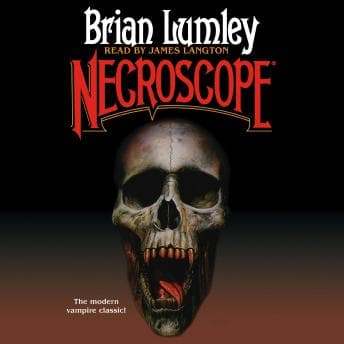
That's not a direct quote, but it's the feeling that crawls under your skin somewhere around hour three of Necroscope, when you realize Brian Lumley isn't writing a vampire novel. Not really. He's writing a Cold War espionage thriller where the spies happen to be psychics and the enemy's greatest weapon is an undead Transylvanian warlord entombed in the earth for centuries. And it works. It shouldn't, but it absolutely does.
I was shelving returns at the library on a gray Tuesday - classic Oregon November, the kind where the sky looks like a bruise - and I had my earbuds in, deep into Lumley's Soviet ESPionage agency (the E-Branch and its Russian equivalent), when a patron tapped my shoulder and I nearly launched a copy of Beloved into the biography section. That's the kind of book this is. It gets into your peripheral vision.
The Dead Have Better Conversations Than the Living
Here's what Lumley understood that most vampire fiction doesn't: the monster is scarier when you build the world around it with patience. Necroscope splits its narrative between Harry Keogh - a quiet, strange kid who discovers he can communicate with the dead - and Boris Dragosani, a Soviet "necromancer" who gets his information from corpses through... considerably less polite methods. Think autopsy-as-interrogation. The contrast is the engine of the whole book. Harry asks. Dragosani takes. And the dead remember everything.
The structure is wild for a horror novel - it's almost academic in places, with chapters that read like intelligence briefings about psychic warfare programs. Lumley drops you into bureaucratic meetings in British and Soviet agencies, and somehow these scenes carry just as much dread as the vampire stuff. Because you know what's coming. The Wamphyri - Lumley's reimagining of vampires as parasitic organisms that bond with human hosts - are genuinely alien. Not sexy. Not brooding. Parasitic. The reveal of what Thibor Ferenczy actually is, buried under that crossroads in Romania, is the kind of slow-dawning cosmic horror that Shirley Jackson walked so this author could run. Different flavor, same craft of dread.
And the Möbius Continuum? Harry's ability to travel through a mathematical dimension discovered by the dead mathematician August Ferdinand Möbius? That's the kind of bonkers genre-blending that either loses you completely or has you pacing your apartment at midnight going "this is GENIUS." I was the latter. Shirley (my cat) was unimpressed. I was electrified.
James Langton Knows What Cold War Paranoia Sounds Like
The narrator commits. That's rare. Langton differentiates the British agents from the Soviet operatives with subtle vocal shifts - not cartoon Russian accents, but a tightness in delivery, a clipped formality for Dragosani's sections that contrasts with the warmer, almost melancholy tone he gives Harry. When Dragosani performs his necromantic rituals - which are visceral, graphic, and deeply uncomfortable - Langton doesn't flinch. He leans into the clinical horror of it. There's a scene where Dragosani interrogates a corpse (if you can call it that) and Langton's voice drops into this flat, almost procedural register that made my skin crawl more than any screaming would have.
For the dead themselves - the voices Harry hears from their graves - Langton gives them this distant, slightly hollow quality. Not echo-effect distant, just... detached. Like they're speaking from very far away and very long ago. It's a smart choice. Makes the conversations between Harry and his dead friends feel genuinely otherworldly without becoming cartoonish.
Seventeen and a half hours is a commitment. I'll be honest - the middle section where Lumley is building out the parallel psychic agencies drags slightly. Not because it's bad, but because you can feel the architecture being laid for future books. This is clearly a foundation novel. But Langton's pacing keeps you anchored even when the plot is doing setup work.
Who Needs This in Their Ears
If you scare easily, skip. If you don't, you need this. But also: if you love le Carré or Cold War thrillers and wish someone had dropped an ancient vampire into the middle of one, this is your book. If you need fast-paced horror from page one, the slow burn here might test you. Necroscope rewards patience. The payoff in the final hours - when Harry's abilities fully manifest and the Wamphyri threat becomes immediate rather than historical - is worth every minute of bureaucratic setup.
Not for the squeamish. Dragosani's methods are genuinely disturbing, and Lumley doesn't cut away. The content warnings are earned. That unflinching approach to violence in service of story is something Salvation in Death handles well too, though it trades cosmic parasites for murder in a cathedral — different breed of dread, same refusal to look away.
My podcast listeners are going to love this. I listened in the dark for the last four hours. Mistake? Maybe. Worth it? Absolutely. Finally, horror that respects the genre while refusing to stay inside it.
File This Under "Why Didn't Anyone Tell Me Sooner"
Necroscope is a 1986 novel that feels like it was written by someone who got tired of vampires being boring and decided to fix the entire subgenre. Lumley rebuilt vampires from the cellular level up, wrapped them in espionage paranoia, and gave us a protagonist whose superpower is basically being kind to the dead. This understands that horror isn't about gore - it's about dread. The gore is there, but it serves the dread, not the other way around. Langton's performance elevates an already ambitious book into something genuinely immersive. I'm already queuing up book two.