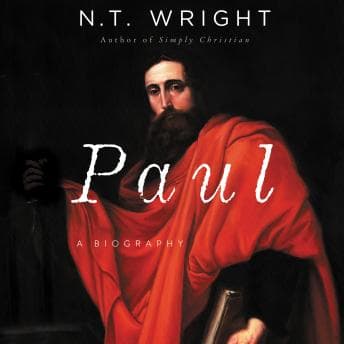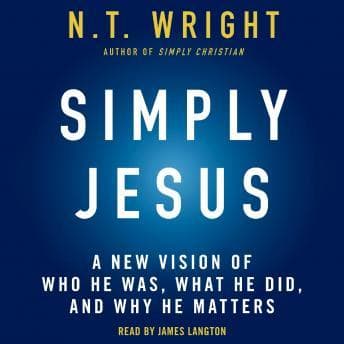

Look, I have a complaint. N.T. Wright has ruined my ability to read the Gospels casually ever again.
I used to think I understood Jesus pretty well. Twenty years of teaching literature, analyzing texts, understanding context—surely that translates to biblical literacy, right? Then Wright spends the first few hours systematically dismantling every comfortable assumption I'd built up since Sunday school, and suddenly I'm the student who didn't do the reading.
I finished this one during a particularly brutal week of grading sophomore essays on The Great Gatsby. There's something darkly appropriate about listening to a scholar explain how badly we've misread the most important figure in Western history while I'm marking papers that completely miss the green light symbolism. We all have our blind spots, apparently.
The Scholar Who Writes Like a Human
Here's what Wright does that most theologians don't: he assumes you're intelligent but not initiated. He doesn't talk down, but he also doesn't assume you've memorized the Second Temple Jewish context. This reminds me of what Hemingway said about writing—that the dignity of movement of an iceberg is due to only one-eighth of it being above water. Wright shows you his iceberg. All of it. But somehow it doesn't feel like drowning.
The central argument—that we've been asking the wrong questions about Jesus for centuries—hits differently when you teach literature. We do this with every classic text. Students come in asking "Is Hamlet crazy?" when the play is asking something far more interesting about performance and authenticity. Wright's essentially saying we've been asking "Was Jesus God or just a good teacher?" when the Gospels are asking "What happens when Israel's God becomes king through this Galilean prophet?" Completely different questions. Completely different answers.
James Langton narrates with the kind of measured clarity this material demands. He's not doing voices—there are no characters to differentiate, really—but he handles Wright's occasionally complex sentence structures without making them feel academic. The prose deserves to be savored, and Langton seems to understand that. He gives Wright's rhetorical questions actual weight, pausing just long enough to let them land. (Principal Martinez could learn something about pacing from this man.)
Where It Gets Uncomfortable
I'll be honest—around hour six, I started getting defensive. Wright challenges both conservative and liberal readings of Jesus with equal enthusiasm, which means everyone gets uncomfortable at some point. He's not interested in your theological comfort zone. He's interested in what the first-century texts actually meant to first-century people. It's the kind of rigorous approach I wish more Christian books would take—though I'll admit Heavenly Life manages to balance accessibility with theological depth in a way that feels less like homework.
This is dense material. Not difficult exactly, but requiring attention. I had to rewind several times when I caught myself drifting during faculty meeting background noise. The comparison to C.S. Lewis in the marketing copy is... optimistic. Lewis wrote for the general reader with deliberate simplicity. Wright writes for the general reader who's willing to work. There's a difference.
At ten and a half hours, it's a commitment. But Wright earns the runtime. He's not padding—he's building an argument that requires historical scaffolding before the payoff.
Who Should Clear Their Schedule (And Who Shouldn't)
If you loved Mere Christianity but wished Lewis had engaged more seriously with biblical scholarship, this is your book. If you're a pastor tired of the same tired devotional material, Wright will give you months of sermon material. If you're a skeptic who thinks Christianity is intellectually bankrupt, Wright will at least make you argue with someone who's done the homework.
Skip it if you want easy answers or devotional comfort. Skip it if you need your Jesus pre-packaged and uncomplicated. My students would hate this. I love it.
Class Dismissed (But the Reading Continues)
Wright has given me a problem. I can't unhear his arguments. I can't go back to reading the Gospels as simple moral instruction or proof-texts for systematic theology. He's made Jesus strange again—which, Wright would argue, is exactly the point. The historical Jesus was far more dangerous and interesting than our domesticated versions.
Langton delivers it all with professional clarity. No fireworks, no drama—just a steady, intelligent reading of a book that deserves exactly that treatment. This is the kind of audiobook that makes you grateful for your commute, even the traffic.
Denise asked me last week why I kept pausing during our lakefront walk to stare at the water. I was trying to process Wright's argument about kingdom and cross. She's used to me being distracted by books. She just didn't expect theology to be the culprit.
Neither did I, honestly. Neither did I.