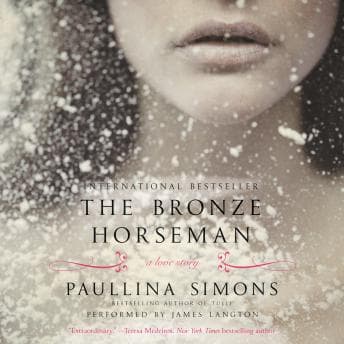

I started this one during a late November faculty meeting about standardized testing protocols. Principal Martinez was explaining something about data dashboards, and I was watching snow fall outside the window while Leningrad starved. The cognitive dissonance was almost too much. Here I was, warm and bored, listening to people freeze to death for bread rations. By the time Martinez asked if anyone had questions, I'd been crying silently for ten minutes.
Thirty hours and forty-three minutes. That's not an audiobook—that's a commitment. A relationship. And like the best relationships, this one will wreck you in ways you didn't consent to.
What Tolstoy Would Have Done With a Love Triangle
Paullina Simons understands something that most historical romance writers miss entirely: the siege of Leningrad wasn't a backdrop. It was a character. The way she describes the slow starvation—the mathematical cruelty of ration cards, the body counts in communal apartments, the impossible calculus of who gets the last potato—this is historical fiction that does its homework. My students would hate this. I love it.
Tatiana Metanova is seventeen when we meet her, and Alexander—our mysterious Red Army officer with secrets that could get everyone killed—is drawn to her despite being involved with her sister Dasha. I know, I know. Love triangles. But this isn't some CW drama. This is two people who understand that loving each other might literally destroy their family, set against a city where 800,000 people starved to death. The stakes aren't emotional. They're existential. Passionate Friends explores that same territory—love that exists under impossible circumstances, where choosing each other means risking everything.
The middle section does drag. I won't pretend otherwise. Around hour twelve, I found myself grading sophomore essays on The Great Gatsby while half-listening, and honestly? The pacing forgave it. Simons is building something. The repetition of hunger, of cold, of fear—it's intentional. She wants you to feel the siege the way Leningraders felt it: endless, grinding, hopeless. Whether that's good storytelling or literary masochism depends on your tolerance for suffering.
The Scottish Problem (And Why It Didn't Ruin Everything)
James Langton. Here's the thing—he's genuinely excellent at what he does. His female voices are convincing without being cartoonish, which is rarer than it should be. When he voices Tatiana, there's a breathlessness, a youth that feels earned. Dasha sounds different. The parents sound different. You always know who's speaking.
But Alexander. Our Russian soldier. Sometimes sounds... Scottish? Look, I'm an English teacher. I notice these things. The accent wanders. It's not consistent. And yes, part of me—the part that grades papers with a red pen—wanted to mark it up. "See me after class, Mr. Langton."
But here's what I kept coming back to: the emotional truth was there. When Alexander tells Tatiana he can't be with her, when he explains the secret he's been hiding, Langton's voice breaks in exactly the right places. The accent might slip, but the heart doesn't. And in a 30-hour audiobook about impossible love during impossible circumstances, I'll take heart over technical perfection.
(This reminds me of what Hemingway said about writing—the iceberg theory. What matters isn't what's on the surface. It's what's underneath. Langton understood what was underneath.)
Why You Should Listen at 1.0x (Yes, Really)
I listened at 1.0x. My students think I'm ancient for this. But Simons writes sentences that reward patience. The descriptions of pre-war Leningrad—the white nights, the golden skies, the translucent twilight—these aren't just pretty words. They're establishing what gets destroyed. You need to hear them slowly to understand what's being lost.
The ending broke me. I was walking the lakefront with Denise, both of us bundled against the Chicago wind, and I had to stop. Just stop walking. She asked if I was okay and I said "Leningrad" and she nodded because she's married to me and understands that sometimes fictional people matter more than they should.
Who Should Brave the Siege (And Who Should Stay Home)
If you loved Doctor Zhivago, if you've read Antony Beevor's histories of the Eastern Front, if you believe that love stories earn their happy endings through suffering—this is your book. If you need tight pacing, if inconsistent accents will pull you out of the story, if you can't commit to 30 hours—skip it. No shame. This isn't casual listening. This is the literary equivalent of running a marathon in a blizzard.
Content warning: this book contains violence, abuse, explicit content, and enough emotional devastation to fuel a semester's worth of therapy. You've been warned.
Class Dismissed (But the Sequel's Already Downloaded)
I've already downloaded the sequel. Denise says I'm not allowed to listen to it during the holidays because she can't handle me crying at Christmas dinner again. She's probably right. But the author chose those words, and I choose to hear them. Even when they hurt. Especially when they hurt.
This is why we still read the classics. Or in this case, why we listen to books that might become classics—if anyone has the stamina to finish them.