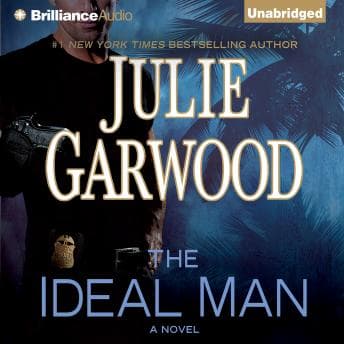

Julie Garwood's Ideal Man is basically three books wearing a trench coat pretending to be one novel. And I mean that both as a criticism and — surprisingly — as a partial compliment.
I was up late making chana masala from my mother's recipe (the one she insists I'm doing wrong every time, even over the phone), and I needed something to keep me company that wouldn't require my full attention while I measured out cumin and coriander. This fit the bill. Which is telling, honestly, because a romantic suspense novel about a woman who witnesses an FBI agent getting shot should demand your full attention. The fact that I could chop onions without pausing once? That's a data point.
The Psychology of Ellie Sullivan (Or Lack Thereof)
Here's what frustrated me. Dr. Ellie Sullivan witnesses a violent shooting. She's the sole eyewitness. Witnesses in these situations — the research actually shows this — experience hypervigilance, intrusive memories, significant disruption to their sense of safety. Ellie gets... mildly inconvenienced? She transitions from terrified witness to swooning over Max Daniels with the psychological resilience of someone who lost their car keys, not someone with a target on her back.
The protagonist exhibits classic romance-genre immunity to trauma, and while I understand that's partly the genre contract, Garwood is better than this. Her earlier work built tension through characters who felt genuinely threatened. Here, the danger feels like wallpaper — it's there, technically, but you stop noticing it.
Max Daniels, the FBI agent assigned to protect her, is the "by-the-book but secretly passionate" archetype. Fine. I've seen it work. But I found myself asking: why does Max really care about Ellie beyond the plot requiring it? Their chemistry is told to us more than shown, and when the banter kicks in, it's pleasant but weightless. Like diet soda romance — all the fizz, none of the substance. The chemistry that actually crackles on the page — the kind where you feel the pull before the characters even admit it to themselves — is something Burn for Me does so much more convincingly, and I kept thinking about that contrast while Max and Ellie exchanged yet another round of pleasant-but-toothless banter.
When Three Plots Collide and None of Them Win
So about that trench coat situation. You've got the witness protection romance plot. You've got Ellie's complicated family dynamics (including a sister subplot that honestly could've been its own book). And you've got the Landry criminal couple — the "modern-day Bonnie and Clyde" from the description — who are genuinely the most interesting element and get the least screen time.
The Landrys are fascinating case studies in folie à deux — shared psychosis between partners in crime — but Garwood barely scratches that surface. Instead, we get long stretches of dialogue that don't advance character or plot. One listener called it "three different novels thrown together with boring dialogue," and psychologically, that tracks. The book can't decide what kind of story it wants to be, so it hedges. Hedging is death for suspense.
What does work: Garwood understands the mechanics of attraction-through-proximity. The forced-closeness trope between Ellie and Max has moments where it clicks — there's a warmth to their domestic scenes that feels earned, even when the thriller elements don't. She knows how to write comfort. I just wish she'd committed harder to the danger.
Christina Traister Keeps It Steady
Traister's narration is... competent. I want to say more but the honest truth is she doesn't make mistakes and she doesn't take risks. Her reading style is easy and smooth — I never had to rewind because of unclear delivery. But I also never felt like she differentiated the characters enough that I could close my eyes and know instantly who was speaking without context clues. For an 8-hour-43-minute listen, that matters. When your villain should sound menacing and your love interest should sound warm and your protagonist should sound increasingly rattled, a narrator who plays everything at the same emotional register leaves something on the table.
She'd be perfectly fine for a straightforward romance. For a book marketing itself as a "pulse-pounding thriller"? You need more heat.
Who Gets the Most Out of This
If you're a Garwood completist working through the Buchanan-Renard series (this is book nine), you'll want it for continuity. If you're looking for light romantic suspense — emphasis on light — and you're okay with the thriller elements being more backdrop than driver, this'll work for a long commute or weekend chores. If you're coming in expecting the sharpness of Garwood's earlier historicals or even her stronger contemporary suspense, prepare to be underwhelmed.
Psychologically, this doesn't track as a thriller. But as comfort food with a thin veneer of danger? My therapist would have thoughts about why I find that distinction important, but she'd also probably agree.
Case File: Closed, Not Solved
I didn't regret the time. But I also didn't learn anything about these characters that surprised me after the first hour. And that's the thing — the best romance AND the best suspense both hinge on the same psychological principle: escalation. Each reveal should reframe what came before. Ideal Man just... continues. Pleasant, easy, forgettable. Like a meal where you can't remember what spice was missing, only that something was.