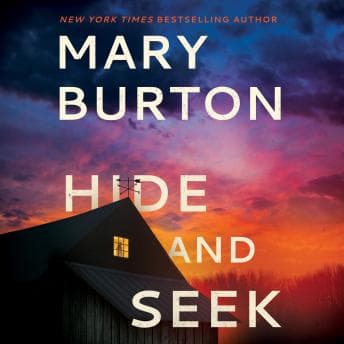

People kept telling me Mary Burton gets the procedural stuff right, and I'd been burned before, so I went in skeptical. I was sorting the kids' lunch boxes at 7 AM after a brutal night shift - three traumas back to back, the kind of night where you don't sit down for eight hours - and I just needed something to occupy my brain while my hands did the autopilot thing with PB&J. Hit play on Hide and Seek and within twenty minutes I was interested enough to keep it going on my drive the next night.
Macy Crow Walks Like Someone Who's Actually Been Hurt
Here's what got me: Macy's recovering from a hit-and-run, and the way Burton writes her body awareness - the stiffness, the pushing through, the refusal to acknowledge limits - that's real. I've watched patients do exactly that. I've been that person, working through a back injury because who's going to cover my shift? The detail that she's essentially auditioning for an FBI profiling team while still physically recovering gave her this edge of desperation that felt earned, not manufactured.
The cold case structure works well here. Tobi Turner's bones surface after fifteen years, and Macy starts pulling threads that connect to other cases - stalking that escalated to assault, assault that escalated to murder. Burton clearly did her homework on how predatory behavior patterns develop over time. The forensic progression made sense. I didn't yell at my dashboard once about the medical or investigative details, which is honestly rare for me. Cruel and Unusual is another one that earned the same silence from me - procedural details tight enough that I could actually just listen instead of arguing with my stereo. The way evidence gets processed, the jurisdictional dance between FBI and local sheriff's department - it tracks.
What I didn't love: the romance between Macy and Sheriff Mike Nevada. Look, I get it, former lovers reuniting over a murder investigation is a genre staple. And Burton handles it without making it feel gratuitous. But every time the tension between them heated up, I wanted to fast-forward back to the case. The mystery was strong enough to carry this book without the romantic subplot doing so much heavy lifting.
Christina Traister and the Nevada Problem
Okay, so. The narration. This is where it gets complicated.
Traister is genuinely good with Macy. She captures that controlled intensity of a woman who's holding herself together by sheer force of will. The internal monologue sections - and there are a lot of them, this is very much Macy's story from the inside out - land with the right weight. When Macy's frustrated, scared, determined, Traister shifts between those registers naturally.
But Nevada. I have to be honest. Nevada sounds... off. There's something about how Traister voices him that makes this experienced sheriff sound like he's perpetually confused. Not unintelligent exactly, but like he's always half a beat behind, which contradicts how Burton actually wrote him. He's supposed to be competent and sharp. The voice doesn't match the man on the page. It's distracting enough that scenes between Macy and Nevada lost some of their chemistry for me.
The female characters are differentiated well enough - you can tell who's speaking without the attribution tags, which is the baseline test. Male characters beyond Nevada blur together a bit. Single narrator doing a full cast of characters is always a gamble, and Traister wins some and loses some here.
Who This Is For (And Who Should Maybe Read the Print Version)
If you're a Mary Burton fan already, you know what you're getting and you'll be satisfied. If you're new to her, this is a decent entry point - it's book four in the Criminal Profiler series but stands alone well enough. The suspense builds steadily across almost ten hours without those dead-zone middle chapters that plague so many thrillers.
If voice consistency in narration is a dealbreaker for you, consider the print version. If you can roll with an imperfect narrator who's genuinely strong in the lead role, the audio works.
Perfect for that post-shift decompression. The pacing is steady enough that you won't miss critical plot points if your brain is running at 60% capacity after twelve hours on the floor, but engaging enough that it'll actually pull you out of whatever you just witnessed in the trauma bay.
I bumped the speed to 1.25x during some of the slower relationship-building scenes and it helped the momentum. The suspense sections I kept at normal speed - they earned it.
Night Shift Prescription
Solid procedural thriller with a protagonist who feels like a real person carrying real damage. Burton respects her readers enough to get the details right, and Traister respects Macy enough to give her a voice that matches her spine. The Nevada voice issue is a genuine flaw, not a nitpick. But the mystery itself? Kept me awake on a drive home where I had no business being awake. That counts for something.