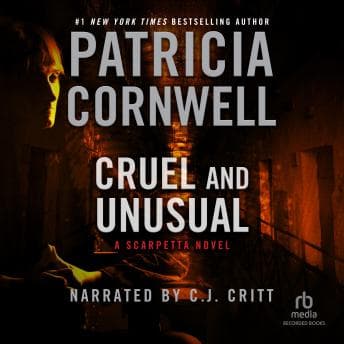

A dead man's fingerprints at a fresh crime scene. That's the hook, and Patricia Cornwell doesn't waste a single page getting you there.
Look, I've been circling the Kay Scarpetta series for years. My podcast listeners keep asking when I'll cover Cornwell, and honestly? I was intimidated. Forensic procedurals can go one of two ways - either they respect the genre's potential for genuine dread, or they drown you in technical jargon until your eyes glaze over. Cruel and Unusual lands firmly in the first camp, and C.J. Critt's narration is a big reason why.
When the Dead Won't Stay Dead
The premise here is pure horror dressed in thriller clothing. An executed murderer - someone the state of Virginia definitively killed - has apparently left evidence at a new crime scene. Cornwell worked in a medical examiner's office, and you feel that. Every autopsy detail, every chain-of-evidence consideration, it all lands with the weight of someone who's actually stood in those rooms. This isn't CSI fantasy forensics. This is the real, slow, meticulous work of understanding how bodies tell their stories.
And that's where the horror creeps in. Because if you're Kay Scarpetta, chief medical examiner, your entire professional existence depends on physical evidence being reliable. On the dead staying dead. When that foundation cracks? Cornwell wrings every ounce of dread from it.
The plotting gets complex - I won't pretend otherwise. There are moments where the technical sections require actual attention. I was doing dishes during one stretch and had to rewind twice because I'd completely lost the thread of what was happening with some DNA analysis. Left To Die had similar moments where the investigative details demanded full attention, though that one's less technical overall. Fair warning: this isn't background listening material.
C.J. Critt Gets It
Here's where I need to be honest. Critt's narration is genuinely excellent - subtle vocal inflections that distinguish characters without veering into cartoon territory. She understands that Scarpetta is controlled, professional, someone who compartmentalizes horror because that's how you survive this job. The emotional delivery works because it's restrained. When Scarpetta's composure cracks, you feel it.
The medical terminology mispronunciations are real, though. "Carotid" came out wrong at one point and I actually winced. For a forensic series where precision matters so much to the protagonist, having the narrator stumble on basic anatomy terms is... distracting. It's not constant, and it doesn't ruin the experience, but if you're a medical professional or true crime obsessive who knows these terms cold? You'll notice.
Critt's pacing saves her, though. She knows when to slow down for tension, when to push through action sequences. The climactic sections genuinely had me gripping my steering wheel harder than necessary during my commute. That's the mark of a narrator who understands the material.
The Cornwell Problem (It's a Good Problem)
Cornwell won the Gold Dagger for this book, and you can see why. Her writing is precise without being clinical, suspenseful without cheap tricks. There's a dry humor running through Scarpetta's observations that I appreciated more than I expected - though I'll note some listeners find it too dark. (My podcast audience will probably love it. We're not exactly a sensitive bunch.)
Scarpetta isn't just a brilliant medical examiner - she's a woman navigating a male-dominated field, dealing with complicated personal relationships, carrying the weight of every victim she's examined. When the case gets personal - and it does - the stakes feel earned because we understand who she is beyond her job.
My one real complaint? The ending felt rushed to me. After all that careful buildup, the resolution comes fast. Not unsatisfying, exactly, but I wanted to sit with the implications longer than Cornwell allowed.
Would I Listen in the Dark?
Absolutely. And I did, actually - finished the last two hours at 1 AM with headphones in, Shirley curled up on my chest, completely absorbed. This understands that horror isn't about gore - it's about dread. The gore is there, clinical and unflinching, but the real terror is existential. What happens when the systems we trust to separate the living from the dead fail?
If you scare easily or want something you can half-listen to while folding laundry, skip this one. But if you want forensic mystery that respects both the science and the horror of violent death - and you're willing to give it your full attention - this is your book.
My podcast listeners are definitely getting an episode on this one. Cornwell walked so many forensic thriller writers could run, and it's about time I acknowledged that properly.