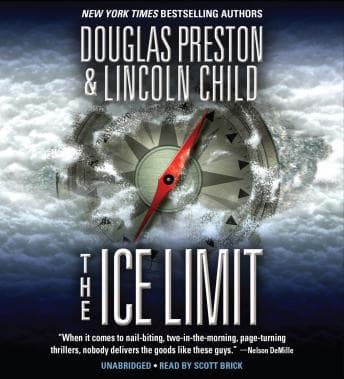

So I'm at 2 AM, deep in a coding sprint for my procedural generation project (okay, "sprint" is generous — I had my IDE open and was mostly staring at a pathfinding algorithm that refused to cooperate), and I threw on Ice Limit thinking it'd be decent background noise. A meteorite heist off the coast of Chile? Sure, that's basically a D&D one-shot premise. Eccentric billionaire hires a crew of specialists to extract a 4,000-ton space rock from a desolate island near Cape Horn. What could go wrong?
Everything. Everything goes wrong. And I stopped pretending to code about two hours in.
The Dungeon Master Planned This Encounter Perfectly
Preston and Child do something I genuinely respect here: they treat the meteorite like a proper mystery, not just a MacGuffin. The thing is weird. Its properties don't behave like any known element. Characters argue about what it actually is. The tension doesn't come from monster-of-the-week scares — it comes from smart people slowly realizing they're dealing with something that breaks their models. If you've ever been in a campaign where the DM describes an object and your party goes "don't touch it" but someone touches it anyway? That's this book. Repeatedly.
The cast of characters reads like a party roster. You've got Eli Glinn, the expedition planner who's basically a Lawful Neutral mastermind — the guy has contingency plans for his contingency plans, and watching his certainty erode is one of the best slow burns in the book. Palmer Lloyd, the billionaire funding the operation, is your classic patron NPC who thinks money solves physics. And Sam McFarlane, the meteorite hunter, is the one character with enough wonder left to be unsettled by what they've found. My D&D group would love this setup.
The world-building is grounded in a way that sci-fi thrillers sometimes aren't. Preston and Child clearly did their homework on ship engineering, meteorite science, and the absolute misery of sub-Antarctic weather. Same energy in Cabinet of Curiosities, where these two turn a museum's basement archives into a full-on dungeon crawl. The Rolvaag — the massive cargo vessel they retrofit for the extraction — feels like a real place. You get the sense of its scale, its limitations, the way a 4,000-ton payload changes everything about how a ship moves. Is some of this info-dump territory? Absolutely. If you don't like info-dumps, this isn't for you (but you're wrong).
Scott Brick at 1.25x Is a Different Narrator
Look, I need to be honest about the elephant in the room. Scott Brick has a specific pacing style that is... deliberate. Very deliberate. I know this narrator well — First King of Shannara was my first Brick marathon, and that glacial epic-fantasy tempo is a rite of passage. At normal speed, the first few hours feel like wading through mud. One reviewer compared it to Captain Kirk's cadence and honestly? I can hear it. There are stretches where you're waiting for him to finish a sentence the way you wait for a loading bar.
But here's the thing — bumped to 1.25x, it clicked. His character work is legitimately solid. The Irish lilt he uses for the ship's captain, Sally Britton, gives her this quiet authority that contrasts sharply with the whiny, entitled tone he lays on Palmer Lloyd. You can hear Lloyd's tantrum energy in every scene where things aren't going his way, and it's satisfying in the way that watching a bad NPC patron get humbled is satisfying. Brick's pacing actually works during the climactic sequences — when the tension ratchets up, his careful style becomes genuinely suspenseful instead of sluggish. He just needs the stakes to match his delivery speed.
There are some sound effects sprinkled in for suspense, which — sure, fine. They're not distracting, and they add a little texture to the storm sequences and ship-creaking moments. Nothing revolutionary on the production side, but nothing broken either.
When the Party Splits and Nobody Rolls Well
Where the book loses me slightly is in the middle third. There's a stretch where the interpersonal conflicts aboard the ship start to feel cyclical — Lloyd throws his weight around, Glinn pushes back with cold logic, McFarlane is caught in between. Rinse, repeat. The meteorite mystery keeps you hooked, but the character dynamics tread water for a bit before the final act kicks everything into overdrive.
And that final act? Worth the investment. The progression is satisfying. The book earns its ending by making you sit with the creeping dread of something that doesn't obey the rules your characters thought were fixed.
Who Should Roll Initiative on This One
If you like hard-science setup with escalating horror undertones — think The Andromeda Strain meets a nautical thriller — this is your jam. Into the Drowning Deep runs the same play — a research vessel, something in the water, scientists watching their models break in real time — and it remains my gold standard for open-ocean horror. If you need fast pacing from page one, bump the speed up or accept that the first quarter is table-setting. At 17.5 hours, yes, it's a commitment. Yes, it's worth it. I read this instead of writing my thesis, and I regret nothing.
Critical Hit or Fumble?
This is a solid genre-blending adventure that rewards patience. The meteorite is one of the better sci-fi mystery objects I've encountered in audio form, and the expedition structure gives everything a ticking-clock urgency once it gets moving. Brick's narration is the kind of thing where your mileage genuinely varies by playback speed — and I mean that literally. 1.25x is the move. Trust me on this.