
What makes a serial killer story genuinely unsettling versus just another body count? I've been chewing on that question since finishing this seventeen-hour monster of a thriller during a week of long drives between client sites. Ranger kept giving me looks in the rearview - apparently my tension was palpable even to a German Shepherd.
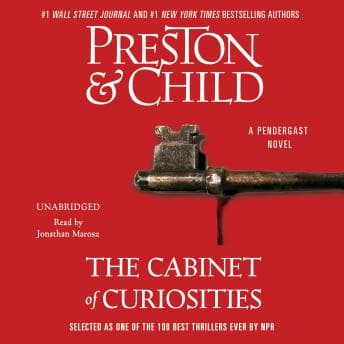
Let me cut to the chase: Cabinet of Curiosities earns its place in the thriller canon. Preston and Child built something here that works on multiple levels - historical mystery, police procedural, and genuine horror all wrapped into one package. The premise alone hooked me: thirty-six mutilated bodies discovered in a sealed tunnel beneath Manhattan, victims from the 1880s, and then identical killings start happening in present day. That's not just a cold case. That's a nightmare with a 130-year incubation period.
The Pendergast Effect
If you've never encountered FBI Special Agent Aloysius Pendergast, prepare yourself. He's not your standard federal agent - think Sherlock Holmes if Holmes had a Southern aristocratic background and a fascination with the macabre. Jonathan Marosz handles Pendergast's Southern drawl with real precision, and it works. There's something about that genteel Louisiana accent discussing dismemberment that creates genuine cognitive dissonance. The man's describing autopsy findings like he's ordering sweet tea at a garden party.
Marosz differentiates the cast sharply - you always know who's speaking. His transitions between the 19th-century historical sections and modern-day investigation feel distinct, almost like you're listening to two different time periods through different audio filters. The macabre scenes land hard. When the characters descend into that Riverside Drive mansion or explore museum archives hunting for century-old evidence, the narration carries real weight.
Now, I've heard some folks prefer Rene Auberjonois for later Pendergast books, and I get it - Auberjonois brings a different energy. But Marosz does solid work here. Not flashy, but effective. Like a good NCO - gets the job done without drama.
When History Becomes Horror
The dual timeline structure could've been a mess. Instead, it's the book's secret weapon. The 1880s sections read like historical true crime - you're following the trail of a Victorian-era monster through newspaper archives, museum records, and the kind of detective work that requires patience. The modern killings ratchet up urgency. Preston and Child clearly did their homework on 19th-century New York, the cabinet of curiosities culture, and period-accurate medical practices. (Trust me, I've read enough poorly researched historical thrillers to appreciate when authors actually put in the work.)
The charnel pit discovery sets the tone immediately - this isn't going to be a comfortable listen. The violence is graphic but purposeful. Not torture porn, but genuinely disturbing because the authors make you understand the methodology behind the madness. Dead in the Family had similar moments where the violence served the story rather than just shocking for shock's sake. There's a clinical precision to the killings that reminded me of briefings I'd rather forget.
Who Should Listen (And Who Should Skip)
This is for focused listening. Don't try to half-pay attention while doing something else - you'll miss crucial details and the whole investigation falls apart. At 17 hours, it's a commitment. Worth it, but plan accordingly.
If you need clean, sanitized thrillers - hard pass. The violence is period-appropriate but unflinching. If you get squeamish about medical experimentation and surgical precision applied to murder, this will test your limits.
But if you want a thriller that actually earns its scares through atmosphere and intelligence rather than cheap jump scares? If you appreciate investigations that require brain cells? If you've ever wondered what would happen if Silence of the Lambs had a historical twin? This is your book.
I'd bump the speed to 1.25x - Marosz's pacing is solid but benefits from a slight acceleration, especially through some of the procedural sections. Doesn't hurt the atmospheric moments, just keeps momentum.
Mission Debrief
Cabinet of Curiosities delivers. The historical mystery satisfies, the modern thriller delivers genuine tension, and Pendergast is the kind of protagonist who makes you want to follow him into the next book. Marosz's narration serves the material well - not the definitive performance some narrators achieve with signature characters, but professional and effective.
Ranger approved this one. Though he did seem relieved when we finally finished and could go back to audiobooks where people don't get surgically dismembered in underground tunnels. Can't imagine why.