
Look, I need to talk about why Myron Bolitar annoys me. And why that annoyance is exactly the point.
I was halfway through making dal makhani — the kind that takes three hours and your full spiritual commitment — when I realized I'd been standing at the stove for forty minutes past when I needed to add the cream because I was too locked into this kidnapping plot to move. My dal suffered. I have feelings about this.
The Sports Agent With a Hero Complex (My Therapist Would Have Thoughts)
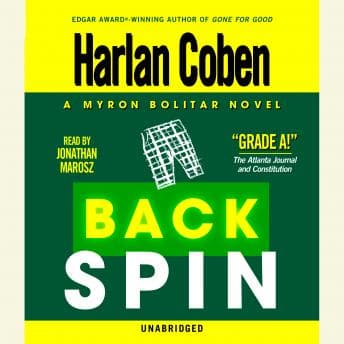
Harlan Coben does something sneaky with Myron Bolitar that I genuinely respect from a character psychology standpoint. On the surface, Myron is your classic wisecracking protagonist — quick mouth, soft heart, charges into danger with the subtlety of a golden retriever chasing a squirrel. But Back Spin peels back something interesting. The protagonist exhibits classic savior complex patterns. He's not just trying to rescue Chad Coldren, the kidnapped teenager — he's compulsively inserting himself into a family system that didn't ask for his emotional involvement. He can't help it. He needs to fix things. And Coben, to his credit, doesn't pretend this is purely heroic. There's ego in it. There's avoidance. Myron solves other people's catastrophes so he doesn't have to sit with his own mess.
I found myself asking: why does Myron really keep pushing when everyone — literally everyone — tells him to back off? The answer isn't just "because he's the protagonist and the plot requires it." It's because standing still terrifies him. That's good character work. That's a writer who understands human nature.
Twenty-Three Years of Rotting Secrets
The dual-timeline structure here is what hooked me. Present day: the U.S. Open, a kidnapping, ransom demands. But layered underneath is this twenty-three-year-old mystery about Jack Coldren's legendary choke — a tournament he should have won and didn't. Coben connects these two timelines with the patience of someone who actually planned the architecture before building the house. The Main Line Philadelphia setting does real work here. These old-money families with their country clubs and their careful silences — this is a fascinating case study in how wealth doesn't protect people from dysfunction, it just gives them prettier rooms to be dysfunctional in. Northern Spy operates in similar territory — a family holding itself together with careful omissions, and the whole thing eventually cracks under the weight of what nobody will say out loud.
The twist at the end genuinely caught me off guard, and I say this as someone who reads mystery novels like clinical case files, actively profiling every character for motive and means. I had the wrong person. I had constructed an entire psychological profile for my suspect and I was wrong. Coben played me by exploiting exactly the assumptions a psychologically-minded reader would make about family dynamics. Respect.
Where it wobbles slightly: some of the secondary characters — particularly in the criminal underworld subplot — feel more like plot devices than people. There's a neo-Nazi angle that Coben uses for shock value but doesn't fully develop the psychology behind. Why are these people the way they are? The research actually shows that extremist recruitment follows predictable patterns, and I wanted more texture there instead of just "here are some scary bad guys." But this is a tight eight-and-a-half-hour thriller, not a character study, so I'm grading on the right curve.
Jonathan Marosz: Mostly Sticking the Landing
Marosz is solid. His Myron has this cocky warmth that works — you can hear the wiseass grin in his delivery, and he shifts convincingly into the heavier emotional scenes. His pacing during the ransom call sequences ratchets up the tension in a way that made me grip my wooden spoon like a weapon.
But — and this is real — there are moments where he stumbles. Not constantly, not egregiously, but enough that I noticed. A word tripped over here, a slightly fumbled transition between characters there. It's the kind of thing that pulls you out of the scene for half a second before the plot yanks you back in. Nothing dealbreaking, but if you're someone who needs pristine narration, this might itch.
Who Gets the Most Out of This
If you're already in the Myron Bolitar series, this is book four and it deepens him in ways that matter. If you're new to Coben, this actually works as an entry point — the kidnapping plot is self-contained enough. Fans of mystery with actual psychological plausibility (looking at you, every thriller that thinks "they were just crazy" counts as motivation) will appreciate Coben's attention to why people implode. Skip it if you need your narrators to be flawless or if complex family secrets spanning decades sound exhausting rather than delicious.
My Diagnosis: Compulsive and Self-Aware
Back Spin knows exactly what it is — a propulsive, witty thriller wrapped around a genuinely painful family story. Coben writes characters who lie to themselves, and he trusts the reader to see through the lies before the big reveal. Psychologically, this tracks. The motivations hold up under scrutiny, which is more than I can say for eighty percent of the thrillers on my shelf. My dal may have been a casualty, but the audiobook earned those extra forty minutes.