
What happens when loyalty becomes a trap?
I was chopping onions for a chana masala at 10 PM—one of those elaborate cooking sessions I do when my brain won't stop churning—and Katharine Lee McEwan's voice was describing Tessa watching her sister pull on a ski mask. The IRA. Her sister. And I stood there, knife suspended, realizing I'd stopped breathing.
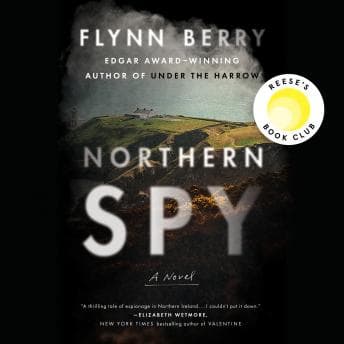
This is a fascinating case study in impossible choices. Flynn Berry has written something that functions less like a thriller and more like a psychological pressure cooker, and I found myself asking: why does Tessa really keep protecting Marian? Is it sisterhood? Guilt? Some desperate need to believe the narrative she's constructed about her family?
The Psychology of Complicity
The protagonist exhibits classic patterns of cognitive dissonance that Berry handles with surprising sophistication. Tessa is a BBC producer, educated, politically aware—she's opposed violence her entire life. And yet. When faced with evidence that her sister has joined the IRA, she doesn't process it rationally. She rationalizes. She minimizes. She constructs alternative explanations.
My therapist would have thoughts about this character.
What makes this compelling is how Berry never lets Tessa off the hook. She's not a passive victim swept up in circumstances. She makes active choices—terrible ones, sometimes—and the novel forces you to sit with that discomfort. The research actually shows that people will compromise their deepest values for family bonds, and Berry seems to understand this instinctively.
But here's where I got frustrated. Marian herself remains frustratingly opaque. We're told about the sisters' bond, their shared history, their political alignment. But I never fully understood what drove Marian to this point. The characterization feels like a sketch when it needed to be a portrait. I spent hours waiting for that psychological reveal, that moment when Marian's internal logic would click into place. It never quite came.
McEwan's Voice and the Weight of Belfast
Katharine Lee McEwan's narration does something crucial: she makes Belfast feel lived-in. One reviewer described feeling "the wind and air of the Irish coastal town," and honestly? That's accurate. Her delivery is measured, almost intimate—like someone telling you a secret they're not sure they should share.
The pacing works for the material. This isn't a book that needs vocal pyrotechnics. It needs authenticity, and McEwan delivers that. The tension Berry builds—those moments when Tessa is walking into situations that could destroy her, her baby, everything—McEwan lets them breathe. She doesn't oversell the danger. She trusts you to feel it.
I will say: if you're expecting distinct character voices, you won't find dramatic differentiation here. It's a more naturalistic approach. Worked for me, but if you need theatrical separation between speakers, adjust your expectations.
Where the Thriller Mechanics Fail the Psychology
Here's my problem. The first 75% of this book is slow. Not contemplative-slow, not building-dread-slow. Just... slow. I kept waiting for the psychological complexity to translate into narrative momentum, and it didn't. The payoff comes late, and when it does, some of the plot mechanics feel—psychologically, this doesn't track.
People don't behave the way some characters behave in the final act. The ending requires you to accept certain coincidences, certain decisions, that strain credibility. I'm not someone who needs perfect realism in thrillers, but when a book has spent hours establishing itself as a grounded psychological study, the sudden pivot to implausibility feels like a betrayal.
Some listeners called out "lazy research" and "plot holes." I won't go that far, but I understand the frustration. Light We Lost has a similar tension between emotional authenticity and plot mechanics that don't quite land. Berry is so good at the interior life of her protagonist that the external plot almost feels like an afterthought.
Who This Works For (And Who Should Skip It)
If you're drawn to character-driven suspense—if you want to understand why people make devastating choices rather than just watch them make them—this will work for you. If you're interested in the contemporary IRA, in the psychological aftermath of the Troubles, in how violence echoes through generations and families, Berry has done her homework.
But if you need propulsive pacing? If you want a thriller that actually thrills throughout? If implausible endings make you throw books (or in this case, headphones)? Maybe borrow this one from the library first.
I finished the last chapter while my chana masala was cooling on the stove, and I sat there for a while, thinking about my own sister. About what I would do. About the lies we tell ourselves for family.
My Diagnosis
Northern Spy is an imperfect but genuinely affecting study in moral compromise. Berry understands human nature—the way we'll twist ourselves into knots to protect the people we love, even when they've become unrecognizable. McEwan's narration serves the material well, creating an atmosphere of creeping dread that compensates somewhat for the pacing issues.
It's not the landmark work some reviews suggest. But it's smart, it's emotionally honest, and it asks questions worth sitting with. Just don't expect it to answer all of them cleanly.