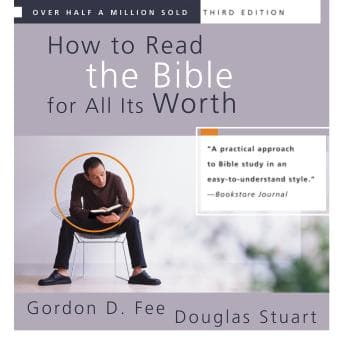

"The Bible wasn't written to us, but it was written for us."
That line hit me somewhere around hour three, walking the lakefront with Denise on a Sunday morning that felt almost sacrilegious for how perfect it was. Twenty years teaching literature, and Fee and Stuart just articulated something I've been fumbling toward in every classroom discussion about context and authorial intent. The audacity of these two scholars - one Old Testament, one New - to write a book that's essentially "How to Close Read Scripture" without ever using the phrase "close reading." My students would appreciate the restraint.
Here's the thing about religious texts that most people get wrong: they treat them either as mystical artifacts beyond human comprehension or as simple instruction manuals with obvious meanings. Fee and Stuart carve out the middle path that any good literature teacher knows is the only honest one. Context matters. Genre matters. The fact that Paul was writing actual letters to actual churches with actual problems - that's not diminishing Scripture, that's taking it seriously.
When Your Grad School Training Finally Pays Off
I spent years learning about genre conventions, historical context, and interpretive frameworks for Chaucer and Milton. Turns out Fee and Stuart are asking the same questions about Revelation that I ask about Paradise Lost: What did this mean to its original audience? What conventions were they working within? What's metaphor, what's literal, and how do we know the difference?
The chapter on Old Testament narratives alone is worth the twelve hours. They make a point I've been trying to hammer into my sophomores for two decades - just because the Bible records something doesn't mean it endorses it. Narrative isn't prescription. The patriarchs were complicated, often morally compromised people, and the text knows it even when we pretend it doesn't. This is basic literary analysis, but apparently revolutionary when applied to Scripture.
The genre-by-genre approach works beautifully in audio format. Epistles get their own treatment. Psalms get theirs. Prophecy (which they're careful to distinguish from "prediction") gets a nuanced breakdown that would make any literary theorist nod approvingly. Each section builds on the last without feeling repetitive.
Henry Arnold: The Professor You Wished You Had
Arnold narrates like he's delivering a particularly engaging lecture to a room of people who actually want to be there. No dramatic flourishes, no affected gravitas - just clear, measured delivery that trusts the material to carry itself. For academic content, this is exactly right. You don't want someone performing Fee and Stuart; you want someone teaching them.
The pacing suits focused listening. I found myself rewinding sections not because Arnold lost me, but because the ideas were dense enough to warrant a second pass. His handling of the Greek and Hebrew terminology is confident without being showy - he pronounces things correctly and moves on, which is all you can ask.
At nearly twelve hours, this isn't casual listening. I tried it once during a faculty meeting (sorry, Principal Martinez, but your budget presentation was competing with hermeneutics) and found myself missing too much. This one demands attention. The prose deserves to be savored, even when - especially when - it's making points that challenge comfortable assumptions.
What the Authors Are Really Saying
Fee and Stuart are making an argument that's simultaneously humble and audacious: that careful, informed reading of Scripture is accessible to everyone, but that "everyone" needs to do some homework first. They're not dumbing anything down. They're inviting readers into the same interpretive process that scholars use, minus the jargon and gatekeeping. That same accessible-but-rigorous approach to faith scholarship shows up in American Religious History, which treats religious movements with the same literary seriousness Fee and Stuart bring to Scripture.
The fourth edition updates are subtle but meaningful. Scripture references appearing only in brackets at sentence ends means the audio flows more naturally - you're hearing ideas develop rather than getting interrupted by chapter-and-verse citations every few seconds. It reads like a book now, which is the point.
If I have a quibble, it's that the recommended resources section doesn't translate perfectly to audio. Arnold reads through commentary recommendations that would be more useful in print where you could mark them. Minor complaint for an otherwise thoughtful production.
Who Should Listen (And Who Should Skip)
This is for anyone who's ever argued about a Bible verse at a dinner table and suspected both sides were missing something. Believers who want to take their text more seriously, skeptics who want to understand what serious biblical scholarship actually looks like, and literature nerds who'll recognize the methodology even if the source material is new to them. Skip it if you want devotional comfort reading or quick answers - Fee and Stuart are allergic to both.
For the Armchair Theologians and the Skeptics Alike
This reminds me of what C.S. Lewis said about reading old books - they correct the blind spots of our own era by introducing us to the blind spots of another. Fee and Stuart do something similar: they help modern readers see how much we import into ancient texts, and how much we miss when we refuse to meet those texts on their own terms.
My students would hate this. I love it.
Not because it's difficult, but because it asks something of the listener. It assumes you're capable of holding complexity, of distinguishing between what a text meant and what it means, of reading generously without reading naively. These are the skills I've been teaching for twenty years, and hearing them applied to Scripture by scholars who clearly love both the text and the task? Worth pausing the faculty meeting for.
Denise asked me what I was listening to so intently. "Hermeneutics," I said. She nodded like that was a perfectly normal Sunday morning activity. Twenty-three years of marriage, and she's learned not to ask follow-up questions about my audiobooks.