
"The boundary is for you, not the child."
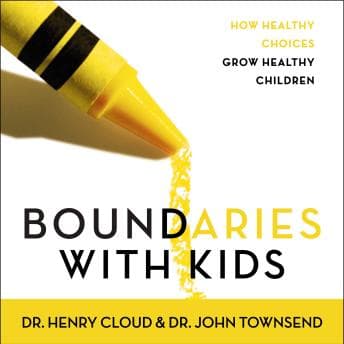
That line hit me somewhere around hour three while I was doing dishes after Jenny had gone to bed. I had to pause, rewind - even at 1.5x (yes, I slowed down for this one) - because Cloud and Townsend just casually dropped something my parents understood in their bones but couldn't articulate in English, let alone in therapeutic language.
What My Parents Knew Before the Clinical Psychologists Did
Here's the thing about Boundaries with Kids that both impressed and frustrated me: about 60% of this book is codifying what immigrant parents have been doing forever. You set expectations. You enforce consequences. You don't rescue your kid from the result of their own choices. My mom didn't need a Gold Medallion award-winning psychologist to tell her that if I didn't finish my homework, I didn't get to play basketball. She just did it. No guilt. No second-guessing.
But - and this is where Cloud and Townsend earn their keep - the other 40% is genuinely useful framework for understanding why boundaries work and how to implement them without becoming either a drill sergeant or a pushover. Their six-step process for building boundaries into daily family life is practical. The distinction between proactive boundaries (setting up expectations before the situation arises) and reactive boundaries (responding after a violation) is simple but I've watched startup founders - and parents - fail at this exact distinction. Plan the system. Don't just react to fires.
The biblical framing is present throughout. If that's your lane, great - it'll reinforce the message. If it's not, the psychological principles underneath still hold. I've seen the same ideas in secular organizational behavior research. Cloud and Townsend just anchor it in Proverbs instead of Harvard Business Review.
The 7-Hour Problem (There's Always a 7-Hour Problem)
At 7 hours and 23 minutes, this book commits the classic business-book sin: it could've been 4 hours. The early chapters spend a lot of time establishing what boundaries are and why they matter, which - if you've read the original Boundaries - is ground you've already covered. Skip to the chapters on specific implementation strategies if you're coming in from the parent book. The payoff is in the practical scenarios, not the theoretical setup.
There's repetition. Concepts get restated in slightly different language across chapters. At 2.0x this is mildly annoying. At 1.0x it'd be genuinely painful. I landed on 1.5x as the sweet spot because some of the case study scenarios actually benefit from slower processing - you're trying to map them onto your own family dynamics in real time, and your brain needs a beat.
What surprised me: the section on how parents themselves need boundaries - how your own unresolved issues become your kid's inherited dysfunction. That's not new psychology, but hearing it laid out specifically in a parenting context made me think about three different clients whose leadership problems trace straight back to this. Boundaries aren't just a parenting book. They're a management book wearing a diaper bag. Grant Cardone would probably hate the measured tone of this book, but The 10X Rule is actually built on the same core premise—that the system you install in yourself determines outcomes, not the individual moments of reaction.
Henry O. Arnold Does the Job (But You'll Wish Cloud Was Reading)
Henry O. Arnold has a pleasant, measured voice. He reads at a pace that lets you absorb the concepts, which matters for a book that's essentially a parenting curriculum. No complaints about clarity or pronunciation.
But here's the honest truth: when you've heard Henry Cloud narrate his own work, there's a warmth and clinical authority that a hired narrator just can't replicate. Arnold is competent. Cloud is convincing. It's the difference between a consultant presenting someone else's strategy deck versus the person who built it. You lose the personal conviction. One listener nailed it - they said they preferred Cloud's voice on other co-authored books, and I get it. Arnold doesn't hurt the experience, but he doesn't elevate it either.
Who Gets the ROI Here
Parents of kids roughly ages 4-12 will get the most value. The scenarios skew toward that range. If your kids are already teenagers, some of this will feel like advice that arrived a few years late to the meeting. New parents might find it too abstract - you need to be in the trenches to map the frameworks to real situations.
If you're not religious, don't let the biblical framework scare you off - the psychology is sound. If you ARE religious, the scripture integration will feel natural rather than forced.
And honestly? If you manage people, there's a stealth leadership book hiding in here. Boundaries are boundaries whether you're dealing with a six-year-old who won't clean their room or a VP who won't hit their quarterly targets.
The Consulting Fee
Bottom line: The key takeaway is worth the listen. The other 7 hours? Not so much - maybe 4.5 hours of them. Cloud and Townsend built a solid parenting framework that holds up against real-world pressure testing. My parents would've rolled their eyes at some of it and nodded quietly at the rest. That's about as high a compliment as I can give a self-help book. At 1.5x speed, with selective skipping of the early theory chapters, this is a useful addition to any parent's toolkit. Not essential. But useful.