
Let me cut to the chase: I didn't expect to spend nearly ten hours on American religious history. Not my usual lane. But I had a three-day consulting gig in Phoenix, and that's a lot of I-10 windshield time. Figured I'd learn something.
Turns out Professor Huff delivered a better briefing than most intelligence officers I've worked with.
The Mission Brief
Here's what surprised me - this isn't some dry academic lecture where you're fighting to stay awake at mile marker 200. Huff actually brings energy to this. And look, I've sat through countless military briefings where the presenter clearly didn't want to be there. This guy wants to be there. He's genuinely interested in his subject, and that makes all the difference when you're staring at endless desert highway.
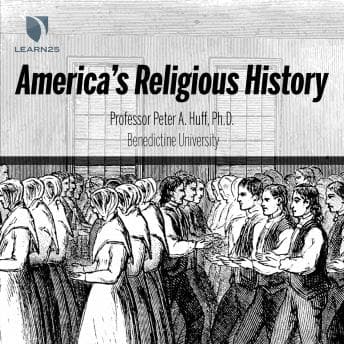
The structure is tight. Military-tight, honestly. He starts with indigenous traditions before European contact, moves through colonial settlements, hits the Great Awakenings, covers the weird and wonderful movements that sprouted up in the 19th century (Shakers, Mormons, you name it), and brings it all the way to modern religious pluralism. It's chronological, logical, and you always know where you are in the timeline.
What I appreciated - and this is coming from someone who's seen how religion operates in combat zones, in small-town America, and everywhere in between - is that Huff stays balanced. He's not pushing an agenda. He presents Catholics, Protestants, Jews, Muslims, Buddhists, and everyone else with the same academic respect. That's harder than it sounds. Most people can't talk about religion for ten minutes without revealing their bias. Huff does it for nearly ten hours.
Where It Gets Interesting
I've seen this scenario play out in real life - you can't understand a country without understanding what its people believe. Promised Land explores that same truth through Obama's political journey—how faith shapes American identity from the ground up. My deployments taught me that the hard way. Huff makes the same point about America. You want to understand why certain political movements exist? Why certain regions vote the way they do? Why some communities stick together through anything? Religion runs through all of it.
The sections on new religious movements were fascinating. I knew the basics about Mormonism and the Shakers, but Huff digs into the how and why these movements emerged when they did. The social conditions, the charismatic leaders, the promises they made. It's almost like studying insurgent movements - same human psychology at work, just different outcomes. That pattern recognition—seeing how groups form around compelling narratives—is something Thank You for My Service captures brilliantly in the veteran community context.
Now, I should be honest about something. This is a lecture series. Professor Huff is narrating his own material, and he sounds like a professor. A good one, an engaging one, but still a professor. If you're expecting some dramatic narrator doing character voices or building tension like a thriller - wrong product. This is an audio course. You're in the classroom, not the cinema.
That said, the author clearly did their homework. Every claim is backed up, every movement gets context, and he doesn't oversimplify complex theological debates. He respects his audience enough to assume we can handle the details.
SITREP: Worth Your Time?
I listened at 1.25x (life's too short, remember?) and it worked perfectly. Huff's delivery is clear enough that speeding it up doesn't lose anything. Clean audio throughout - no weird production issues, no background noise. Professional quality.
Ranger slept through most of it, which is actually a good sign. He gets restless when I'm listening to something that's frustrating me. This one? Smooth sailing.
Here's who should grab this: anyone who wants to understand America better. Seriously. Whether you're a student, a professional who deals with diverse populations, or just someone who's wondered why there's a different church on every corner in some towns - this fills in gaps you didn't know you had. It's also solid for anyone interested in how religious movements form, grow, and either fade or become mainstream.
Who should skip it? If you want entertainment, look elsewhere. If you can't handle academic content, even well-delivered academic content, this isn't your mission. And if you're looking for a deep dive into any single tradition - this covers too much ground for that. It's broad, not deep.
Mission accomplished, Professor Huff. You made me smarter on a long drive. That's about the highest compliment I can give.