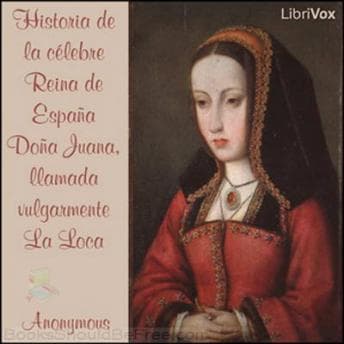

"Llamada vulgarmente La Loca." That word — vulgarmente — hit me about three minutes in, and I couldn't shake it. Commonly. Popularly. Vulgarly. The anonymous author of this 1848 manuscript chose that word with full knowledge of what it carried. Juana wasn't just nicknamed "the Mad" — she was branded by it, by common people, by historians, by her own family. And here's this unknown writer, 350 years after her death, still wrestling with whether the label fit.
I was up past midnight — papers half-graded, red pen dried out, Denise already asleep — when I put this on. Sixty-five minutes. That's it. Shorter than most of my podcast episodes on Faulkner. But sometimes the shortest texts carry the heaviest freight.
A Queen Buried Under Her Own Epithet
Let me give you the context, because this one needs it. Juana was the daughter of Ferdinand and Isabella — yes, those Ferdinand and Isabella, the ones who funded Columbus, unified Spain, expelled the Moors. She was heir to one of the most powerful thrones in European history. And what does history remember her for? Allegedly going mad over the death of her husband, Philip the Handsome. Refusing to let his coffin out of her sight. Wandering the countryside with his corpse.
This anonymous 1848 biography tries to sort through those stories with the tools available to a mid-nineteenth-century Spanish writer — which is to say, limited archival access, plenty of political agenda, and a Romantic-era fascination with tragic women. The text reads like what it is: a period document that tells you as much about 1848 Spain as it does about fifteenth-century Castile. As a teacher, that's the kind of layered reading I live for. You're not just learning about Juana — you're learning about how Spain wanted to remember Juana.
The prose is formal, structured, a product of its era. If you've read nineteenth-century Spanish historiography — or even the kind of biographical essays Carlyle was writing in English around the same time — you'll recognize the rhythm. Long, declarative sentences. A tone that oscillates between sympathy and clinical detachment. The author clearly feels something for Juana but can't quite decide if she was a victim of political manipulation or genuinely unwell. That ambiguity, honestly, is the most honest thing about the whole project.
What You're Actually Getting in 65 Minutes
Let me be straight with you: this is a public domain recording. The narrator is uncredited. The production is bare — no music, no sound design, just voice and text. And at just over an hour, it's less a full biography and more a biographical sketch, a pamphlet-length treatment of a life that deserves volumes.
The narration is functional. Clean enough. The Spanish is read clearly and at a measured pace, which helps if you're listening in a second language (my Spanish is passable, thanks to twenty years in Chicago public schools and a lot of parent-teacher conferences). But there's no interpretive performance here — no shift in register when the text moves from political maneuvering to personal tragedy, no vocal distinction between the author's analytical passages and the more emotional sections about Juana's confinement at Tordesillas, where she spent nearly fifty years locked away. The narrator reads. They don't inhabit.
And that's a loss, because the material practically begs for it. When the text describes Juana's alleged obsession with Philip's body — the midnight processions, the refusal to bury him — a narrator who understood that pause is punctuation could have made those scenes devastating. Instead, they pass at the same steady tempo as the genealogical details. Everything lands at the same emotional altitude.
Who This Is Really For
If you're a student of Spanish history, or if you're curious about how the "Juana la Loca" legend was constructed and perpetuated, this is a fascinating primary source. It's the historiographical equivalent of reading a Victorian biography of Mary Queen of Scots — the subject matters, but the framing matters just as much. My students would hate this. I love it. That same preoccupation with how powerful women get framed by the people around them runs through Dressmakers of Auschwitz too — different century, different horror, same pattern of women's inner lives getting flattened into whatever story the men in charge found most convenient.
If you're looking for a riveting, dramatic retelling of Juana's life — the kind of thing that makes you miss your highway exit — this isn't it. At 65 minutes, it barely scratches the surface. The political chess between Ferdinand, Philip, and later Charles V gets condensed to the point of confusion if you don't already know the players.
But here's what stayed with me, grading those papers at 1 AM: the quiet tragedy of a woman whose inner life we will never access, because everyone around her had a political reason to call her mad. The anonymous author sensed this in 1848. We're still sensing it now.
The Red Pen Stays Down
This is a historical curiosity more than a great audiobook experience. Worth your time if you care about Juana, about Spanish historiography, about how we construct the stories of powerful women who were inconvenient to powerful men. The production won't wow you. The prose deserves to be savored for what it reveals about its own era. And at 65 minutes, the commitment is smaller than a faculty meeting — and considerably more interesting. (Sorry, Principal Martinez.)





![Steve Jobs [unabridged audiobook] audiobook cover](/_next/image?url=https%3A%2F%2Fcovers.audiobooks.com%2Fimages%2Fcovers%2Ffull%2F9788499923406.jpg&w=1920&q=75)