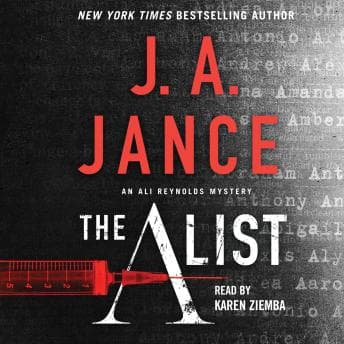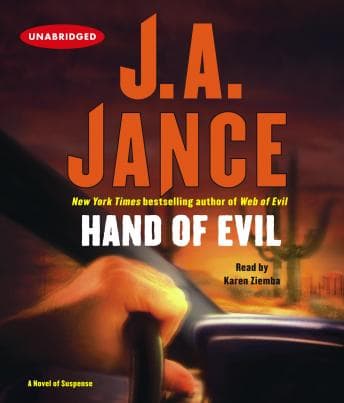

I was driving through the back roads between my town and the coast last Saturday — one of those gray Oregon afternoons where the fog sits so low you can't tell where the road ends and the treeline begins — when the opening of this book made me white-knuckle the steering wheel. A man dragged alongside a speeding car by his trapped hand. Coyotes circling the remains but refusing to approach. That's not a cozy mystery opener. That's a declaration of intent.
When the Coyotes Won't Come Close
J.A. Jance's third Ali Reynolds book starts with visceral violence and then does something interesting: it pulls way back. Ali is grieving the collapse of her broadcasting career and a marriage torpedoed by infidelity, and Jance spends real time sitting in that grief before the thriller machinery kicks in. That same patience with character grief shows up in her Brady series too, especially in Remains of Innocence, where the personal stakes hit just as hard. A missing teenager. A mysterious summons from an old scholarship benefactor. Killers zigzagging across the Southwest. The pieces feel disconnected until suddenly they don't, and the connective tissue — a generational secret involving child molestation (content warning: this is central to the plot, not peripheral) — gives the whole thing a weight that a lot of series mysteries at this level don't bother earning.
Here's the thing, though. This is book three, and it knows it's book three. Ali's emotional landscape assumes you've walked with her through two previous novels. If you haven't, her grief reads more like setup than payoff. I found myself caring about her by around hour four, but I shouldn't have had to work that hard.
The mystery structure itself is solid. Jance juggles multiple threads — Ali's personal losses, the disappearance, the Southwest killing spree — and the way they converge through "two very different women with the same horrifying secret" is the book's real strength. She's not exploiting trauma for plot fuel. She's examining how it echoes across generations. This understands that horror isn't about gore — it's about dread. And even though this isn't technically horror, it borrows from the playbook. The slow reveal. The creeping wrongness. The sense that something terrible happened long before page one and is still radiating outward.
That said, the resolution wraps a little too neatly for my taste. After ten hours of careful, layered construction, the ending clips along at a pace that doesn't match the patience of everything before it. Satisfying in the "case closed" sense. Not in the "I need to sit with this" sense.
Karen Ziemba at 1.2x (Without Anyone Hitting 1.2x)
Ziemba's narration is a split decision, and I get why the listener base is divided. She's genuinely skilled at character differentiation — each person in the story gets enough vocal identity that you can track conversations without mental gymnastics, which matters when Jance is juggling this many threads across multiple states. Her Ali is warm without being saccharine. And she catches the humor in the dialogue, which is real — Jance writes genuinely funny banter when she wants to, and Ziemba doesn't steamroll it.
But there's a pacing problem that kept pulling me out. Certain passages feel rushed, like the narration is trying to beat a clock that doesn't exist. Suspense needs silence. It needs the pause between the knock on the door and the hand on the knob. When those beats get compressed, you lose the dread — and in a book that opens with a man dragged to his death, dread should be doing the heavy lifting.
It's not enough to ruin the experience. It is enough to notice. And noticing is its own kind of problem in an audiobook. I had a similar issue with Cold Betrayal, though Ziemba's character work there gets more room to breathe.
For the Shelf or the Return Cart?
If you're already invested in the Ali Reynolds series, this is a strong entry — possibly stronger than the first two. The subject matter is handled with gravity, the mystery rewards close attention, and Ziemba's narration, pacing quirks aside, carries the emotional core where it counts.
If you're new to Jance? Start at the beginning. This book earns its emotional beats through accumulated history, and jumping in here shortchanges both you and the character.
My podcast listeners who live in the mystery-thriller space will find plenty to appreciate. It's smart, it's dark where it needs to be, and it doesn't insult your intelligence. If you enjoy that kind of unflinching darkness served with intelligence, No Name might be another one to keep you up at night. But the narration's tendency to rush the quiet moments and the series-dependent emotional weight keep it from being the audiobook I'd press into someone's hands unprompted.
Shirley (my cat) slept through the entire drive home. She has no taste.