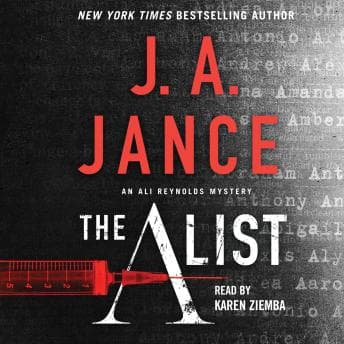

Okay, I need to rant for a second. Why do thriller authors think that when someone flatlines, you shock them with a defibrillator? You don't. That's not how it works. Asystole gets CPR and epinephrine, not electricity. So when a medical thriller actually gets the hospital scenes right - the chaos, the hierarchy, the way nurses are the ones who actually catch the details that save lives - I notice. And J.A. Jance? She did her homework.
I finished this one on my drive home after a brutal twelve-hour shift. Three codes, two traumas, and a patient who insisted his chest pain was "just gas" (it was not gas, sir, it was an MI). By the time I hit the freeway, I needed something that would keep my brain engaged enough to stay awake but not so complex I'd miss my exit. The A List hit that sweet spot perfectly.
The Revenge Plot Actually Makes Medical Sense
Here's what got me: Dr. Edward Gilchrist isn't your typical mustache-twirling villain. He's a disgraced physician with a literal hit list tattooed on his arm - the initials of everyone who put him away. And the backstory involves a kidney transplant scandal that spiraled into murder. As someone who's actually worked with transplant teams, the medical mismanagement angle felt uncomfortably plausible. Organ allocation is already ethically fraught. Add a god-complex surgeon who thinks he's above the rules? Yeah, I've met that guy. Well, not the murderer part. But the attitude? Absolutely.
The pacing is relentless. Jance doesn't waste time with setup - you're dropped into the threat immediately, and Ali Reynolds' cybersecurity team starts working the case while bodies are still warm. That same immediate-threat energy drives Dead Men's Money, though without the tech angle. Ziemba's narration keeps that urgency tight, her matter-of-fact delivery matching the procedural elements without sacrificing tension.
Frigg the AI Stole the Show (And I'm Not Even Mad)
Look, I was skeptical about an AI character in a mystery series. But Frigg - the artificial intelligence that assists Ali's team - is genuinely one of the more interesting elements. Karen Ziemba gives her this eerie, almost-human tone that sits right in the uncanny valley. Unsettling in the best way. When Frigg processes information or makes connections the humans miss, there's this slight shift in Ziemba's delivery that signals "this isn't a person thinking." Subtle, but effective.
The female character differentiation is excellent across the board. Ali sounds different from her mother-in-law, who sounds different from the detective, who sounds different from Frigg. The male voices are serviceable - not Ziemba's strongest suit, but she distinguishes the resistant police detective from the archbishop well enough that I never lost track of who was speaking.
Where It Dragged (Because Nothing's Perfect)
I'll be honest - there are stretches where the procedural details pile up. Jance includes a lot of the investigative legwork, and while I appreciate accuracy, some of those passages had me reaching for the speed controls. I bumped it to 1.25x during the middle section and didn't feel like I was missing anything. The extraneous details that some listeners complain about? They're there. But for me, they added authenticity rather than tedium.
The real tension comes from knowing Gilchrist is crossing names off his list while Ali's team scrambles to connect the dots. That countdown structure works beautifully in audio - you feel the clock ticking.
Who Should Queue This Up (And Who Should Skip)
If you're already following the Ali Reynolds series, this is a solid entry. If you're new, you can jump in here without too much confusion, though you'll miss some relationship context. Perfect for commutes, focused listening, or - like me - that post-shift decompression when you need something engaging but not emotionally devastating.
Skip it if you want literary fiction or character studies. This is plot-driven suspense with competent professionals doing competent things. Sometimes that's exactly what you need. Dog on It scratches that same itch - solid procedural work without the emotional devastation.
Clocking Out
Carlos asked why I was still sitting in the driveway when I got home. I told him I had twenty minutes left and wasn't coming inside until I knew whether Ali survived the list. He brought me coffee. That's love.
Ziemba's crisp pacing and Jance's methodical plotting make this a reliable listen. Not groundbreaking, but satisfying in the way a well-executed procedure is satisfying. And when the medical details are right? That's just bonus points.
My mom would love this. She's still mad I'm not a doctor, but she'd appreciate a thriller where the doctor is the villain.