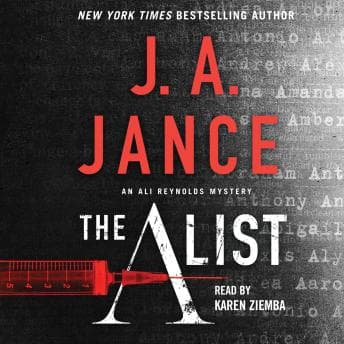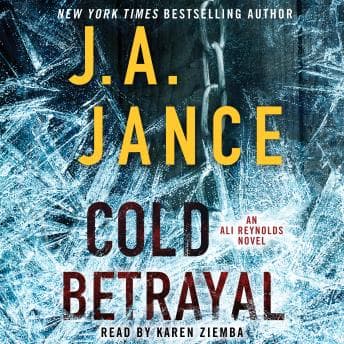

Look, I've got a problem with polygamous cults in fiction. Not because the subject matter bothers me - I've seen worse in real life. My problem is that authors too often treat cults like a plot device, a spooky backdrop, and never actually get into the mechanics of how these groups operate, how they keep people trapped, how they enforce silence. J.A. Jance doesn't make that mistake here, and that's what kept me listening through the back half of this book even when other parts were testing my patience.
The Nun With the Taser Is the Best Character You Didn't Know You Needed
I was up late finishing a threat assessment report for a client - the kind of tedious document work that makes you miss getting shot at, just a little - and I had this running in my earbuds. Sister Anselm is the reason I stayed locked in. A Taser-carrying nun who serves as a patient advocate? That's not a character you forget. Her bedside manner with the young runaway from The Family hits different when you realize Jance is drawing on real dynamics from actual polygamous communities in the Southwest. The way the cult tracks its members, the way they dismiss women who try to leave as mentally unstable - I've seen corporate security operations with less sophisticated suppression tactics. That kind of institutional pressure on individuals who know too much is something Enemy gets right too, though Reacher's method of cracking that silence is considerably less patient than a nun with a Taser. The author clearly did their homework on how isolated communities maintain control, and Sister Anselm's quiet determination to crack through that wall of silence carries real emotional weight.
But here's where it gets uneven. We've got a second plotline running - Ali Reynolds trying to protect an elderly woman named Betsy who's being targeted by someone turning on her gas burners at night, breaking into her house, and the local cops are writing it off as dementia. Solid premise. The problem is that these two storylines don't really earn their convergence. They feel like two separate books duct-taped together for about seven of the eleven hours, and when the threads finally connect, it feels more convenient than inevitable.
Two Storylines Walk Into a Bar - Only One Buys a Round
This is where it lost me, or at least where my attention drifted. The Ali Reynolds domestic scenes - the married life, the daughter-in-law drama - read like filler between the genuinely tense cult sequences. Ali's a competent protagonist, don't get me wrong. She's resourceful, she's connected, she gets things done. But compared to Sister Anselm walking into hostile territory armed with nothing but a rosary and righteous anger (and that Taser), Ali's corporate-adjacent problem-solving feels like watching someone file an insurance claim during a firefight.
Jance is a pro, though. She's been doing this for decades across multiple series, and you can feel that experience in how cleanly she moves between perspectives and keeps the clock ticking. The pacing is steady - not breakneck, but steady. Think of it as a patrol pace rather than a sprint. Around the midpoint, when the cult's enforcement arm starts closing in on the runaway girl, things pick up considerably. That's when I bumped my speed down from 1.25x to normal because I didn't want to miss the details.
Karen Ziemba Plays It Quiet - And It Works
Karen Ziemba's narration is understated in a way I wasn't sure about at first. She doesn't do big vocal swings between characters. Her approach to the Western characters, the Minnesotans, even the brief Native American voices - it's all subtle tone shifts rather than full accent work. I'll be honest, in the first hour I wanted more differentiation. But by hour three, I realized her low-key delivery actually serves the material. These are people who don't shout. The cult members speak in careful, measured tones because they've been trained to. The elderly Betsy is dignified and frustrated. Ziemba captures the emotional undercurrent without overselling it. The AudioFile Earphones Award makes sense here - this is narration that respects its audience enough not to perform AT you.
That said, if you need a narrator who gives every character a distinct, unmistakable voice, this isn't your listen. It's more like overhearing real conversations than watching a play.
Who Should Saddle Up - And Who Should Ride On
If you're already invested in the Ali Reynolds series (this is book 10), you're going to listen regardless, and you'll find plenty to enjoy. If you're new to Jance, this isn't a bad entry point, but know that the cult storyline is the engine and the domestic thriller subplot is the caboose. Fans of authors like C.J. Box who like their mysteries grounded in specific Western geography and community dynamics will feel at home. If you need constant action and explosions - and Linda, if you're reading this, I do NOT only like books where things explode - this isn't that. It's a slow burn with genuine stakes.
Ranger fell asleep during the Betsy subplot but perked up every time Sister Anselm came back. I trust his judgment.
Mission Debrief
Worth your time? Here's the debrief: Cold Betrayal is a solid procedural thriller carried by one outstanding character and a subject matter that Jance handles with real care. The dual-storyline structure holds it back from being great, but Sister Anselm's half of the book is genuinely good stuff. Ziemba's narration grows on you like a good pair of boots - not flashy, but reliable and right for the terrain. Good listen for a long drive or a quiet evening. Not essential, but satisfying.