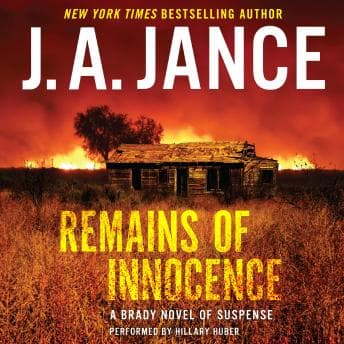

People kept telling me this was one of the strongest entries in the Joanna Brady series. After twelve hours with Sheriff Brady and a German Shepherd who's now thoroughly confused why I kept muttering "check the cavern" at my steering wheel, I can confirm—they weren't wrong.
I came into this one skeptical. Been burned before by series books that phone it in around entry fifteen or sixteen. Jance doesn't do that here. Two separate investigations running parallel: a woman in Massachusetts discovering a fortune in cash hidden among her dying mother's hoarder stacks, and a body at the bottom of a limestone cavern near Bisbee. The question of whether they connect kept me engaged through three client meetings and one particularly boring stakeout. (Don't ask.)
The Dual-Front Operation
Here's what Jance gets right that a lot of thriller writers fumble: she understands that real investigations are messy. You don't get clean answers. The Liza Machett storyline—daughter finding hundred dollar bills stuffed in her mother's book collection—sounds almost cozy until it isn't. The money has history, and that history has teeth.
Meanwhile, Joanna's dealing with a dead family friend in that cavern. This one hits different because it's personal. Jance handles the professional-versus-personal tension well. Joanna can't just be a sheriff here; she's also grieving, also suspicious, also trying to keep her objectivity when everything in her wants to assume the best about someone she trusted.
The convergence of these cases takes its time. Some listeners apparently found the finale "overly convoluted." I'd push back on that—it's complicated, sure, but so is actual casework. 5th Horseman had that same layered complexity, multiple threads that required patience to see how they connected. Nothing wraps up in a neat bow because life doesn't work that way. If you want simple, go watch a procedural where everything's solved in forty-two minutes. Even Cupcakes with a Side of Murder, which sounds lighter on the surface, understood that real investigations take time to unfold properly.
Hillary Huber Knows Her AO
Huber's been narrating this series long enough that she owns these characters. Her Joanna Brady walks that line between steely professionalism and genuine warmth—you hear both simultaneously. The subtle tone shifts between characters won't blow your mind, but they're consistent and clear. I never lost track of who was speaking, which matters more than flashy vocal gymnastics.
What I appreciated most: Huber doesn't oversell the suspense. She trusts the material. When tension builds, she lets the words do the work instead of going melodramatic. That restraint is harder than it sounds, and it kept me from rolling my eyes during the climactic sequences.
No pronunciation issues that I caught, and I'm the guy who gets irritated when narrators call a "magazine" a "clip." The pacing is steady—not slow, not rushed. At 1.25x, it hit my sweet spot perfectly.
Where It Lost Me (Briefly)
The middle section drags slightly. Around hour six or seven, we're getting a lot of setup and not enough payoff. Jance is clearly laying groundwork for the convergence, but there's a stretch where I found myself checking how much time remained. Not a dealbreaker, but worth mentioning.
Also—and this is personal—I wanted more from the cavern investigation. The Arizona landscape gets some attention, but I've spent time in that desert. Cochise County has a specific feel, a specific heat, a specific way the light hits limestone. Jance touches on it, but I wanted to feel it more.
Who Should Gear Up (And Who Should Stand Down)
If you're already invested in the Joanna Brady series, this is a strong entry. Don't skip it. If you're new to Jance, you could start here—there's enough context provided—but you'd be better served starting earlier to understand why certain relationships matter.
This is a focused listen. The dual-timeline structure requires attention. Don't try this one while doing anything that requires brain power. Windshield time? Perfect. Background while cooking? You'll miss something important.
Skip if you need fast action and explosions. This is investigation-heavy, character-driven. The body count is low. The tension is psychological, not kinetic.
Mission Debrief
Solid procedural thriller with a narrator who's clearly done her homework. The dual investigation structure pays off if you're patient enough to let it develop. Some middle-section pacing issues, but nothing that derails the operation.
Ranger approved this one. Though he did fall asleep around hour eight. Can't blame him—that's the slow stretch I mentioned.
If you like your mysteries methodical and your sheriffs competent, Jance delivers. Not flashy, but effective. Like a well-planned op that gets the job done without unnecessary casualties.