I was standing in my kitchen at 10 PM on a Tuesday, browning onions for a chana masala I had no business making that late, when Natalie found the newspaper clippings in Mark's drawer. And I just — stopped stirring. Because I knew exactly where this was going, psychologically speaking, and I needed to see if Maggie James knew too.
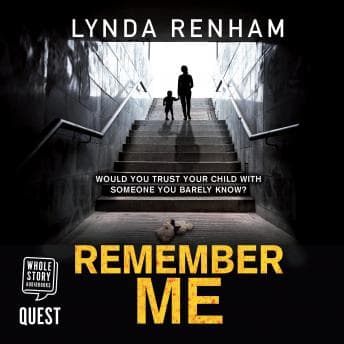
Here's the premise: Mark Slater was convicted as a child for the murder of two-year-old Abby Morgan. He served his time, got a new identity, built a quiet life. Then his girlfriend Natalie finds out. That's the hook. But the real question — the one that kept me burning my onions — is whether James can make you feel something for a man convicted of killing a toddler. And honestly? She gets closer than she has any right to.
The Psychology of Children Who Kill (And Whether Fiction Gets It Right)
I found myself asking: why does Mark really stay tethered to Adam Campbell, the co-defendant who was clearly the dominant, violent force in the original crime? The protagonist exhibits classic patterns of coercive control and trauma bonding that persist well into adulthood. James understands something that a lot of thriller writers miss — that the psychological prison outlasts the physical one. Mark's inability to fully sever ties with Adam isn't just a plot device. It maps onto real dynamics you see in cases like the Bulger murder, where the power differential between child perpetrators becomes its own kind of pathology.
What makes this character compelling is that Mark's guilt isn't clean. He wasn't just an innocent bystander. He wasn't just following orders. He exists in that gray space that makes people deeply uncomfortable, and James parks the entire novel there. She doesn't let you off the hook with a simple redemption arc, and I respect that. Close to Home attempts something similar with moral ambiguity in a small community and it's worth reading alongside this one to see how differently two authors can handle the question of collective guilt.
But — and this is where my enthusiasm hits a wall — some of the secondary characters don't get the same psychological rigor. Natalie's reaction to discovering Mark's past felt a bit too neat in places. The research actually shows that partners of people with hidden criminal histories go through something closer to betrayal trauma, with cycles of disbelief, hypervigilance, and identity disruption. Natalie processes things a little too linearly for my taste. She's shocked, she's angry, she investigates — but where's the part where she questions her own judgment? Where's the shame spiral? Psychologically, that doesn't fully track for me.
Rosie Akerman and the Cell Phone Problem
Okay, let's talk about the audio situation, because it's a real issue. Rosie Akerman narrates, and based on what I could gather, listeners have noted that the recording quality sounds like it was captured on a cell phone. I noticed it too — there's a thinness to the audio, a lack of depth that makes nine hours feel more taxing than they should. It's the kind of production issue that sits just below conscious awareness for a while and then suddenly you realize your jaw is clenched and you've been straining to listen without knowing it.
Akerman herself isn't bad. I didn't find her performance distracting in the way that some narrators can be when they're miscast. But the recording quality undercuts whatever she's doing with the material. It's like watching a decent actor perform in a high school auditorium — the venue is working against them. I couldn't find specifics on how she differentiates between Mark and Adam vocally, which is a shame because that dynamic is the psychological spine of the entire book. A narrator who could vocally encode the power imbalance between those two characters would elevate this story significantly.
At nine hours, the pacing is reasonable for the subject matter. This isn't a breakneck thriller — it's a slow unraveling, which suits the psychological weight of child-on-child violence. But the audio quality issue means I'd recommend bumping speed to 1.25x. It actually helped me push past some of the production muddiness.
Who This Hits Different For
If you're interested in the psychology of juvenile offenders, in questions of moral culpability and whether children can truly be held responsible for acts of violence — this is a fascinating case study in fiction wrestling with those questions. James clearly did her homework on the emotional landscape even if the execution is uneven.
Skip this if you need pristine audio production or if the subject matter (child murder, described in some detail) is too much. Content warnings are warranted here — this is dark material handled with seriousness but not always with enough distance.
And honestly? If you're a parent, maybe don't listen to this one while cooking alone in your kitchen at night. My chana masala was unsalvageable and my mood wasn't much better.
My Therapist Would Have Thoughts About This Book (And So Do I)
James wrote something that's psychologically ambitious and mostly lands. The central question — can someone who participated in an unforgivable act as a child deserve a second life? — is one worth sitting with. She doesn't answer it cleanly, which is the right call. But the audio production genuinely detracts from the experience, and some character work needed another pass. It's a book I'm glad I listened to and probably won't revisit, which is its own kind of review.