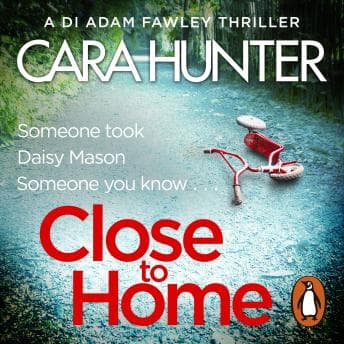

I was standing in my kitchen at 10 PM, attempting my mother's dal makhani recipe for the third time this month (she'd be horrified by my impatience with the slow-cooking process), when I realized I'd been so absorbed in this audiobook that I'd let the lentils burn. Again. An eight-year-old girl vanishes from a garden party in Oxford, and DI Adam Fawley has to navigate the particular horror of a missing child case where everyone's a suspect - including the parents.
The thing is, I should have seen every twist coming. I study human behavior for a living. I've read enough case studies on family dynamics under crisis to fill a small library. But Cara Hunter got me. Multiple times.
How Guilt and Trauma Wear the Same Mask
What makes this character study compelling is Hunter's understanding of how guilt manifests differently in different personality types. The parents - both of them - exhibit classic defensive behaviors that any investigator would flag as suspicious. But here's where the author understands human nature: trauma responses look a lot like guilt responses. The father's emotional shutdown, the mother's obsessive need to control the narrative - these are textbook stress reactions that also happen to be exactly what you'd expect from perpetrators.
Fawley himself is carrying something heavy. His own backstory unfolds in fragments, and I found myself asking: why does this particular case hit him so differently? The research shows that investigators who've experienced personal loss either become more effective or more compromised. The book doesn't answer which category Fawley falls into. Not definitively. And that ambiguity feels honest.
The 37-Voice Experiment
Okay, let's talk about the elephant in the room - this audiobook features 37 different speakers, including cameo voices and the author herself. That's... ambitious. Emma Cunniffe handles the third-person narration with this steady, almost clinical delivery that works perfectly for a procedural. Lee Ingleby's Fawley has this weary quality, like a man who's seen too much but hasn't quite figured out how to stop caring.
The multi-voice approach creates something interesting: you're essentially listening to a documentary reconstruction rather than a traditional novel. The social media insertions - tweets, newspaper clips, online comments - are read by different voices, which makes them feel like evidence. Like you're sitting in the incident room, sifting through the noise.
But (and my therapist would have thoughts about this character trait of mine) I have to be honest: the format doesn't always work. Some listeners found the social media sections disruptive, and I get it. When you're deep in the investigation and suddenly there's a full page of Twitter commentary being read aloud, it breaks the tension. Psychologically, this doesn't track with how we actually process information during crisis. We don't stop to read the comments section. We obsess. We spiral. The format occasionally fights against the emotional reality it's trying to create.
When the Ending Stretches
I'm going to tread carefully here because spoilers are the enemy. But some listeners felt the ending stretched credulity. Here's my take: the final twist works if you accept that people are capable of compartmentalization that borders on the pathological. The research shows that humans can maintain contradictory beliefs and behaviors with remarkable consistency - we're better at lying to ourselves than to anyone else. Firekeeper's Daughter explores that same psychological territory - characters holding impossible truths in their heads while functioning normally.
Did I buy it completely? Mostly. The mechanism of the twist made psychological sense. The execution felt slightly rushed, like Hunter had this brilliant idea and didn't quite have the page count to sell it fully. But that last revelation - I'll admit I said "oh" out loud, alone in my kitchen, burnt dal forgotten.
Who Should Listen (And Who Should Run)
This is not a background listen. The narrative style is heavy on description, light on dialogue, which means your attention needs to be present. I'd recommend this for focused listening - long walks, solo cooking sessions, those nights when sleep isn't coming anyway.
If you need constant action to stay engaged, this might frustrate you. Unkindness of Ravens has a similar pacing - it's all about the slow build of dread rather than adrenaline spikes. If you're someone who picks apart character motivations and enjoys watching an investigation unfold through multiple unreliable perspectives, you'll find a lot to chew on here.
Parents of young children: content warning for obvious reasons. The subject matter is handled with restraint, but the premise itself might be too close to home. (Yes, I see what Hunter did with that title. Points for thematic coherence.)
Closing the Case File
This is a fascinating case study in how format shapes experience. The same story in print would hit differently - the social media insertions would feel like clever structural choices rather than interruptions. The audiobook production is genuinely impressive in its ambition, even when that ambition occasionally trips over itself.
Hunter writes like someone who's studied police procedure and human psychology in equal measure. Fawley's team feels like a real unit with real dynamics, not a collection of quirky sidekicks. And the central mystery - what happened to Daisy Mason - kept me burning lentils and losing sleep.
Worth a credit? If you're a procedural fan who appreciates character depth over action set pieces, absolutely. If you're curious about how audiobook production can transform a narrative experience, this is an interesting specimen. Just don't expect perfection. Expect something messier and more human than that.