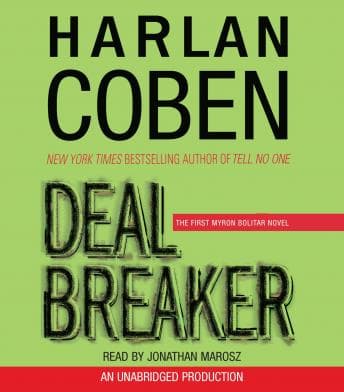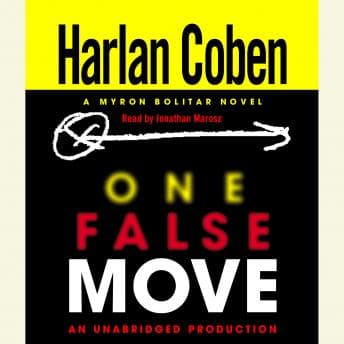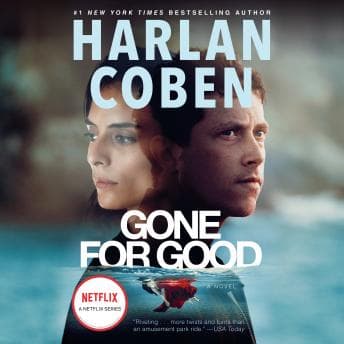

Look, I need to rant about something before we get into this. Harlan Coben has sold 80 million books. Eighty. Million. And the audiobook version of Gone for Good gets saddled with a narrator who sounds like he's reading the terms and conditions for a new credit card? That's the part that genuinely haunts me about this listen, and I say that as someone who actively seeks out things that haunt me.
I was shelving returns at the library on a Saturday afternoon - quiet branch, rain against the windows, the kind of gray Oregon day that begs for a thriller in your earbuds - and I figured Coben would carry me through the monotony. The story absolutely did. The narration? It tried its best to stop that from happening.
Coben's Plot Machine vs. the Flatline Voice
Here's what's maddening. Gone for Good is structurally bonkers in the best way. Will Klein's brother Ken vanished after being suspected of murder eleven years ago, and when Will discovers proof Ken might be alive, the book starts dropping revelations like it's playing Jenga with your assumptions. Every two or three chapters, Coben yanks a block out and somehow the tower stays standing. The dead girl in the basement. The connections to Will's current girlfriend's disappearance. The Yoga assassin duo - yeah, you read that right - two killers called the Ghost and his partner who are genuinely unsettling on paper.
But Jonathan Marosz narrates all of this with the same emotional register. Will discovering his brother might be alive? Same tone as Will ordering coffee. A scene where violence erupts and the stakes spike? Marosz's voice stays level, almost clinical. It's like watching a horror movie where the score never changes - the tension is there in the writing, but the audio performance won't let it breathe. His voice is pleasant enough, clear, good pacing technically. But Will Klein is supposed to be a young guy unraveling, desperate, scared, and Marosz sounds like a middle-aged man calmly recounting someone else's problems over brunch.
I've said it on the podcast a hundred times: audiobook narrators are actors. The ones who understand this create magic. Marosz understands the words. He doesn't quite understand the fear.
The Story Coben Built (And Why It Still Works Despite Everything)
Okay, so here's where I have to be fair. Even with the flat narration, I didn't stop listening. Couldn't. Coben is doing something genuinely clever with structure here - he's running parallel timelines and multiple POVs, and the reveals are calibrated so precisely that just when you think you've figured out the shape of the conspiracy, he pulls back and shows you it's three times bigger than you thought.
The New Jersey setting is specific and lived-in. Affluent suburbs hiding ugly secrets - it's not a new concept, but Coben writes it with the confidence of someone who grew up in those neighborhoods and knows exactly which closets have skeletons. The family dynamics between Will, his dying mother, and the ghost of Ken are genuinely affecting. There's a scene where Will's mother, on her deathbed, says something about Ken that restructures everything you thought you knew about the Klein family, and even through Marosz's even delivery, it landed.
And those twist reveals? Some are genuinely jarring. Coben described as "subtle as a shotgun" is accurate - this isn't literary horror or slow psychological unraveling. It's propulsive, almost aggressive plotting. He trusts that if he keeps the reveals coming fast enough, you won't have time to question the occasionally thin characterization. And he's right. At 11 hours 24 minutes, the pacing is tight enough that I never felt it drag, even when Marosz's delivery threatened to lull me.
Who Gets the Invite, Who Gets Turned Away at the Door
If you're a Coben fan who reads for plot architecture - the way twists interlock, the way he plays fair with clues while still surprising you - you'll get what you came for. If you're a commuter or doing housework and need something that keeps your brain hooked without requiring intense focus, this works surprisingly well even at 1x speed (though honestly, bumping to 1.25x helps compensate for the narration's flatness and makes the pacing feel even snappier).
But if you're like me - if you believe the narrator's performance is half the experience - you'll spend the whole listen slightly frustrated. This is a book that demands vocal commitment. It demands panic and whispered dread and the catch in someone's voice when they realize everything they believed was a lie. Marosz gives you competence instead. It's not bad narration. It's just narration that doesn't rise to what Coben wrote. I ran into the opposite problem with Creation in Death — a thriller where the narrator's commitment to the tension actually outpaced what the writing demanded, which is its own strange frustration.
Shirley (my cat) was unimpressed. But she's unimpressed by everything except tuna, so that tracks.
Shelve It Under: Good Book, Wrong Voice
I keep thinking about what this audiobook could've been with a narrator who committed - really committed - to Will's desperation. Someone who understood that a thriller lives and dies on vocal tension. The story is a solid 4. The audio experience knocks it down. If you've got a library card and access to Libby, stream this one. The writing earns your time. The performance just doesn't quite earn your credit.