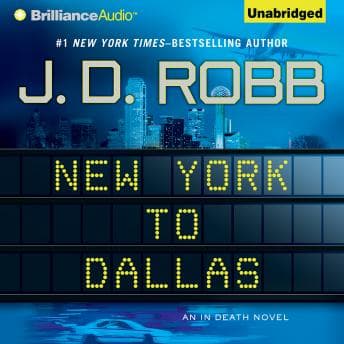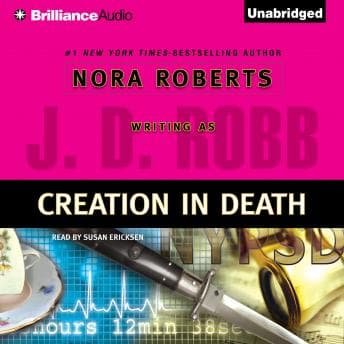

Susan Ericksen has been voicing Eve Dallas for over twenty books now, and honestly? She IS Eve at this point. There's no separation. When I started this one on my drive home after a brutal night in the trauma bay—we'd had three GSWs and a multi-car pileup—I needed something familiar. Something where I knew the good guys would win, even if the path there was ugly.
This book delivered ugly in spades.
The Groom Is the Kind of Monster That Keeps You Checking Your Mirrors
J.D. Robb—Nora Roberts, for those keeping track—has written some seriously dark villains in this series, but The Groom sits in a special category. A serial killer who carves the exact time of death into his victims' bodies? As someone who's actually worked a code, who's watched the clock during resuscitation efforts, that detail hit different. The precision of it. The coldness. It's not just about the killing—it's about the documentation. The record-keeping.
Nine years ago in the book's timeline, Eve and Feeney couldn't catch him. He disappeared, killed elsewhere, and now he's back. Making it personal by using products from Roarke's companies. That's a nice narrative hook, but what really works is how Robb uses it to show Eve's vulnerability. She doesn't do vulnerable well. Neither does Ericksen in the performance—there's this clipped quality to Eve's voice when she's scared that sounds exactly like how we talk in the ER when things are going sideways. Professional. Controlled. But you can hear the fear underneath if you know what to listen for.
Why I've Stuck With Ericksen for Twenty-Plus Books
Look, I've listened to a lot of audiobooks where the narrator does "voices" and it's... not great. Ericksen does something different. Her Roarke has that Irish lilt that makes you understand why Eve fell for him—there's warmth there, and danger, and money all wrapped up in the accent. Her Peabody is earnest and slightly breathless. Her Feeney sounds tired in a way that feels earned.
But it's the small characters that impress me. The victims' families. The witnesses. She gives them weight without making them caricatures. In a book about a serial killer who targets brunettes, it would be easy to let the victims blur together. Ericksen doesn't let that happen.
The pacing is steady—not rushed, not dragging. At almost twelve hours, this is a commitment, but it felt like a solid week of commutes rather than a slog. I finished it this morning, actually, sitting in my driveway for an extra ten minutes because I needed to hear the ending. Carlos texted asking if I'd fallen asleep in the car again. (I have done this. Night shift is no joke.)
The Medical Details Are... Fine
Okay, this is set in the 2060s, so I can't exactly fact-check the futuristic medical tech. But the autopsy scenes, the discussions of cause of death, the way the ME talks about the bodies—it tracks. Robb has clearly done her research, or at least enough that I wasn't yelling at my dashboard. I wish I could say the same about It—King's medical details in the Derry hospital scenes made me want to throw my phone. The torture elements here are described clinically, which is the right choice. We don't need graphic detail. We need to understand what happened and why it matters.
What I appreciated: the book doesn't sensationalize the victims' suffering for shock value. It's there, it's horrible, but it serves the story rather than existing just to disturb you.
Who's Going to Love This (And Who Should Skip)
If you're already deep in the In Death series, you know what you're getting. This is a strong entry—not my absolute favorite, but solid. The Groom is genuinely menacing, the investigation is logical, and the personal stakes for Eve feel real without being melodramatic.
New to the series? You could start here, but you'd miss a lot of the relationship dynamics that make Eve and Roarke work. You'd miss why Feeney matters so much to her. I'd say start earlier—maybe book one, or at least within the first ten.
If you're sensitive to violence against women, this one's rough. The content warnings are accurate. It's not gratuitous, but it's not gentle either.
Clocking Out
I listened to most of this between 7 AM and 8 AM, decompressing after twelve-hour shifts. It's good for that—engaging enough to keep you awake, familiar enough to be comforting, dark enough to match the weird headspace you're in after seeing real trauma all night. Susan Ericksen's voice is genuinely soothing even when she's describing horrible things, which is a strange compliment but accurate.
My mom would hate this one. Too violent, she'd say. But she still thinks I should've been a doctor, so what does she know.