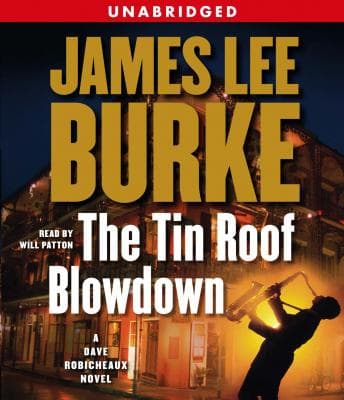

Fifteen hours. That's two weeks of post-shift drives home for me, and I spent every single one of them in the Louisiana bayou with Dave Robicheaux, trying not to miss my exit because I was too wrapped up in whether his daughter was dating a murderer.
James Lee Burke writes cops the way I wish medical shows wrote nurses—with all the moral gray areas intact. Robicheaux isn't some cowboy hero. He's a recovering alcoholic who philosophizes about the Spanish moss while contemplating violence against men who hurt women. As someone who's actually worked a code on a domestic violence victim at 4 AM, I get that duality. The rage that sits right next to the tenderness.
When Your Best Friend Becomes a Murder Suspect
The setup here is brutal in the best way. Seven young women dead in Jefferson Davis parish. A pimp named Herman Stanga who keeps showing up in the investigation like a bad penny. And then Clete Purcel—Dave's ride-or-die, his chaos agent, his moral compass that points slightly left of legal—beats the hell out of Stanga in front of witnesses. When Stanga turns up dead? Yeah. That's a problem.
Burke doesn't rush this. The 15-hour runtime lets the investigation breathe, lets you sit with the humidity and the corruption and the way old money families in Louisiana protect their own. Kermit Abelard, the novelist dating Dave's daughter Alafair, comes from one of those families. His fortune's sinking into the bayou along with his morals, and Dave can smell it. But Alafair's a Stanford law student. She thinks her dad's just being paranoid.
Carlos asked why I was crying in the car during one of the Alafair scenes. I blamed allergies. But watching Dave try to protect his grown daughter while she pulls away from him—that hit different. My eldest is only twelve, but I already see glimpses of that future. The one where they stop believing you know anything.
Will Patton Understands the Assignment
Here's the thing about medical accuracy in audiobooks—when someone gets it wrong, it yanks me right out of the story. Narrator accuracy works the same way. Will Patton gets Louisiana. His southern drawl has those regional inflections that don't sound like someone doing an impression. When Dave and Clete banter, you can hear decades of friendship in the way their voices play off each other. Full-bodied characterizations, not just different pitches.
Did he mispronounce 'beignet'? Yeah, apparently. I didn't catch it because I was too busy not rear-ending someone during the climax. But I'm not from Louisiana, so maybe that would bother someone who is. Minor complaint in an otherwise expert performance.
The philosophical passages—and Burke loves his philosophical passages—could easily become pretentious in the wrong hands. Patton makes them feel like a man thinking out loud at 3 AM, which is exactly when I was listening to most of them. Night shift approved.
The Burke Problem (Or Is It?)
Some listeners felt this one read like a parody of Burke's style. Writer's tricks instead of truth, one review said. I get that. There are moments where the prose gets so lyrical it almost tips over into self-indulgence. Descriptions of the natural world that go on maybe one beat too long.
But here's my take: Burke's been writing Robicheaux for decades. The man's earned the right to be a little extra. And honestly? After charting on the same dying patient for three hours, I wanted the extra. I wanted someone to describe Spanish moss like it meant something. I wanted the overwrought beauty of it.
This is not how hospitals work. Trust me. But this IS how Louisiana works, at least in Burke's hands. The corruption, the old families, the way violence seeps up through the swamp like groundwater—it all feels authentic even when it's heightened.
Who Should Sink Into the Bayou (And Who Should Keep Driving)
If you need action every five minutes, this isn't your book. Burke's a slow burn. He wants you to marinate in the atmosphere before he serves you the body. Hidden takes a faster approach to the same kind of atmospheric mystery work, though it doesn't quite reach Burke's literary heights. But if you like your mysteries with moral complexity and prose that actually sounds like literature? Get in.
Perfect for that post-shift decompression. The pacing matches that 3 AM energy when you're too wired to sleep but too tired to do anything demanding. Just sink into the bayou and let Will Patton's voice carry you home.
My mom would love this (she still thinks I should've been a doctor). She's always asking for 'smart mysteries' and this is exactly that—a detective story that doesn't insult your intelligence, with a narrator who treats the material like it matters.
The Night Shift Prescription
Fifteen hours is a commitment. But some stories need room to breathe, and this is one of them. Dave Robicheaux is the kind of flawed protagonist I'd want on my side—the guy who knows the system is broken but keeps trying anyway. Sound familiar? Yeah. Healthcare workers, cops, anyone who's ever tried to help people inside a broken institution—you'll recognize this man.
The emotional details are accurate. The way a parent watches their child make mistakes they can see coming. The way friendship means showing up even when your buddy's covered in someone else's blood. That same broken-system frustration runs through Green Rust, though without Burke's poetic touch. The way solving one case doesn't fix anything, not really.
I yelled at my dashboard during this one. Not because Burke got something wrong, but because I saw the twist coming and Dave didn't, and I needed him to LISTEN. That's good writing. That's what keeps you driving past your exit.