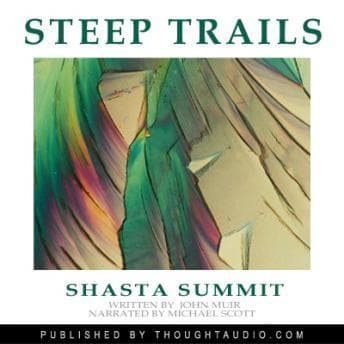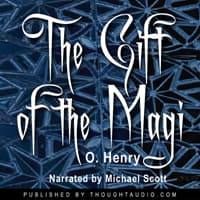

Twenty-one minutes. That's all O. Henry needed to remind me why I became an English teacher in the first place.
I listened to this walking the lakefront with Denise last Sunday - one of those gray Chicago mornings where the wind off Lake Michigan makes you question every life choice. And here's the thing about "The Gift of the Magi": I've taught this story probably thirty times. I've watched teenagers roll their eyes at Della selling her hair. I've explained the irony to kids who think irony means "rain on your wedding day" (thanks, Alanis). But hearing it? Actually hearing it performed? That's different.
Why This Story Still Hits After a Century
Look, I'll be honest - I was skeptical about listening to something I practically have memorized. But Michael Scott's narration reminded me of something I tell my students all the time: the author chose those words. And O. Henry chose every single one with surgical precision. The way Scott delivers that famous line about the Magi being wise - you can hear him leaning into it without overselling. That's harder than it sounds.
What strikes me listening as an adult (okay, a middle-aged man with reading glasses and a mortgage) is how economical the prose is. O. Henry doesn't waste a syllable. Jim and Della are broke - not "experiencing financial hardship" or whatever corporate-speak we'd use now. They're broke. They have love and $1.87. And in twenty-one minutes, O. Henry builds more emotional architecture than most novels manage in twenty hours.
My students would probably call this "mid" or whatever they're saying now. They're wrong. This is why we still read the classics.
The Voice That Carried It Home
Michael Scott brings exactly what this story needs - warmth without sentimentality. (And yes, I'm aware of the name. No, it's not that Michael Scott. My students asked.) His pacing is spot-on, which matters more than you'd think for a story this short. He lets the quiet moments breathe. The pause before the reveal - and you know the reveal, everyone knows the reveal - still lands because he doesn't rush it.
The narrator understands that pause is punctuation.
I couldn't find much about Scott's other work online, but based on this performance, he gets O. Henry's tone. There's this tricky balance with late 19th-century prose - you can play it too straight and it sounds dusty, or you can modernize it and lose the texture. Scott threads that needle. His Della feels young and impulsive. His Jim has this quiet dignity. For a 21-minute performance, that's impressive character work.
Who This Is For (And Who Should Skip It)
Listen if you need a reminder that short fiction can punch above its weight. Holiday story lovers, obviously - this is basically the literary equivalent of a Hallmark movie, except actually good. Parents looking for something the whole family can handle. And honestly? Anyone with a 20-minute commute who wants to feel something before walking into the office. That same focus on ordinary people in impossible situations is what makes Crime and Punishment so devastating, even if Raskolnikov's choices are considerably darker than Della's.
If you loved "A Christmas Carol" or any of Chekhov's short stories, this is in that lineage - stories about ordinary people making extraordinary sacrifices. The prose deserves to be savored, which is why I listened at 1.0x. My students think I'm ancient for this take. They're not wrong.
Skip it if you need action, if sentimentality makes you uncomfortable, or if you're the kind of person who thinks anything under novel-length isn't "real" literature. (I have colleagues like this. We don't talk at lunch.)
Class Dismissed
This reminds me of what Hemingway said about prose - that the dignity of movement of an iceberg is due to only one-eighth of it being above water. O. Henry shows you Jim and Della's love through what they do, not through endless internal monologue. The sacrifice is the story. The irony is the point. And Michael Scott's narration lets both land without getting in the way.
Denise and I finished our walk right as the story ended. She squeezed my hand. Neither of us said anything for a block or two.
That's what good literature does. That's what good narration preserves.
Twenty-one minutes well spent.