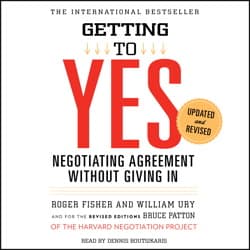

I was prepping for a client call at 11 PM - founder who was about to get eaten alive in a Series B negotiation with a VC firm that treats term sheets like blood sport - when I figured I'd finally knock this one off the list. Getting to Yes has been sitting in my Audible library for an embarrassing amount of time. The kind of book you assume you've already absorbed through osmosis because every consultant on earth has referenced it in a deck.
Turns out I hadn't absorbed it. And I'm a little annoyed about that.
The Framework Your Parents Already Knew (But Couldn't Articulate)
Here's the thing about Fisher and Ury's core argument: separate the people from the problem, focus on interests not positions, generate options for mutual gain, insist on objective criteria. Four principles. That's it. That's the whole book. And yet it took me 8 years at McKinsey, a dozen failed vendor negotiations, and one spectacularly botched apartment lease discussion with Jenny to realize how rarely anyone actually does this.
My parents negotiated with suppliers, landlords, and difficult customers every single day at their dry cleaning shop. They didn't call it "principled negotiation." They called it not going out of business. My dad's move was always the same - find out what the other person actually needs (not what they're asking for) and figure out how to give them that without losing his shirt. Fisher and Ury wrote 200 pages about what my dad did on instinct between pressing shirts. This is what my parents did instinctively. Now it has a TED talk.
But I'll give the book credit where it's earned: the BATNA concept alone - Best Alternative To a Negotiated Agreement - is worth the listen. I've used it with at least fifteen clients in the last year. Knowing your walkaway point before you sit down isn't just strategy, it's self-respect. The chapter on separating invention from decision-making during brainstorming? That's saved actual deals. Real money. Not theoretical money.
Dennis Boutsikaris Sounds Like Your Corporate Lawyer's Corporate Lawyer
Someone described Boutsikaris as having an "expensive lawyer" voice and - yeah. That's exactly it. Smooth, authoritative, the kind of baritone that makes you sit up straighter even though you're in sweatpants at midnight. He brings courtroom gravitas to material that frankly could feel like a textbook in lesser hands.
But here's my problem. The pacing is glacial. And I don't throw that word around lightly as someone who already listens to everything at 2x. Even at double speed, there are stretches where Boutsikaris delivers paragraphs with the measured cadence of someone reading a legal brief to a jury. It works for the weightier conceptual sections - you want that authority when Fisher is walking you through the Camp David accords example. But for the more straightforward tactical advice? I found myself reaching for 2.5x, which is territory I don't love entering because voices start sounding like caffeinated chipmunks.
The narration style honestly feels more suited to a history book than a negotiation guide. For a topic that's supposed to be about dynamic human interaction, the delivery is surprisingly static. No dramatic shifts, no tonal variation to signal "pay attention, this is the important part." It's polished. It's professional. It's also a little flat.
6 Hours of Content, Maybe 3 Hours of Insight
At 6 hours and 18 minutes, this is short by business audiobook standards, and I respect that. But even here, Fisher and Ury repeat themselves. The core principles get restated, reframed, and re-illustrated more times than necessary. Skip to chapter 5. Thank me later. That's where the practical "jiu-jitsu" of negotiation lives - what to do when the other side won't play fair, when they attack you personally, when they use dirty tricks. That's the stuff I actually needed before my client call.
The key takeaway is worth the listen. The other 7 hours? Not so much. (Okay, it's 6 hours, but you get my point.)
What keeps this from being a must-listen in 2024 is the age. The examples feel dated. The Cold War references, the landlord-tenant scenarios - they work conceptually but they don't hit with the urgency of modern negotiations around equity splits, SaaS contracts, or remote work arrangements. The framework is timeless. The packaging is showing its years. The Toyota Way has that same problem - foundational thinking wrapped in examples that creak a little - and I gave it the same grudging respect I'm giving this one: Toyota Way (Second Edition) is another case where the principles outlast the packaging by a wide margin.
Who Gets the ROI
If you've never read this and you negotiate anything - salaries, contracts, who picks the restaurant - you need this in your ears. Period. It's foundational. If you're a founder heading into fundraising, listen before your first term sheet meeting. If you've already internalized BATNA and interest-based bargaining from other sources, you can probably skip this and spend your credit on Chris Voss's Never Split the Difference, which takes these ideas and adds street-level intensity.
Jenny would say I'm being harsh. Jenny is right. But also - this book changed how millions of people think about conflict resolution. It just didn't need to be this slow about it.
The Consulting Rate on This One
Bottom line: Getting to Yes earns its reputation as the negotiation textbook. The framework is rock solid, battle-tested, and genuinely useful - I literally used BATNA prep with a client the morning after finishing it. Boutsikaris is competent but needs the 2x treatment. The book respects your intelligence but not quite your time. Worth a credit if you're new to negotiation theory. If you've been in the game awhile, this is a refresher course you can get through in an afternoon - and probably should.