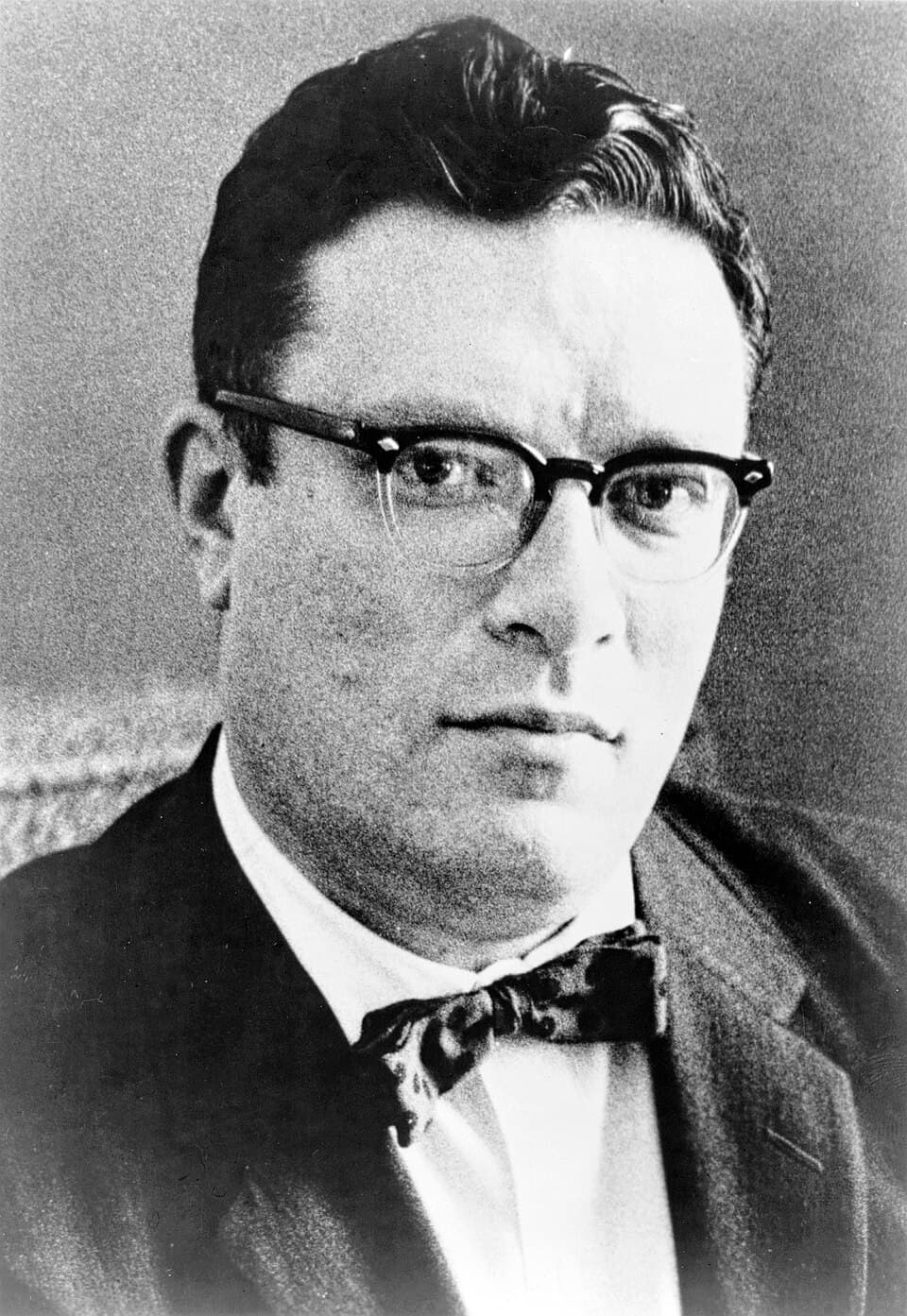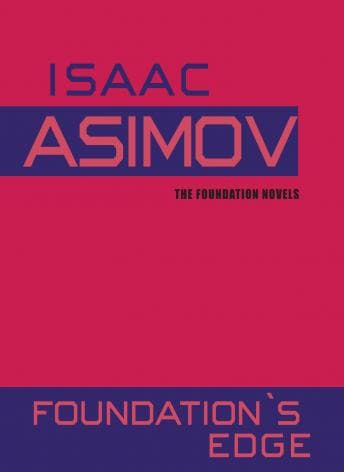

Look, I need to rant about something before we get into this: Isaac Asimov wrote Foundation's Edge in 1982, thirty years after the original trilogy, and you can feel it. The terse, almost clinical prose of the 1950s Foundation books? Gone. Replaced by characters who actually have conversations that last more than two paragraphs, who bicker and flirt and second-guess each other. And honestly? I'm conflicted about whether that's an upgrade or a downgrade.
I started this one during a particularly brutal week where my on-call rotation overlapped with a deployment freeze that wasn't actually frozen (you know the type), and I was zombie-walking through my commutes with even less brain capacity than usual. Which turned out to be a problem, because Foundation's Edge demands more of your attention than the earlier books.
Asimov Discovered Dialogue And Went Full Send
The original trilogy was basically Hari Seldon's spreadsheet come to life - big historical sweeps, civilizations rising and falling like microservices during a cascading failure. Foundation's Edge is... a road trip novel? Councilman Golan Trevize gets exiled from Terminus and sent off with Janov Pelorat, this delightfully absent-minded scholar obsessed with finding Earth, and they just... talk. A lot. About the nature of the Seldon Plan, about whether the Second Foundation still exists, about whether free will means anything when psychohistory has predetermined your civilization's trajectory.
The philosophical core is genuinely interesting - Trevize keeps insisting something is wrong with the Seldon Plan being too perfect, and his gut feeling drives the entire plot. It's Asimov grappling with the determinism he built into his own universe decades earlier. But the execution means long stretches of two guys on a ship having Socratic dialogues while the actual tension - the Second Foundation's Stor Gendibal racing to intercept them, Gaia waiting in the wings - simmers on a back burner.
And then you get to Gaia. And the ending choice Trevize makes is the kind of thing that'll either blow your mind or make you throw your phone across the Caltrain car. I won't spoil it, but imagine someone proposing that the solution to your distributed systems problems is to merge every single service into one giant monolith. On purpose. That's basically the philosophical argument here, and Asimov commits to it.
Scott Brick's Baritone Does Heavy Lifting (Sometimes Too Heavy)
Scott Brick is not Ray Porter. (Nobody is Ray Porter. This is my cross to bear.) But his deep baritone genuinely works for the gravitas of Asimov's universe - when Trevize is wrestling with galaxy-scale decisions, Brick's voice sells the weight of it. The man sounds like he was engineered in a lab to narrate epic science fiction.
Here's the thing though: Brick doesn't really differentiate characters. Trevize, Pelorat, Gendibal, Mayor Branno - they all live in roughly the same vocal register with the same cadence. For a book that's 80% dialogue, this is a real problem. I kept losing track of who was talking during the Trevize-Pelorat exchanges, especially at 6AM when my cognitive load is already maxed out by the act of standing upright. I bumped my speed up to 1.5x (my default) and it actually helped with the pacing but made the character confusion worse.
Some people call his delivery melodramatic and I get it - there are moments where a quiet observation gets the Full Dramatic Treatment and it feels like he's narrating a trailer instead of a conversation. But I'd rather have that than flat. At least the energy kept me from drifting off during the slower philosophical stretches.
Who Gets a Ticket to Gaia (And Who Should Stay on Terminus)
Perfect for: Foundation completists, people who like their sci-fi cerebral rather than action-heavy, anyone who's ever gotten into an argument about free will vs determinism at a dinner party and enjoyed it.
Skip for: Anyone who hasn't read the original trilogy (you will be completely lost), people who want the sparse efficiency of early Asimov, or anyone who needs strong character voice differentiation to follow dialogue-heavy audiobooks during low-attention listening.
The ROI on this audiobook is decent but not great - 16 hours is a real commitment for what is essentially a setup book. The payoff is philosophical rather than plot-driven, and the actual destination (Gaia) doesn't show up until fairly late. It took me about 5 commutes, and there were stretches in the middle where I caught myself thinking about work instead of listening. That's never a good sign.
The Seldon Plan Says Borrow It
Foundation's Edge is the book where Asimov proved he could still write big ideas three decades later, but also the book where he forgot that the original trilogy's power was in its brevity. It's good. It's interesting. The central question - what happens when the plan works too well - is genuinely great science fiction. But as an audiobook experience, the combination of dialogue-heavy scenes and same-voice narration makes it a tougher listen than it should be. I ran into the same narration problem with Numbers Game, where a dialogue-heavy script and an undifferentiated vocal performance turned what should have been an easy commute listen into an exercise in backtracking. If you're deep in the Foundation series, you need this to get to Foundation and Earth. If you're not? This isn't where you start.