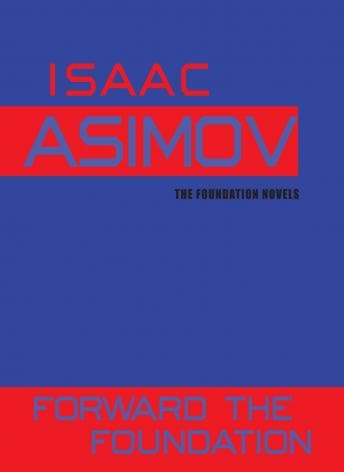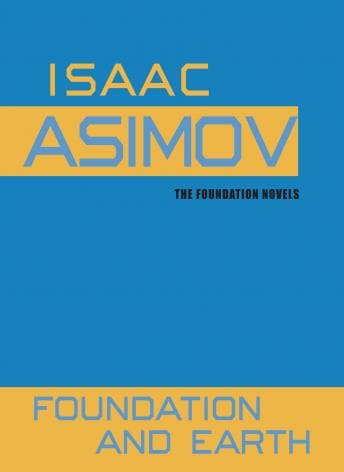

Asimov wrote Foundation and Earth as a quest novel. Trevize made his choice for Gaia in the previous book, but he doesn't trust his own intuition. So he goes looking for Earth—the mythical origin planet that nobody in the Galaxy seems to remember exists. It's Asimov doing what Asimov does best: using a journey as an excuse to explore ideas about consciousness, identity, and what humanity should become.
I finished this one during a particularly brutal stretch of essay grading. Thirty-seven papers on The Great Gatsby, and I'm listening to Asimov philosophize about collective consciousness. The irony of escaping one form of repetition for another wasn't lost on me.
The Problem With Patience
Look, I teach patience. I tell my students that Faulkner rewards slow reading, that the pause is punctuation, that great prose deserves to be savored. So I should be the ideal listener for Larry McKeever's narration. I should appreciate his careful, deliberate approach.
I didn't.
McKeever reads like he's dictating to someone taking notes. Every word gets equal weight. Every sentence lands with the same measured cadence. For Asimov's dialogue-heavy philosophical debates—and this book is basically 18 hours of characters arguing about destiny—you need some variety. Some heat. When Trevize gets frustrated, I want to hear it. When Bliss defends Gaia's collective consciousness, I want conviction.
What I got was... clear. Undeniably clear. I never missed a word. But clarity isn't the same as engagement.
(I bumped it to 1.25x around hour six. Don't tell my students—I'm the guy who lectures them about respecting authorial pacing.)
Where Asimov Carries the Weight
Here's the thing: Asimov's ideas are strong enough to survive mediocre narration. The search for Earth becomes this meditation on why civilizations forget their origins. Why would an entire Galaxy erase the memory of its home planet? Asimov plants little mysteries on each world Trevize visits, and the slow accumulation of clues kept me listening even when McKeever's monotone threatened to put me under during those late-night grading sessions.
The philosophical debates between Trevize and Bliss about individuality versus collective consciousness—this is why we still read the classics. Asimov was wrestling with questions about AI and merged consciousness decades before anyone was worried about algorithms. My students would hate this. They'd call it "too talky." But the conversations here are the point. They'd probably say the same thing about Romeo and Juliet—all that poetry when they just want to know who dies. This isn't space opera. It's Socratic dialogue with spaceships.
The ending, though. I won't spoil it, but Asimov connects the Foundation series to his Robot novels in a way that's either brilliant or frustrating depending on how much you've read. If you've followed both series, there's a genuine payoff. If this is your first Asimov—honestly, why would you start here?—you'll be confused.
Who This Is (and Isn't) For
Foundation completists with long commutes or eyes shot from twenty years of grading like mine? You can get through this. Speed it up. Accept that you're here for Asimov's mind, not McKeever's interpretation. But if you want narration that matches the intellectual energy on the page, or you're new to the series entirely, skip this version and read it instead.
The Teacher's Honest Grade
Probably wouldn't listen again in audio form. And that's the honest answer.
The book itself? Worth reading. Asimov's exploration of what it means to choose humanity's future, the tension between individual freedom and collective harmony—this is science fiction doing what science fiction should do. Making you think about now by imagining then.
But McKeever's narration turns an 18-hour philosophical journey into something you endure rather than enjoy. I found myself wishing for Scott Brick, who apparently narrated some of the other Foundation audiobooks. (I haven't heard those versions, but based on this experience, I understand why listeners compare them unfavorably.)
If you have the choice? Read it. The prose isn't Faulkner—Asimov was always more interested in ideas than sentences—but at least you can control your own pacing. You can pause when the philosophy gets dense. You can race through the slower planetary visits.
This reminds me of what Hemingway said about writing: the dignity of movement of an iceberg is due to only one-eighth of it being above water. Asimov's iceberg is massive here. The narration just doesn't do justice to what's beneath the surface.