
I started this book during a February cold snap - rare for Austin, but real enough that I'd wrapped myself in Abuela's old serape on the couch, cats tucked against my legs, a massive freelance rebrand project glowing on my laptop. Fifty-seven hours. I knew what I was signing up for. Michener doesn't write books, he writes commitments. And honestly? I needed that. Something enormous and slow and geological to anchor me through two weeks of tedious logo iterations.
Here's the thing about Alaska that I wasn't expecting: it made me feel small in the best possible way. Not emotionally small - cosmically small. Like, Michener opens this thing with tectonic plates. Literal tectonic plates shifting and forming the land mass over millions of years. Before there are any people, before there's even a concept of people, he's asking you to sit with ice and rock and time. And I found that - weirdly - incredibly moving? Like, I'm sitting here worrying about kerning on a logo and this book is reminding me that glaciers carved entire valleys before humans existed to name them.
When the Land Is the Main Character and You're Somehow Okay With That
Michener cycles through epochs and peoples - Tlingits, Russian fur traders, gold rush fortune seekers, military personnel during WWII, modern political players fighting over statehood and oil. Over 100 characters across these chapters, and honestly, some of them blur. That's just the truth. You'll spend four or five hours deeply invested in a Russian Orthodox priest's moral crisis about the treatment of Aleut people, and then Michener just... moves on. New century, new cast. It's like watching a telenovela where the entire cast gets replaced every season but the house stays the same.
And the house - Alaska itself - is what carries the emotion. The descriptions of the northern lights over frozen tundra, the salmon runs so thick the rivers change color, the brutal mathematics of surviving a winter where darkness lasts months. That's where I got hit. Not in the human drama (though some of it lands), but in the sheer weight of place. This book felt like standing at the edge of something so vast your chest aches from trying to take it in.
The parts that genuinely wrecked me were the Indigenous sections - the Tlingit and Aleut communities watching their world get systematically dismantled by colonizers who called it "progress." Michener doesn't sensationalize it, which almost makes it worse. It's delivered with this dry, factual cadence that lets the horror speak for itself. Abuela would have recognized that particular flavor of grief - watching your culture get swallowed by someone else's ambition. My heart. MY HEART. That specific ache - the one where survival costs you the thing you were trying to survive for - hit me in a completely different register in Their Eyes Were Watching God, which I think about every time a book makes me feel like grief is just love with nowhere left to go.
Larry McKeever, We Need to Talk
Okay. Fifty-seven hours is a LOT of time to spend with one voice, and Larry McKeever's voice is... fine? It's fine. It's the vocal equivalent of a reliable sedan. Gets you there, doesn't thrill you on the way. He's narrated other Michener books, so he knows the rhythm, the long descriptive passages, the pace of historical sweep. But - and this is a real but - there are pronunciation stumbles that pulled me out of moments I was sinking into. Native place names, Russian words, some of the Tlingit terminology - you can hear him hesitating, and that hesitation breaks the spell.
I listen at 1.0x because I'm savoring, remember? So every stumble gets its full weight. At 1.25x you might skate past them. At my speed, they land. The narrator's voice isn't bad, it's just not the warm hug I need for a 57-hour journey. No emotional peaks in his delivery - the genocide of a people and a salmon fishing scene get roughly the same vocal energy, and that's a problem for someone like me who needs the narrator to FEEL it with me.
Who Should Strap In (and Who Should Walk Away)
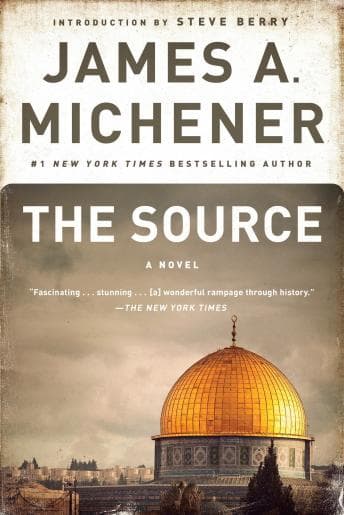
If you love Michener's other doorstoppers - The Source, Hawaii, Centennial - you already know if this is for you. It's the same architecture: deep history, rotating casts, land as protagonist. If you haven't tried Michener before, I'd honestly say start with Centennial. Alaska is rewarding but it's also his most demanding listen. The middle sections (gold rush era, early American governance) drag in ways the prehistoric and modern sections don't.
If you need tight plotting and character arcs that pay off - skip this. Michener doesn't do that. He does panoramas. If you want to feel the weight of a place in your bones and you have the patience for a slow, slow burn across geological time? This is a rainy Sunday book stretched across many, many rainy Sundays.
I didn't ugly-cry at this one. But I sat in silence after it ended, staring at my screen with Diego purring against my arm, thinking about how land outlasts every story we put on it. That's a different kind of feeling. Quieter. Heavier.
The Serape Stay On for This One
Fifty-seven hours and I don't regret a single one, even with a narrator who couldn't quite match the scale of what Michener built. The book itself is a monument. The audio experience is... adequate. And that gap between the writing and the narration is real enough that I'd say borrow this one rather than spend a credit. Read the print if you can. But if audio's your only path - and it's mine - it's still worth the long, cold, beautiful walk.