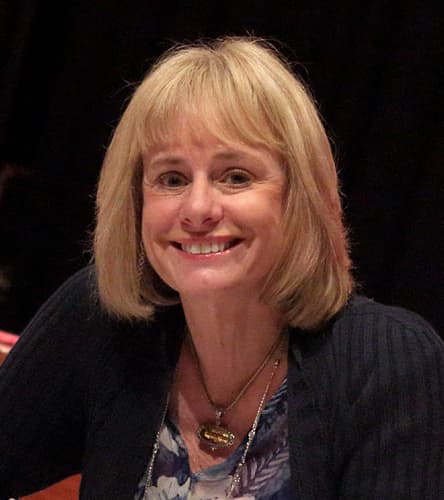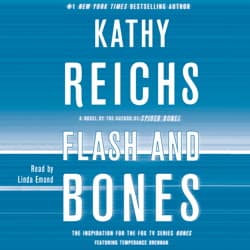

Everyone keeps telling me Kathy Reichs gets forensics right because she IS a forensic anthropologist. And look — they're not wrong. But book fourteen in a series? I went in bracing myself for the kind of autopilot writing where the author knows the character so well they stop trying. I was half right.
I picked this one up on a Saturday morning after pulling a brutal Friday night — two traumas back to back, the kind where you don't sit down for six hours. Carlos had taken the kids to his mom's, the house was empty, and I was too wired to sleep. So I ran a bath, put my earbuds in, and let Linda Emond's dry, steady voice try to bring my heart rate down. It worked. Mostly.
When the Forensics Don't Make Me Yell at Things
The medical details are accurate. Finally. Reichs doesn't fake the decomposition science. When Tempe examines the body pulled from that asphalt barrel near the Charlotte Motor Speedway, the observations about tissue preservation and what asphalt does to remains — that's real. She's not guessing. She's not having her forensic anthropologist character do things an ER doc would do, or confusing a medical examiner's jurisdiction with a coroner's (a mistake that makes me want to throw things). The chain of custody stuff, the lab protocols, the way Tempe interacts with law enforcement — it reads like someone who's actually stood in those rooms. Because Reichs has.
And the CDC subplot with the missing employee and the strange substance found in the barrel? That's where it gets genuinely interesting. Reichs layers biological threat over right-wing extremist militia activity over a twelve-year-old disappearance, and for a while it feels like three different books fighting for space. But Tempe's methodical approach — piecing bone fragments and chemical analysis together — keeps pulling the threads into one line. As someone who's actually worked a code, I appreciate a protagonist who follows procedure instead of going rogue every five minutes.
Linda Emond Earns Her Paycheck
Emond's narration is the reason this audiobook works as well as it does. Her voice has this calm, slightly detached quality that IS Temperance Brennan — analytical, professional, occasionally sardonic. She differentiates male characters with subtle pitch and pace changes rather than doing cartoonish deep voices, and her female characters each get their own rhythm. The tension scenes — and there are a few where Tempe is in genuine physical danger — Emond ratchets up without going melodramatic. She trusts the material. I found a narrator doing similarly patient, understated work in Valley of Silent Men — that one also has a procedural rhythm where the performance carries you through the slower investigative stretches without ever feeling like the narrator is doing the heavy lifting for the author.
Now. The sentence fragments. Some reviewers have complained about Reichs's writing style — the choppy, incomplete sentences that are supposed to convey Tempe's rapid-fire thinking. And yeah, in audio form, those fragments can feel jarring. Emond handles them as well as anyone could, but there were moments where I thought my Bluetooth had glitched because the sentence just... stopped. It's a stylistic choice. I get it. But in audio, where you can't see the period on the page, it occasionally pulls you out of the story.
The NASCAR of It All
Here's where I have to be honest: I know nothing about NASCAR. Zero. The Charlotte Motor Speedway setting and Race Week backdrop are clearly meant to give this installment its own flavor, and Reichs does her homework on the racing world the same way she does on forensics. But I found myself zoning out during the NASCAR-specific details — the crew dynamics, the track culture, the sponsor politics. It's not badly done; it's just not my world. If you're into racing AND forensic thrillers, this is probably your perfect book. For me, those sections were where my mind wandered to whether I'd remembered to restock the Tylenol at home.
The Patriot Posse militia angle, though? That hit different. Right-wing extremist groups stockpiling weapons and potentially getting their hands on biological agents — this is not how hospitals work, but it IS how the news works, and Reichs wrote this in 2011. Reading it now, it feels uncomfortably prescient.
Who's Going to Love This
If you've been following Tempe Brennan through all fourteen books, you already know if you're in. Emond's narration rewards loyalty to the series — she's got Tempe's voice locked down. If you're new to Reichs, this isn't where I'd start (too many relationship references to earlier books that won't land). And if you need your thrillers at a dead sprint, know that this one takes its time. Reichs builds her case like an actual investigation — methodical, sometimes slow, but the payoff is earned.
Perfect for that post-shift decompression. Eight hours is just right — not so long it becomes a commitment, not so short it feels rushed. Night shift approved, with the caveat that the biological weapon subplot might not be ideal if you're already anxious about, you know, everything.
The Discharge Summary
Solid procedural, accurate science, strong narration that never oversells. It's not Reichs at her most electric — the NASCAR setting doesn't quite generate the same tension as some of her other locations — but Emond's performance and the genuine forensic credibility keep it well above average. Carlos asked why I was still in the bathtub an hour later. I told him Linda Emond made me do it.