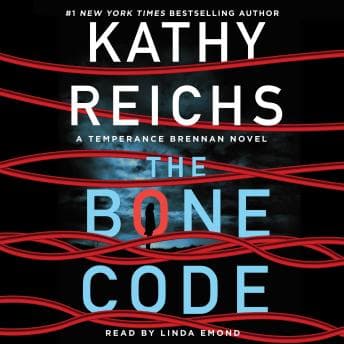

What happens when the person you trust most to identify the dead can't trust her own mind?
That's the question Kathy Reichs drops on us right from the start, and I'll admit—it hooked me harder than I expected. I've been following Tempe Brennan since the early books, back when I was still on active duty and burning through audiobooks on every deployment. This one? Different. Darker. Tempe's recovering from brain surgery, questioning her own perceptions, and still charging into a case that nobody wants her anywhere near. Sounds like half the NCOs I served with.
When Your Own Head Becomes the Enemy
Look, I've seen operators come back from TBI situations. The self-doubt, the second-guessing, the wondering if what you're seeing is real—Reichs nails it. Tempe's dealing with migraines, possible hallucinations, and a new boss who's got it out for her. She's isolated, working outside the system, and pushing forward anyway. That's not stubbornness. That's mission focus when everyone's telling you to stand down.
The forensic details are solid. Reichs knows her stuff—she's the real deal, a board-certified forensic anthropologist, not some writer who watched a few episodes of CSI. When she describes the process of identifying a faceless, handless corpse, I believe it. The dark web elements and tech references got a little dense in places (I'm more of a boots-on-ground guy than a cyber warfare specialist), but nothing that pulled me out of the story completely.
The plot's got layers. Missing kid from a decade ago, possible spy, possible trafficker, government assassination angle—Reichs throws a lot at the wall. Some of it sticks better than others. There were moments I felt like I was tracking too many targets simultaneously, which can work in the field but gets messy in a thriller. A few red herrings could've been cut without losing anything.
Linda Emond's Clean, Professional Delivery
Here's where this audiobook earns its keep. Linda Emond's narration is clean, professional, controlled. She's got that smooth, intelligent delivery that fits Tempe perfectly—radiates competence without being cold. Her character voices are consistent, which matters when you're listening over multiple sessions. (I knocked this one out over about a week of driving between client sites in the Austin area. Ranger rode shotgun for most of it.)
Emond handles the emotional weight of Tempe's medical struggles without going melodramatic. That's not easy. She also keeps Skinny Slidell's rough-around-the-edges personality distinct from Ryan's smoother approach. The pacing stays tight even when the plot meanders a bit. Production quality's clean—no weird audio artifacts, no volume jumps. Professional all the way through.
The Slow Stretches and the Payoff
I won't lie—the middle section drags. There's a stretch where Tempe's chasing leads that don't pan out, and while that's realistic (most investigations are 90% dead ends), it tested my patience. The book takes its time getting to the action. If you need constant movement, you might find yourself checking how much time is left. The Circular Staircase had similar pacing issues—lots of setup before the payoff—but at least that one kept things lighter.
But when the pieces start connecting? Worth the wait. The final act delivers. Reichs pulls the threads together in a way that made me go back and reconsider earlier details. That's the mark of a well-constructed mystery.
Content warning for anyone who needs it: this one goes dark. Child abuse, pedophilia references, violence. It's not gratuitous, but it's there. Reichs doesn't shy away from the ugliness that forensic anthropologists actually encounter.
Mission Debrief
If you've been with the Temperance Brennan series, this is essential. It's a different Tempe—vulnerable in ways we haven't seen before—and that adds depth to a character who could've gotten stale. New to the series? You can probably jump in here, though you'll miss some of the relationship context with Ryan and Slidell.
Compared to earlier Brennan books, this one's moodier, more psychological. Less procedural, more personal. I appreciated the change of pace, even if it meant sitting through some slower stretches.
Who should listen: Brennan series fans, anyone who appreciates forensic thrillers with real science behind them, and listeners who don't mind a slower burn for a solid payoff. Skip it if: you need constant action or can't handle dark subject matter involving crimes against children.
Linda Emond's narration elevates the material. I listened at 1.25x (my standard) and it held up perfectly—her pacing's already crisp enough that speeding up doesn't lose anything.
Ranger approved this one. He perked up during the tense scenes, which is basically his version of a five-star review.