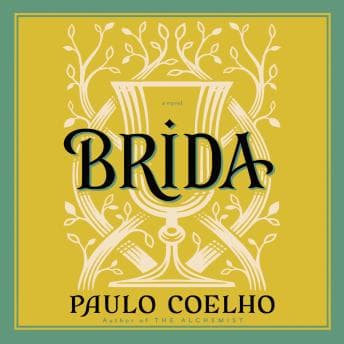

I'll be honest with you. I came to Brida expecting the same lightning-in-a-bottle experience I had with The Alchemist years ago. That book hit me during a rough patch in my twenties, and I've been chasing that feeling with Coelho ever since. Brida? It's not that book. But somewhere around hour three—grading a stack of sophomore essays on The Great Gatsby that were making me question my life choices—something shifted.
This is a quieter kind of magic. And I mean that literally and figuratively.
When the Mysticism Actually Works
Coelho writes about spirituality the way my students write about symbolism—sometimes it's profound, sometimes it feels like they're reaching. Brida's journey through witchcraft traditions, past lives, and finding her "soulmate" (a concept the book treats with more complexity than you'd expect) walks that line constantly. Outlander plays with similar ideas about soulmates across time, though it wraps them in a much more plot-driven package.
There are moments where the philosophy lands beautifully. The idea of trusting the world's goodness, of learning to dance to life's hidden music—this reminds me of what Hemingway said about writing true sentences. Coelho is trying to write true feelings.
But then there are passages that feel like they belong in a greeting card. My students would roll their eyes. I did too, a few times.
Here's the thing though—and this is where twenty years of teaching teenagers has actually taught me something—not every book needs to be Faulkner. Sometimes a book meets you where you are. Brida met me during a particularly exhausting faculty meeting (sorry, Principal Martinez, I definitely wasn't listening to the budget presentation) and gave me permission to think about mystery and wonder instead of standardized testing metrics.
Linda Emond Understands the Assignment
Emond reads Coelho's prose with this gentle authority that never tips into the mystical-woo-woo voice you might expect. She sounds like someone telling you a story they genuinely believe in, not someone performing enlightenment.
Her character work is subtle—we're mostly in Brida's head, after all—but she gives the Magus and Wicca (Brida's two teachers) distinct enough presences that you can feel the different energies they bring to Brida's education. The Magus gets this grounded, almost reluctant wisdom. Wicca has more warmth, more invitation.
Some reviewers found the pacing slow. I listened at 1.0x because the author chose those words, and honestly? The deliberate rhythm worked for me. This isn't a thriller. It's a meditation. Rushing through it would be like speed-reading poetry—you'd get the words but miss the music.
That said, I can see how this might drag for listeners who want more plot momentum. There are stretches where Brida is essentially just... feeling things. Processing. If you need narrative urgency, this will test your patience.
The Love Story Nobody Talks About
Everyone mentions the spiritual journey, but can we talk about how this is also a surprisingly honest book about relationships? Brida has a boyfriend, Lorens, who is patient and loving and completely baffled by her spiritual awakening. And she's genuinely torn between her comfortable love and her calling to something larger.
This hit different for me. Denise and I have been married twenty-three years, and I've watched her be patient with my podcast obsession, my late-night grading sessions, my tendency to quote dead authors at dinner parties. Brida's struggle to balance love with personal growth—that's real. Coelho doesn't pretend it's easy or offer clean answers.
The "soulmate" concept gets complicated too. Without spoiling it, the book suggests we might have multiple soulmates across lifetimes, and recognizing them doesn't mean we're obligated to upend our lives. Club: A Novel wrestles with similar questions about connection and obligation, though in a completely different setting. That's... actually pretty mature for a book that also features ritual magic and past-life regression.
Who Should Queue This Up (And Who Should Skip)
My students would hate this. Too slow, too philosophical, not enough happens. Skip it if you need plot momentum or if greeting-card spirituality makes you twitch. But if you're in a season where questions matter more than answers—if you want permission to sit with mystery for a while—this might be your book.
If you loved The Alchemist, this is its spiritual successor, though less focused and more meandering. If you're coming to Coelho fresh, maybe start there instead. Brida works best when you're already willing to meet it halfway.
Mr. Williams's Final Grade
The prose deserves to be savored. Emond's narration earns that patience. At just under six hours, it's short enough to finish in a weekend of long walks or a few late grading sessions.
Is it a life-changing listen? Probably not. But it's a thoughtful one. And sometimes, between faculty meetings and essay piles and the general chaos of trying to convince teenagers that literature matters, thoughtful is exactly what you need.