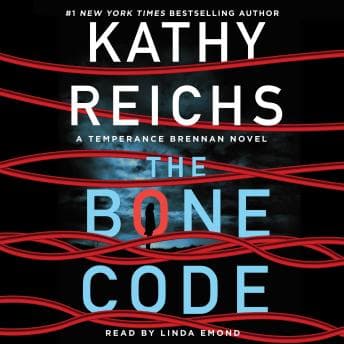

Kathy Reichs is one of maybe three thriller writers who can talk forensic science without making me want to throw something. She's actually done the work — autopsies, bone analysis, the whole grim catalog — and it shows. Twenty books into the Temperance Brennan series, The Bone Code proves she hasn't lost her edge for procedural detail, even if the plot tries to carry more weight than it should.
I finished this one on a late-night drive back from a client site in San Antonio. Empty highway, no traffic, Ranger asleep in the back seat. Good conditions for a book that demands you pay attention, because Reichs doesn't hold your hand through the science.
When the Forensics Are Real, You Feel It
Let me cut to the chase — the opening setup hooked me hard. Hurricane debris washes up a medical waste container on Isle of Palms, and inside are two decomposed bodies wrapped in plastic and bound with electrical wire. Tempe recognizes the MO from a fifteen-year-old cold case she worked in Quebec. That's a hell of a premise, and Reichs earns it because she writes decomposition and bone examination the way someone who's actually stood over a table writes it. No Hollywood gloss. The transitions between the South Carolina investigation and Montreal feel like real casework — you're juggling jurisdictions, waiting on lab results, dealing with bureaucratic friction. That same procedural authenticity — the grind of real investigation without shortcuts — is something I noticed in Bitter Harvest too, though the subject matter there hit closer to home in a different way. I've seen this scenario play out in real life (minus the flesh-eating contagion, thankfully), and the operational tempo felt authentic.
Where it gets ambitious — maybe too ambitious — is the bioweapon/contagion subplot. Reichs tries to tie the container murders to a spreading flesh-eating pathogen, and the genetics angle behind it all. The science is clearly researched (the author clearly did her homework on genetic manipulation), but the conspiracy starts stacking up like a Jenga tower around hour seven. Secret programs, shadowy figures willing to kill to protect dark research — it's not bad, but it stretches credibility in a series that built its reputation on grounded forensic work. Some listeners find the pacing slow in the middle stretch, and I'd agree there's a section between hours four and six where Tempe is chasing leads that feel more like busywork than breakthroughs.
Linda Emond Owns This Character
Here's the thing about narrator loyalty — when someone has voiced a character through twenty books, they don't just read the part. They inhabit it. Linda Emond is Temperance Brennan at this point. She's got the confidence and dry authority down cold, and she handles the rapid-fire forensic terminology like someone who's been pronouncing "perimortem fracture" for a decade. The transitions from scientific jargon to Tempe's sardonic internal monologue? Smooth. Not flashy, just professional.
Emond differentiates characters well enough — you always know who's talking — but this isn't a performance where the voices are going to blow you away. It's workmanlike in the best sense. She keeps the pacing tight and matches the story's forward momentum, which is exactly what you want in a procedural thriller. I listened at 1.25x and it played perfectly; Emond's natural cadence has just enough deliberateness that the speed bump keeps things moving without losing clarity on the technical passages.
No production issues, no weird audio artifacts, no moments where I had to rewind because something was unclear. Clean, standard production. Nothing fancy, nothing broken.
This Is Where It Lost Me (A Little)
The personal subplot. Look, I understand Tempe has a life outside the lab — the ongoing Ryan situation, her relationships — but after twenty books, these domestic threads feel like contractual obligations rather than organic story elements. They don't sink the book, but every time we detoured into Tempe's personal drama, I was mentally tapping my fingers waiting to get back to the dead bodies in the container.
And the conspiracy resolution felt rushed relative to the buildup. You spend hours watching Tempe carefully piece together evidence, and then the endgame comes fast and a little too neat. Not a dealbreaker, but noticeable.
Who Should Deploy With This One
If you've been riding with the Brennan series, this is solid — not her strongest outing, but far from her weakest. Worth your time? Here's the debrief: the forensic detail is excellent, Emond's narration is reliable as always, and the hurricane-ravaged coastal setting gives it a different texture than the usual Charlotte/Montreal backdrop. If you're new to Reichs, start earlier in the series. If you're a procedural junkie who appreciates real science in your thrillers, you'll find plenty to like here.
Skip it if you need constant action. This is investigation, not firefight. And if you call a magazine a clip — well, that's a different problem, but Reichs won't make that kind of mistake with her field. Ranger slept through the last hour, but he sleeps through most things that don't involve treats. Mission accomplished, with minor reservations.