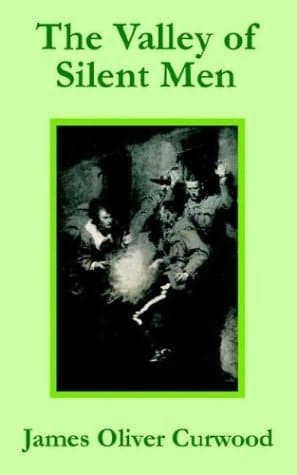

James Oliver Curwood wrote this thing over a century ago, and it still moves better than half the thrillers published last year.
I picked this up during a late-night drive back from a client site in Houston. Three hours of empty highway, Ranger snoring in the back seat, and a story about a man who confesses to murder because he thinks he's dying anyway. That premise alone had me hooked before I hit the Bastrop county line.
A Confession That Backfires Beautifully
James Kent is a Royal Canadian Mounted Police officer—and yes, Curwood actually gets the details right about frontier law enforcement, which is more than I can say for most modern writers. Kent receives a terminal diagnosis and decides to confess to a murder he didn't commit. Noble, stupid, and very human. The problem? He doesn't die. Now he's stuck with his confession, a suspicious woman named Marette who clearly knows more than she's saying, and the actual killer still walking free somewhere in the Canadian wilderness.
The setup reminds me of operations that went sideways—you make a decision based on available intel, conditions change, and suddenly you're improvising in hostile territory. Where'd You Go, Bernadette has that same quality of watching someone navigate consequences they never saw coming. Kent spends the rest of the book doing exactly that, except his hostile territory is the Three River Country where the Athabasca, Slave, and McKenzie rivers converge.
Roger Melin Earns His Keep
Melin's voice fits this material like a well-worn pair of boots. There's a weathered quality to his narration that matches the frontier setting—he sounds like someone who's actually spent time in cold places, not a studio actor imagining what wilderness feels like. His pacing stays steady without dragging, which matters when you're covering 8+ hours of early 20th century prose.
The romantic elements between Kent and Marette could've gone saccharine in lesser hands. Melin keeps it grounded. When Kent falls for this mysterious woman who refuses to explain her past or what she knows about the murder, the narrator sells the frustration alongside the attraction. (Linda would probably say I'm projecting—she claims I fell for her the same way, confused and stubborn about it.)
The Three River Country Isn't Just Scenery
Curwood spent years traveling the Canadian northwest, and it shows. The Three River Country isn't just backdrop—it's practically a character with its own agenda. The descriptions of frozen landscapes and isolated settlements feel authentic rather than romanticized. This was a different way of life, and the audiobook captures that foreignness without turning it into tourism.
What kept me coming back wasn't just the mystery of who actually committed the murder. It was the world-building. The Hudson's Bay Company outposts, the mix of Indigenous and European cultures, the brutal practicality of survival in country that'll kill you if you get careless. Curwood understood that adventure means nothing without stakes, and the stakes here are constant.
Where It Shows Its Age
I won't pretend this is flawless. The prose occasionally gets purple in ways that modern readers might find slow—Curwood liked his descriptions, and sometimes he liked them a little too much. At 1.25x speed, this wasn't a problem for me, but listeners expecting contemporary pacing should adjust expectations.
The romance follows conventions of its era. Marette is mysterious and beautiful and keeps her secrets close, which was apparently the height of romantic tension in 1920. It works within the story, but don't expect modern relationship dynamics.
Mission Debrief
If you want a straightforward adventure with actual consequences, competent narration, and a setting that feels genuinely remote, Valley of Silent Men delivers. It's not trying to reinvent the genre—it's executing classic adventure storytelling with skill and authenticity.
This is ideal for long drives, focused listening sessions, or anyone who appreciates historical adventure that doesn't insult your intelligence. Skip it if you need constant action or can't tolerate prose from a century ago.
Ranger approved this one. He perked up during the wilderness chase sequences, which is more than I can say for some modern thrillers we've endured together. Curwood knew how to write tension, and Melin knows how to deliver it. Mission accomplished.