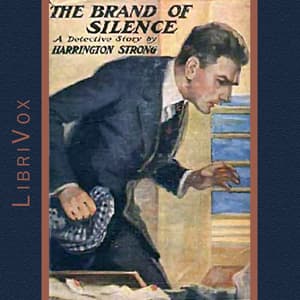

What happens when a man returns home only to find that home doesn't want him back?
I've been thinking about this question since I finished The Brand of Silence, and honestly, it's the kind of psychological setup that makes my researcher brain light up. Sidney Prale comes back to New York after ten years of making his fortune, expecting... what, exactly? A hero's welcome? The research actually shows that people who leave and return often experience what we call "re-entry shock" - but Prale's situation goes way beyond that. Hotels won't serve him. Friends cross the street to avoid him. He keeps receiving cryptic notes about "retribution."
And he has no idea why.
The Paranoia Engine
Here's what makes this 1919 detective story still work: McCulley (writing as Harrington Strong - yes, the Zorro guy had pseudonyms) understood something fundamental about human psychology. The not-knowing is always worse than the knowing. Prale spends the first half of this book in a state of mounting dread, and I found myself right there with him during my morning runs through Cambridge.
The protagonist exhibits classic hypervigilance - scanning every interaction for threats, second-guessing every memory. Is he being paranoid? Or is everyone actually out to get him? The beauty of the setup is that both could be true. My therapist would have thoughts about this character, and none of them would be simple.
Now, I should be honest - the language is dated. This is pulp fiction from over a century ago, and it reads like it. If you're expecting snappy modern dialogue, you're going to be disappointed. But if you can settle into the rhythm of it (and Roger Melin's narration helps enormously with this), there's something almost hypnotic about the formal cadence.
Roger Melin Carries the Weight
I couldn't find much about Melin's background online, but based on this performance? He gets it. Classic detective fiction lives or dies by its narrator, and Melin has the kind of clear, measured delivery that keeps you locked in without ever feeling like he's trying too hard.
One listener mentioned they put the audiobook on their Kindle and rushed home to finish it. I get that. There's a quality to Melin's pacing - he knows when to speed up during the tense moments and when to let the mystery breathe. He's not doing theatrical voices for every character, but he differentiates them enough that you're never confused about who's speaking. For a nearly seven-hour listen, that consistency matters.
What really works is how he handles Prale's growing desperation. The character starts out confident - he's made his money, he's coming home successful - and slowly unravels as the conspiracy tightens around him. Melin tracks that arc beautifully.
A Case Study in Social Erasure
Okay, so here's where the psychology nerd in me gets excited. (Don't tell my students I said that.) What McCulley is really writing about is social death - the systematic removal of a person from their community. Prale can't get a hotel room. Can't eat at restaurants he used to frequent. His old friends pretend not to know him.
This is a fascinating case study in how identity depends on social recognition. Prale IS wealthy. He HAS the money. But without social acknowledgment, those facts become meaningless. He's experiencing what sociologists would later call "civil death" - existing physically while being erased socially.
The mystery of WHO is doing this and WHY drives the plot. But the deeper question - can you survive when your entire social world rejects you? - that's what kept me coming back.
Compared to other classic detective fiction I've listened to, this one leans harder into the psychological torment than the procedural elements. Blue Cross strikes a similar balance between mystery and character study, though with a lighter touch. If you're expecting Sherlock Holmes-style deductions, you might be frustrated. This is more about watching a man try to hold himself together while invisible forces dismantle his life.
Who's This For (And Who Should Skip It)
If you're a fan of classic pulp and don't mind dated language, this is worth your time. If you need modern pacing and contemporary dialogue, skip it. But if you want to understand why the guy who created Zorro was actually pretty good at psychological suspense? Give this one a shot during your next long commute.
Class Dismissed
Would I listen again? Probably not - once you know the mystery's solution, some of the tension deflates. But I'm genuinely glad I spent those seven hours with Sidney Prale and his paranoid spiral. The writing is dated, sure. Some of the plot mechanics creak a bit. But McCulley understood something about human nature that still tracks: we need to be seen to exist. And watching someone fight against their own erasure? That never gets old.
Just don't expect to stop thinking about it when it's over.