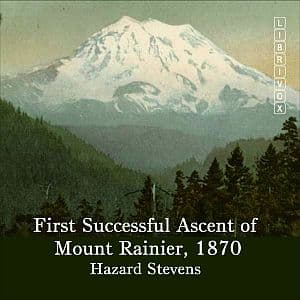

I don't climb mountains. I climb piles of laundry and occasionally a step stool to reach the good mezcal on the top shelf. But I figured listening to two guys freeze their butts off in 1870 might give me some perspective on my "stressful" logo deadline.
Less Into Thin Air, More History Class
Here's the deal—I usually go for books that wreck me emotionally. You know, the ones where the narrator's voice cracks and I'm sobbing into Frida's fur (she hates it). This isn't that. It's a historical document from the 1870s, written by Hazard Stevens, who apparently decided climbing Mt. Rainier without coats was a solid plan.
Compared to the high-octane survival thrillers we get today—where every chapter ends on a cliffhanger—this feels way more subdued. Journalistic. Factual. It reminds me of those old letters my Abuela used to keep in a shoebox—interesting because they're real, not because they're trying to be a blockbuster movie. It's short, though. Under two hours. So I listened while doing some tedious file organization. It fits that "I need background noise that isn't silence" vibe perfectly.
An NPR Report on Near-Death Experiences
Okay, we need to talk about the audio experience. The narrator, Sue Anderson, has a voice that is... very clear. Super articulate. If she were reading the evening news or a manual on how to assemble a bookshelf, I'd be thrilled.
But these guys are trapped in an ice cave, huddled around a sulfur steam vent because they left their blankets behind (seriously, guys?). They are literally rotating themselves like rotisserie chickens to keep from freezing to death while choking on sulfur fumes. And the narration? It sounded like a weather report.
(Frida actually fell asleep on the speaker, which is a sign.)
When I listen to Julia Whelan or Bahni Turpin, they act the hell out of the book. They infuse dread, cold, panic. Here, the tone was so flat that the stakes felt nonexistent. The text says "the smell of sulfur was nauseating," but the voice says "pass the salt, please." It created this weird disconnect where my brain knew it was dangerous, but my heart wasn't racing.
The "Why" of It All
Despite the flat delivery, the story itself is kind of bananas. The guide, Sluiskin, basically told them, "Hey, there's an evil spirit up there in a fiery lake, don't go," and they went anyway. Typical.
There's a raw quality to Stevens' writing that I actually liked—it's not polished by twenty editors. It's just a guy describing how beautiful and terrifying nature is. Geronimo's Story of His Life has that same unpolished, firsthand quality—Sue Anderson narrates that one too, and honestly, her straightforward delivery works better for historical testimony than life-or-death drama. If you're into mountaineering history, the actual content is a goldmine. Just don't expect to feel the frostbite.
Who's This For (And Who Should Skip)
Mountaineering history buffs and Pacific Northwest nerds? You'll dig the firsthand account. But if you need your audiobooks to make you feel something—if you want your heart pounding during the ice cave scene—this narration won't get you there. Skip it and find a more dramatic retelling.
Back to My Romance Novels
It's a cool slice of history, but the audio didn't do the drama justice. If you want to know how the first guys up Rainier survived, maybe just read the text. Or listen at 1.5x speed so it sounds a little more urgent. I'm going back to my romance novels now—at least there, the suffering is emotional.








![Steve Jobs [unabridged audiobook] audiobook cover](/_next/image?url=https%3A%2F%2Fcovers.audiobooks.com%2Fimages%2Fcovers%2Ffull%2F9788499923406.jpg&w=1920&q=75)