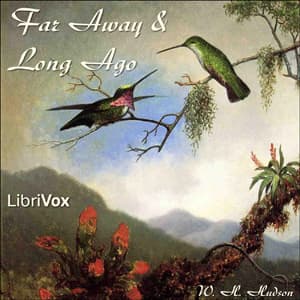

"The world was all before me, and I was eager to explore it."
I don't remember exactly when Hudson wrote that, but I do remember where I was when I heard it—curled up on my couch at 2 AM, Frida purring on my chest, Diego judging me from across the room as usual. And honestly? I felt like crying. Not the ugly-cry kind, but that quiet ache you get when someone describes a feeling you forgot you had.
Okay, so here's the thing about Far Away and Long Ago. It's not a memoir in the way we think of memoirs now. There's no dramatic arc, no villain, no "and then I overcame my trauma" moment. It's just... a boy. On the Argentine Pampas. Watching birds. And somehow that's everything. Memories of Childhood's Slavery Days has that same unvarnished quality—just lived experience, no manufactured drama.
When Childhood Felt Infinite
Hudson writes about his youth in 19th century Argentina like he's painting with words, and I mean that literally. I kept pausing my design work because I'd get so lost in his descriptions of the landscape—the endless grass, the strange birds, the way light hit the plains at dusk. This is the kind of book Abuela would have called "un libro para el alma." A book for the soul. She would've loved the way Hudson talks about nature like it's family.
But I'm not gonna lie—there were moments where I zoned out. Like, entire chapters about specific bird species where I had to rewind because I'd accidentally started thinking about client deadlines instead. If you need plot, if you need things to happen, this isn't your book. It meanders. It lingers. It's a rainy Sunday book, not a Monday morning commute book.
The Voices in My Head (Literally)
So this is a LibriVox recording with various readers, which—look, I couldn't find much about the specific narrators online, but based on what I heard, they're solid. Doug Cooper's sections are warm and clear, the kind of voice that feels like a nature documentary narrator who actually cares. The pacing is gentle, which matches Hudson's prose perfectly.
The multiple narrator thing can be jarring if you're used to one consistent voice carrying you through. I noticed the shift between readers a few times and had to readjust. But honestly? It almost works for this book. Like different people sharing memories of the same place. The production is clean—no weird audio issues, no background noise that I noticed.
The Slow Burn That Isn't a Burn
Here's where I have to be real with you. This audiobook is almost nine hours long, and about six of those hours are detailed observations of flora and fauna. If you're the kind of person who finds that meditative, beautiful, almost spiritual—you'll love this. If you're the kind of person who needs something to happen—skip it. No shame either way.
What got me through was listening while I worked. The prose is gorgeous enough that it became ambient, almost like a soundtrack. And then every so often, Hudson would drop something so achingly beautiful about childhood wonder or the passage of time that I'd have to stop and just... sit with it.
One listener said it "took me back to the same feelings I had for the natural world as a boy," and yeah. That's exactly it. This book isn't trying to entertain you. It's trying to remind you of something you lost.
Would I Listen Again?
Probably not cover to cover, if I'm being honest. But there are sections I've already bookmarked to revisit—the parts about the wild horses, the descriptions of storms rolling across the plains, the quiet moments of solitude that felt almost too intimate to witness.
Who Should Listen (And Who Should Skip)
This is a niche book for niche listeners. If you love nature writing, if you want something contemplative and slow, if you're okay with a memoir that's more poetry than plot—this is your book. Skip it if you need romance or drama or anything resembling a conventional narrative structure. You'll just end up frustrated.
Me? I'm glad I listened. It made me miss my grandmother. It made me want to go outside and actually look at the birds in my backyard instead of just hearing them while I work. And honestly, any book that makes you want to pay more attention to the world around you? That's doing something right. The Surrender Experiment gave me that same feeling—like I'd been sleepwalking through my own life.
Abuela would have loved this one.



![Steve Jobs [unabridged audiobook] audiobook cover](/_next/image?url=https%3A%2F%2Fcovers.audiobooks.com%2Fimages%2Fcovers%2Ffull%2F9788499923406.jpg&w=1920&q=75)