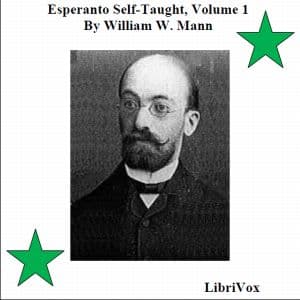

When I downloaded an Esperanto vocabulary audiobook from 1908, I wasn't expecting literary transcendence. I was expecting exactly what I got: seven and a half hours of word lists read aloud in a constructed language invented by a Polish ophthalmologist. And somehow? I'm not mad about it.
Let me set the scene. It's 2 AM, I'm three hours into grading sophomore essays on The Great Gatsby ("Gatsby was rich and sad" - thanks, Tyler, very insightful), and I need something to keep my brain from liquefying. Something that requires zero emotional investment. Something that won't make me feel things. Enter William W. Mann's 1908 guide to international communication through Esperanto.
The Audacity of 1908 Optimism
What strikes me most about this audiobook isn't the language itself - it's the worldview baked into Mann's original preface. He genuinely believed Esperanto would "open up to the traveller, not merely one particular country, but the whole of Europe." This was 1908. Six years before the assassination of Archduke Franz Ferdinand. The optimism is almost painful to hear now, like reading love letters from the Titanic.
Nicholas James Bridgewater reads Mann's words with appropriate earnestness, and there's something oddly moving about hearing vocabulary lists organized for "the tourist or traveller, visitor or resident abroad, health or pleasure seeker, and professional or business man." Thirty-seven vocabularies of common words, each one a little time capsule of Edwardian assumptions about what a gentleman might need to discuss abroad.
Seven Hours of Word Lists (Yes, Really)
Let's be clear about the product here. This is a LibriVox recording - volunteer-produced, public domain, free. Bridgewater is reading vocabulary lists with phonetic pronunciations. That's it. That's the whole thing. If you're expecting conversational Esperanto lessons with interactive exercises, you're in the wrong place.
But here's the thing - and this is where my twenty years of watching teenagers pretend to read comes in handy - there's genuine pedagogical value in repetitive audio exposure. Language acquisition research backs this up. Your brain starts pattern-matching whether you want it to or not. It's the same principle behind 100 Deadly Skills—repetitive drills that embed themselves in muscle memory, except here it's linguistic muscle instead of tactical. By hour four, I found myself muttering "tablo" (table) and "seĝo" (chair) while marking papers. Denise asked if I was having a stroke.
The audio quality is what you'd expect from volunteer production - clean enough, nothing fancy. Bridgewater maintains a steady, measured pace throughout, which is appropriate for language learning material. He's not performing Shakespeare here; he's being a pronunciation guide. The consistency is actually the point.
Skip This If You Want Actual Conversation Skills
This is not for casual listeners. This is not for your commute unless you want to arrive at work muttering Esperanto numbers. Same goes for Gambler: Secrets from a Life at Risk—you need a specific mindset to appreciate someone methodically explaining their craft, whether it's constructed languages or calculated risks. This is for:
- Esperanto enthusiasts who want audio reinforcement of vocabulary
- Linguistic history nerds (guilty)
- People who need background audio that won't distract them from other tasks
- Insomniacs who've exhausted every other option
- Anyone fascinated by early 20th-century internationalist idealism
If you want to actually learn Esperanto conversationally, there are better modern resources. Duolingo has an Esperanto course now. But if you want to hear what language learning sounded like before apps, before tapes, before anything but books and human voices - this is a fascinating artifact.
Mann's Categories Tell Their Own Story
I can't in good conscience tell you this is riveting listening. It's vocabulary lists. But Mann's organizational categories reveal something about his era - the sections on "health" and "business" and "travel" paint a picture of who he imagined using this language. And Bridgewater's commitment to reading every phonetic pronunciation with care shows respect for the material, even when that material is "the phonetic rendering of 'umbrella' in a language spoken by maybe 100,000 people worldwide."
This is Volume 1 of 3, with the other volumes promised for future recording. Whether you need all three depends entirely on how deep your Esperanto rabbit hole goes.
Mr. Williams's Late-Night Verdict
Worth pausing a faculty meeting for? Absolutely not. But worth having on in the background while you grade papers at midnight? Surprisingly yes. It's oddly meditative. The repetition becomes almost hypnotic. And every now and then, Mann's 1908 optimism about international understanding breaks through the word lists, and you feel a little pang for a future that never quite arrived.
My students would find this incomprehensible. Not the Esperanto - the idea that anyone would voluntarily listen to vocabulary lists for seven hours. But they also think annotating books is torture, so their judgment is suspect.
For free? If you're curious about Esperanto or early language-learning methods, give it an hour. You'll know quickly whether this particular brand of linguistic archaeology speaks to you. Just don't expect it to open up all of Europe. That ship, unfortunately, sailed a long time ago.