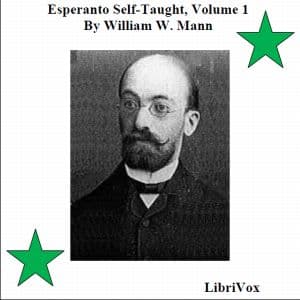

Look, I've spent twenty years teaching teenagers the difference between a gerund and a participle, and here I am at 11:30 PM voluntarily listening to a Polish eye doctor explain how to conjugate verbs in a language he invented in 1887. What is wrong with me.
But actually - and I mean this - there's something genuinely moving about this little book once you stop treating it as a curiosity and start hearing what Zamenhof is really saying.
An Eye Doctor Who Wanted to Fix What He Couldn't Examine
Here's the context my students would never sit still for: Zamenhof grew up in Białystok, a city where Russians, Poles, Germans, and Jews lived side by side and mostly couldn't stand each other. The man was an ophthalmologist by trade, but his real obsession was the violence he watched language barriers create. So he did what any reasonable person would do - he built an entire language from scratch and published it as a 40-page pamphlet under the pen name "Dr. Esperanto," which translates to "one who hopes."
This reminds me of what Hemingway said about writing true sentences. Zamenhof wasn't trying to write beautiful prose. He was trying to write useful prose. The grammar section is startlingly elegant - sixteen rules. That's it. Sixteen rules for an entire language. I can't get my sophomores to remember sixteen vocabulary words, and this man built a functioning linguistic system on sixteen rules. The whole thing takes about two hours and eighteen minutes, and by the end you've essentially been handed the skeleton key to a language that - here's the kicker - people still actually speak.
The 900 root words listed here, with their suffix system for building new forms, feel like watching someone assemble IKEA furniture except the instructions actually make sense. You take a root, snap on a prefix or suffix, and suddenly you've got a new word that follows logical patterns. No irregular verbs. No gendered nouns that exist purely to torture foreign speakers. It's language as engineering project.
Nicholas James Bridgewater and the Problem of Reading a Textbook Aloud
Let's be honest about what we're working with. This is a LibriVox recording of a grammar textbook. Nicholas James Bridgewater has the unenviable task of making pronunciation guides and verb conjugation tables work as audio content. The narrator understands that pause is punctuation - he gives the Esperanto words enough space to land, which matters enormously when you're trying to absorb a new phonetic system through your earbuds.
But here's the thing: a grammar textbook fights the audio format. Hard. There are moments where you desperately want to see the word on a page, especially during the vocabulary sections where Esperanto roots are listed alongside their English translations in rapid succession. I was walking the lakefront with Denise on a Saturday morning when the vocabulary dump hit, and I found myself stopping every thirty seconds to replay phrases. Denise asked if I was okay. I told her I was learning Esperanto. She gave me the same look my students give me when I explain why we're reading Moby-Dick.
Bridgewater's delivery is steady and clear - he's not performing, he's instructing, which is probably the right call for this material. But I wish there were slightly more variation in tone between the historical introduction (which is genuinely fascinating) and the grammar tables (which are useful but flat). The Esperanto pronunciation sections are handled well enough that you can repeat along, though without visual reference you're trusting your ear more than most language learners would be comfortable with.
Who This Is Actually For (Be Honest, Marcus)
If you loved the linguistics sections of Umberto Eco's The Search for the Perfect Language, this is its spiritual successor - except stripped of all academic padding and delivered with Victorian-era optimism that a constructed language could prevent war. My students would hate this. I love it. But I love it the way I love reading the preface to Samuel Johnson's dictionary - as a historical document, as an act of radical hope disguised as dry scholarship. There's something about that particular flavor of earnest, unfashionable optimism that I keep gravitating toward - I heard it again, surprisingly, in Emotional First Aid, a book that also believes, with complete sincerity, that a set of rules and the right vocabulary can genuinely repair something broken in the world.
This is not the audiobook for someone who wants to learn Esperanto. For that, you need a screen, a textbook, and probably Duolingo. This is the audiobook for someone who wants to understand why Esperanto exists, to hear the original pitch from the man himself, and to marvel at the audacity of a 28-year-old eye doctor who thought language could save humanity.
At two hours and eighteen minutes, it's shorter than most faculty meetings I've suffered through. And considerably more useful.
The Lesson Plan, If I'm Being a Teacher About It
Worth your time if you're a language nerd, a history-of-ideas person, or someone who's ever wondered what pure optimism sounds like when it's been formatted as a grammar guide. Skip it if you want entertainment or practical language instruction. Stream it for free - it's LibriVox, after all - and pair it with the PDF so you can actually see those root words. The prose deserves to be savored, not because it's beautiful, but because every spare, functional sentence carries the weight of a man who genuinely believed he could fix the world with sixteen grammar rules and nine hundred words.