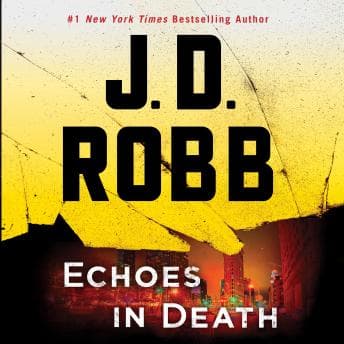

So there I am, 6 AM jog through Cambridge, breath visible in the cold, and Eve Dallas is chasing a monster through futuristic New York while I'm dodging ice patches. The juxtaposition isn't lost on me. Here's a woman in a glittering gown who just went from cocktail party to crime scene in under ten minutes, and I'm thinking about how that transition—that whiplash from normalcy to horror—is exactly what makes these books work.
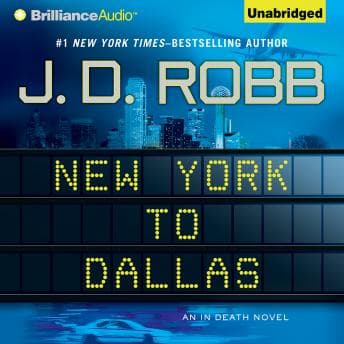
Echoes in Death is book forty-four in the In Death series. Forty-four. And honestly? The fact that J.D. Robb (Nora Roberts, for those keeping track) can still deliver a compelling mystery this deep into a series is worth studying. Eve exhibits classic workaholic trauma response patterns, sure, but her psychological consistency is what grounds these books. She's not magically healed. She's not suddenly well-adjusted. She's still Eve—damaged, brilliant, terrible at emotions, married to a billionaire who somehow makes that dynamic work.
The Devil in the Details
The premise here is brutal, and I'm not going to sugarcoat it. A woman stumbles in front of Eve and Roarke's car—naked, bloody, calling her attacker "the devil." Her husband, a surgeon, is dead. The safes are empty. And Daphne Strazza can barely string together a coherent sentence, let alone provide a useful description.
What makes Daphne compelling is how Robb handles trauma. She isn't a convenient witness who suddenly remembers everything at the perfect moment. She's shattered. Her memories come in fragments. As someone who studies how trauma affects memory and identity, I found myself nodding along. This is a fascinating case study in how victimhood intersects with societal expectations—Daphne was already living in a controlled environment with her cold, controlling husband. The attack didn't create her cage. It just changed the bars.
Research shows that victims of intimate partner violence often struggle to articulate their experiences, and Robb captures that without making it feel exploitative. It's dark, yes. The content warnings are real—violence, sexual assault, the works. But it's handled with more care than I expected from a procedural thriller.
Susan Ericksen Is Eve Dallas at This Point
Here's the thing about long-running audiobook series: the narrator becomes the voice in your head. Susan Ericksen has been voicing Eve Dallas for years, and at this point, she doesn't just perform the character—she IS the character. She brings that same depth to Ceremony in Death, where the emotional stakes are just as high. The way she shifts between Eve's clipped, no-nonsense delivery and Roarke's Irish lilt? Flawless. (My therapist would have thoughts about how attached I've become to fictional characters' voices, but that's a session for another day.)
Ericksen is a three-time Audie winner, and you can hear why. The emotional delivery during Daphne's fragmented recollections is genuinely affecting. She doesn't oversell the trauma. She lets the words do the work, which is harder than it sounds. And when Eve is doing her thing—interviewing dinner party guests, pushing through bureaucratic nonsense, having those quiet moments with Roarke—Ericksen's pacing keeps everything moving without feeling rushed.
The production is clean, professional. No weird audio artifacts, no jarring transitions. At nearly fourteen hours, this is a commitment, but I never felt like it dragged. (Okay, maybe one interview scene went a bit long, but I was also trying not to slip on ice, so my attention was divided.)
The Pattern Recognition Problem
Here's where I have to be honest: some listeners find the mystery predictable. I get it. If you've read enough of these, you start to see the patterns. The red herrings become familiar. The "who benefits" calculus gets easier to run. I found myself asking: why does the killer really do this? And when the answer came, it wasn't shocking so much as... satisfying. Psychologically, it tracked. The motivation made sense.
But if you're looking for a twist that genuinely blindsides you? This might not be it. The pleasure here is in the execution, not the surprise. It's watching Eve work the case, seeing the team dynamics, enjoying the banter between characters you've known for forty-plus books. That character-driven approach is what I loved about Abandoned in Death too—Ericksen's narration makes even the procedural moments feel intimate.
Who's This For (And Who Should Skip)
If you're already invested in the In Death series, this is a solid entry. Not the best, not the worst. Skip this one if you're sensitive to assault content—the subject matter is heavy and unflinching. But for fans of mystery and suspense who want a character-driven thriller with excellent narration? Yeah. This works.
I finished it just as I got back to my apartment, coffee calling my name, and immediately queued up the next one. That's the thing about these books—they're comfort food for the analytically minded. You know what you're getting. And sometimes, that's exactly what you need.