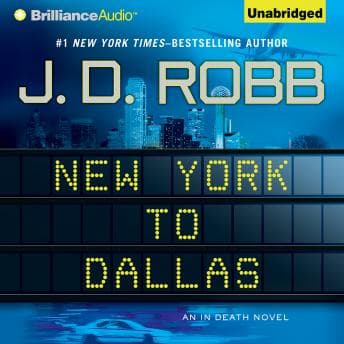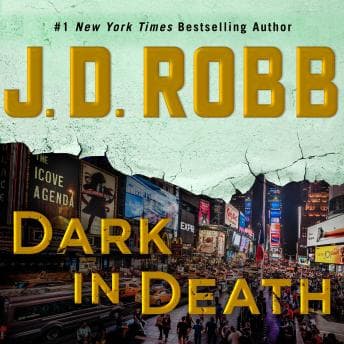

I have a confession. I've been studying this series the way I study case files—not because J.D. Robb asked me to (she didn't), but because Eve Dallas is one of the most psychologically consistent protagonists in modern genre fiction. That's saying something when we're 46 books deep.
So when a killer starts recreating murder scenes from fiction? My brain went into overdrive. This is literally what I teach about—the intersection of narrative, identity, and behavior. Except usually my case studies don't involve ice picks at Psycho screenings.
The Psychology of Copycat Crime (Finally, Someone Gets It Right)
Here's what Robb understands that most thriller writers don't: copycat killers aren't just fans who went too far. They're creating their own narrative, casting themselves as the author of someone else's story. The killer in Dark in Death isn't just imitating—they're appropriating. There's a profound identity disturbance there, and the book actually explores it instead of just using it as a gimmick.
The research on copycat crime is fascinating (I've read way too much of it), and while Robb doesn't get bogged down in clinical terminology—this is entertainment, not a textbook—she captures the psychological truth of it. Ceremony in Death explores similar territory with cult psychology, another case where Robb nails the internal logic of disturbed thinking. The killer's motivation makes sense in that deeply unsettling way real pathology does. Not logical to us, but internally consistent for them.
What I found myself asking: why does this particular author's work become the template? Robb gives us enough to theorize without spelling everything out. Smart choice.
Susan Ericksen Has Been Living in My Head for 13 Hours
I listened to this during a week of particularly brutal grading (don't ask), and Susan Ericksen's narration became the soundtrack to my red-pen-induced misery. Honestly? It helped.
Ericksen has voiced Eve Dallas for decades now, and it shows. She doesn't just read Eve—she inhabits her. That same level of character immersion carries through in Abandoned in Death; Ericksen's consistency across this massive series is genuinely impressive from a performance psychology standpoint. The clipped speech patterns, the way Eve's internal monologue has this barely-contained intensity, the shift when she's with Roarke versus when she's interrogating a suspect. It's character psychology translated into vocal performance.
Her Roarke is... look, the Irish accent works. Some listeners apparently disagree (I found grumbling online), but for me, it creates the right contrast with Eve's harder New York edge. Their dynamic—the billionaire husband and the cop wife who can't quite believe she deserves any of this—comes through in how Ericksen modulates between them.
The supporting cast is where things get slightly less consistent. Peabody is great. Some of the one-off characters blur together a bit. But in a 13-hour audiobook with this many speaking parts, I'm impressed she maintains as much distinction as she does.
A Procedural That Earns Its Patience
This isn't a page-turner in the breathless sense. It's a procedural, and Robb commits to that. Eve interviews witnesses. She reviews evidence. She has meetings. The domestic scenes with Roarke—reading mystery novels together for "research" with their cat Galahad—could feel like padding, but they don't. They're character work, and they earn the emotional stakes when things escalate.
I'll admit I zoned out during one or two of the middle investigative sequences. (In my defense, I was also trying to figure out if a student had actually plagiarized their analysis of Hamlet or just had suspiciously similar thoughts to SparkNotes.) But the pacing picked up significantly in the final third, and the resolution felt earned rather than rushed.
The futuristic setting—this is 2061 New York—is handled with a light touch. Technology is present but not overwhelming. It's basically our world with better gadgets and worse traffic. (Some things never change.)
Who This Works For (And Who Should Skip)
If you're already invested in the In Death series, you know what you're getting and you'll be satisfied. Ericksen's narration is the audio equivalent of comfort food—familiar, reliable, exactly what you wanted.
New to the series? You could start here—the mystery is self-contained—but you'd miss the accumulated weight of Eve and Roarke's relationship. There's something to be said for understanding why Eve's trauma responses manifest the way they do, why her partnership with Peabody works, why Roarke's patience with her walls matters. Start at the beginning if you have 45 books worth of patience. (I did. No regrets. My therapist has thoughts about this.)
Skip if you need constant action or if procedural pacing makes you antsy. This is a slow-burn investigation with character moments, not a thriller that grabs you by the throat.
The violence is present but not gratuitous. The romance is established-couple warm rather than new-relationship heat. The language is adult. Content warnings apply, but nothing felt exploitative.
Case Closed (For Now)
Robb understands that the best mysteries aren't really about whodunit. They're about why. And that's the question that keeps me coming back.