
What do you do with a book that helped teach Europe how to tell stories - and also contains enough bedroom scheming to make my seniors suddenly interested in medieval literature? You listen carefully. Preferably not while half-answering email.
I took The Decameron on a long walk by the lake after school, that weird hour when Chicago is all wind and gold light and my brain is still full of student essays about symbolism that definitely was not intentional. And Boccaccio, in all his 14th-century audacity, felt startlingly alive. Not polished. Not uniformly graceful. Alive. This is why we still read the classics. They survive because human beings do not actually change that much; we just get better upholstery.
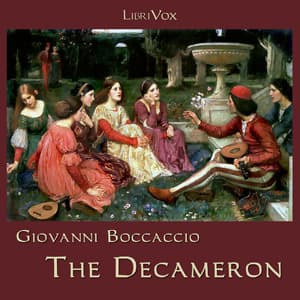
This audiobook gives us the whole sprawling machine: the frame of young Florentines escaping the plague and entertaining one another with 100 stories, then the stories themselves - dirty jokes, romantic tricks, reversals of fortune, moral lessons that are not always especially moral. If you only know The Decameron as "important," this version usefully reminds you that it is also mischievous. Frequently shameless. Sometimes cruel. And often very, very funny.
The plague outside the villa, the gossip inside
Part of what makes The Decameron last is the contrast. The frame story begins in catastrophe - Florence under the Black Death - and then Boccaccio pivots into order, games, storytelling, flirtation, structure. Ten storytellers, ten days, one hundred novellas. That organizing device matters on audio because it keeps a massive collection from feeling like a random anthology dumped in your lap.
And the stories really do swing hard between registers. One minute you get bawdy sexual farce, the next you get something tragic or sharp-edged or quietly cynical about religion, status, and desire. This reminds me of what Hemingway said about prose being architecture, not interior decoration. Boccaccio built a house big enough for slapstick, grief, erotic mischief, and social satire to live in the same hallway.
What struck me listening - more than reading it on a page years ago - was how modern the social comedy feels. Priests lie. Lovers improvise. Smart women run circles around pompous men. Respectability is usually one costume change away from embarrassment. My students would hate this. I love it. That particular pleasure — watching self-important people get thoroughly outmaneuvered — is something I also found in Captain Blood, where the social reversals hit just as hard, just in a different century.
But. Thirty-two hours of linked but uneven tales is a real commitment. Some novellas snap into focus immediately because they have a joke engine or a cruel little twist. Others feel more like historical sediment - interesting because of what they influenced, less exciting in the moment. If you come in expecting a single developing plot, this will test your patience. If you like dipping into human behavior at its most foolish and inventive, you'll have a much better time.
When the cast clicks, it really clicks
A full-cast Decameron is a smart idea. On paper, at least. In practice, it is mostly successful and occasionally frustrating.
The upside first: multiple readers help a 32-hour medieval collection breathe. Simon Russell Beale, in particular, brings the kind of authority that can make old prose feel less like homework and more like performance. The bawdier tales benefit from readers who understand that comedy on audio lives in timing, not mugging. The narrator understands that pause is punctuation. A raised eyebrow can exist in the voice, and some of these readers know exactly how to place it.
That matters because Boccaccio's humor depends on control. A seduction story read too solemnly dies. A trickster tale read too broadly turns into Renaissance community theater. The better performances here hit that sweet spot where the joke lands, but the text still sounds like literature rather than a sketch.
Now the trouble. The quality is inconsistent across the cast. A few sections are simply read too slowly, the kind of pace that makes you suddenly aware of your own shoelaces, the weather, mortality. And some listeners have complained about mispronounced vowels and names; I heard enough pronunciation wobble to notice it. Not enough to ruin the production, but enough to break the spell now and then. A book this old can survive interpretive variety. It does not always survive uncertainty.
There are also stretches of over-dramatization. Not constantly. But enough that I occasionally wanted a reader to trust Boccaccio more and perform less. This material is spicy already; it does not need extra paprika.
Who should spend 33 hours in this villa (and who shouldn't)?
This is for listeners who like literature as a living thing, not a museum label. If Chaucer interests you, if you've ever wanted to hear one of the major roots of European storytelling, if you enjoy a book where sex, wit, plague, class, and hypocrisy all sit at the same dinner table - yes, absolutely. If you loved The Canterbury Tales, this is its spiritual predecessor, and you can hear the future of narrative comedy rattling around inside it.
Skip it if inconsistent narration quality drives you crazy. This isn't a disaster by any means, but it's not one of those rare full-cast productions where every voice feels calibrated to the same artistic wavelength. Also skip if you need a single through-line plot to stay engaged — this is a banquet, not a three-act meal.
It is not good background listening. Not for folding laundry, not for bedtime, not for pretending to pay attention during a faculty meeting. Worth pausing the faculty meeting for, maybe, but not ideal if your attention is split. The frame structure, the shifts in tone, and the rotating cast all ask you to stay alert.
Cliff Notes
I'm glad I listened to this version, even with its bumps. The Decameron should feel a little unruly. It is a book about civilization improvising in the shadow of death, and that mix of elegance and earthiness still lands. The prose deserves to be savored, the jokes deserve to breathe, and the historical importance is real - but the thing that surprised me most is simpler than that.
It still gossips. It still blushes. It still laughs at people who think they're above being human.
That's a classic for a reason.