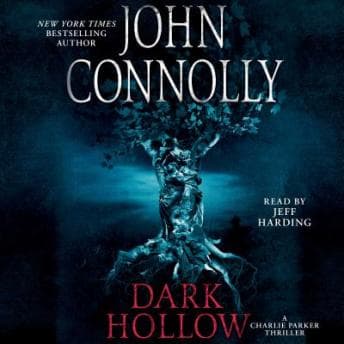

I'd heard people call John Connolly's Charlie Parker series "crime fiction with a supernatural edge," which - sure. But what nobody told me is that Dark Hollow is basically a psychological case study of a man who keeps running toward damaged people because he can't forgive himself for the ones he couldn't save. I found myself asking: why does Charlie Parker really befriend this down-and-out mother? Connolly knows why. And it's not heroism.
I was making chicken tikka masala at eleven on a Tuesday - the kind of elaborate weeknight cooking that my mother would call "unnecessary for one person" (Maa, it's called self-care) - when Parker's investigation shifted from a domestic abuse case to something genuinely ancient and unsettling. The spatula stopped moving. The onions burned. Worth it.
A Haunted Man Hunting Haunted Ground
The protagonist exhibits classic compulsive rescue behavior, and Connolly seems entirely aware of it. Charlie Parker isn't just investigating a murder - he's dragging his guilt from New York to rural Maine like luggage he refuses to check. When the estranged husband becomes his primary suspect, the pursuit isn't really about justice. It's about Parker needing to prove that this time he can get there before someone dies.
What makes this character compelling is that Connolly doesn't let him off the hook. Parker's instincts are good but his motivations are messy - tangled up in his own trauma from the first book. My therapist would have thoughts about this character. Specifically about how he conflates proximity to danger with penance.
The generational murder angle is where things get genuinely interesting from a psychological standpoint. The research actually shows that communities build collective narratives around unsolved violence - the mystery becomes part of the identity of the place. Connolly gets this. Maine isn't just a setting here; it's a character with unprocessed grief. The unsolved murders from generations back haven't faded - they've calcified into local mythology. And when Parker starts picking at that mythology, the resistance he encounters isn't just from a killer. It's from people who've built their understanding of home around those buried secrets.
I saw a similar dynamic in Connolly's Dirty South—a different landscape, but the same unflinching look at how violence embeds itself in a community's bones.This is a fascinating case study in how place and memory interact with violence. The 14-hour runtime gives Connolly space to let that atmosphere seep in slowly, which works - but I'll be honest, there are stretches in the middle where the atmosphere does more work than the plot. Slow burn is one thing. Stalling is another. Around hours 6 through 8, I was chopping vegetables with more urgency than the narrative warranted.
Jeff Harding's Voice - Almost, But Not Quite
Here's where I got conflicted. Harding's dramatic narration genuinely fits the gritty, gothic tone Connolly is building. When the story gets dark - and it gets dark - his delivery lands with the right weight. There's a steadiness to his reading that grounds Parker's internal monologue, which could easily tip into melodrama with the wrong narrator.
But. The mispronunciations. They're not constant, but they're repeated - the same words mangled the same way, multiple times. Once you notice it, your brain starts listening for the next one instead of listening to the story. It's like a tiny crack in a window you can't stop staring at. For a 14-hour listen, that's a real problem. I kept getting pulled out of tense moments because my linguistically pedantic brain was going "that's... that's not how you say that."
Psychologically, this doesn't track as carelessness - it reads more like a narrator who prepared well for the dramatic beats but didn't get enough editorial feedback on specific words. The performance is strong enough that you adjust, but "you'll get used to it" is not exactly a ringing endorsement.
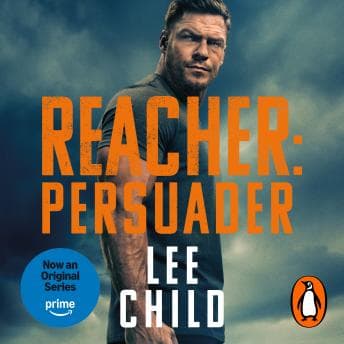
For a Harding performance with fewer linguistic potholes, I'd point you to 61 Hours—he brings the same grit to Jack Reacher but without those repeat missteps.Who Gets Absorbed and Who Walks Away
If you're someone who reads crime fiction for the puzzle, you might get impatient. The mystery structure is solid but Connolly is more interested in why violence persists across generations than in whodunit mechanics. If that question interests you - if you want your thriller to leave you thinking about collective trauma and inherited guilt - this is your book.
Skip it if character motivations matter less to you than pace. And maybe skip the audiobook specifically if mispronunciations are the kind of thing that breaks your immersion. The print version might serve you better there.
Second-book-in-a-series energy is real here. You can technically start cold, but Parker's psychological arc from the first book does a lot of heavy lifting for his decisions in this one. I wouldn't recommend it as an entry point.
If you want to understand the full weight of Parker's guilt, start with Every Dead Thing—that's where his demons were born.The Case File, Closed (For Now)
Connolly understands something most thriller writers don't: that the scariest thing about violence isn't the act itself, but the way communities absorb it and keep living. Dark Hollow isn't a perfect audiobook - the pacing drifts, the narrator stumbles on pronunciation in ways that break the spell - but it's a smart one. Parker is the rare fictional detective whose psychology actually holds up under scrutiny, and that's enough to keep me reaching for book three. Connolly pushes that psychological insight even further in Unquiet, where family secrets become just as dangerous as any killer. After I finish the tikka masala.