
Look, I need to complain about something before we get into this. Sixteen books. Charlie Parker has sixteen books in this series, and I'm just now discovering it exists? I've spent twenty years teaching students about literary archetypes and the hero's journey, and nobody — not a single colleague, not one of my 47 podcast listeners, not even Denise — thought to mention that there's a crime fiction series out there that reads like Raymond Chandler wandered into an M.R. James ghost story and decided to stay?
I'm a little bitter about the lost time. But I'm here now.
The Dead Don't Call Collect — Except When They Do
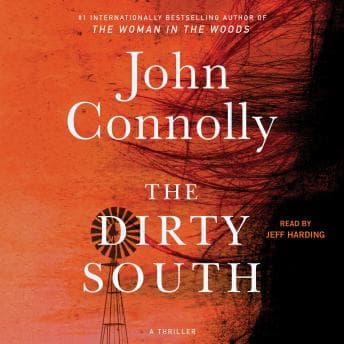
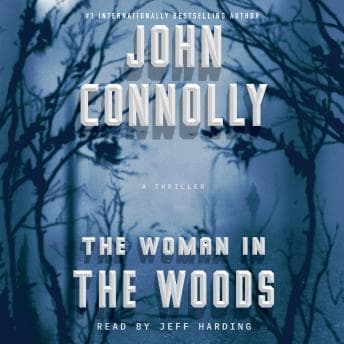
I picked this up on a whim during one of those late Saturday mornings when Denise drags me to the lakefront and I pretend the walk is for exercise rather than an excuse to listen to something with my earbuds in. And I'll tell you, there's something genuinely unsettling about walking along Lake Michigan on a bright spring day while Jeff Harding is describing a partly preserved body in the Maine woods — a woman who gave birth before she died, her child missing, and the forest holding its secrets the way forests do in the best gothic fiction.
Connolly does something here that I wish more thriller writers understood: he lets the landscape do emotional work. The Maine woods aren't just setting. They're mood. They're character. This reminds me of what Hemingway said about prose being like an iceberg — seven-eighths of it underwater. Connolly writes the visible eighth as crime fiction, but underneath there's this whole subterranean mythology about good, evil, and the things that persist after death. The toy telephone scene — where a boy receives a call from a dead woman — shouldn't work. It sounds like a B-horror setup. But Connolly earns it because he's spent hundreds of pages building a world where the boundary between living and dead is permeable, not as gimmick but as theology.
My students would hate this. I love it.
Quayle and Pallid Mors Walk Into a Bar (Nobody Walks Out)
Let's talk about what the author is really saying with his antagonists, because this is where the book elevated itself for me. Quayle — the villain pursuing the same missing child Parker's looking for — isn't your standard crime fiction heavy. He's erudite, patient, and interested in something far older and stranger than a kidnapping. His henchwoman, Pallid Mors, is basically death personified as a woman who does violence with the calm efficiency of someone sorting mail. The dual perspective — Parker searching, Quayle hunting — creates this tightening spiral where you realize the infant isn't just a plot device. The child means something cosmically different to each side, and that tension is what keeps the 14-plus hours from ever feeling bloated.
(I will say this: coming in at book sixteen without reading the previous fifteen is a bit like walking into the third act of a play. That's exactly why I'm going back to the beginning with Every Dead Thing, the one that started it all. There are references to Parker's past — his losses, his reputation, the network of people around him — that clearly carry weight I couldn't fully feel. I could follow the plot fine, but I was aware of emotional resonance I was missing. Fair warning for fellow latecomers.)
Jeff Harding Understands That Pause Is Punctuation
The narration. The narrator understands that pause is punctuation. Harding has this melodious quality — not showy, not theatrical — that matches Connolly's prose the way a good wine matches a meal. He shifts between characters not by doing dramatic voice changes but through subtle tonal adjustments: Parker gets a worn steadiness, Quayle gets something cooler and more measured, and the quieter characters — the frightened witnesses, the grieving — get this careful tenderness that never tips into sentimentality.
I listened at 1.0x, obviously, because the prose deserves to be savored. Connolly writes sentences you want to roll around in your head. I found that same slow, careful attention in Dirty South, another Connolly where the place itself carries the whole weight of the story. There's a literary sensibility here that separates this from airport thrillers — he's not rushing past language to get to plot. He's using language AS plot. Harding gets that. He reads the descriptive passages with the same attention he gives the dialogue, which tells me he understood the assignment.
No production quirks to report. Clean audio, single narrator, no music or effects. Just Harding and Connolly's words. Sometimes that's all you need.
I tracked down more of Harding's work after this and landed on Killing Floor, where that same steady patience gets poured into a very different kind of loner.Who Gets the Recommendation (And Who Should Walk Away)
If you loved the atmospheric dread of Tana French's Dublin Murder Squad books, this is their spiritual successor — but with the supernatural dial turned up several notches. Readers who need their crime fiction grounded strictly in realism will probably bounce off the paranormal elements. That's fair. But if you're the kind of person who thinks the best mysteries are really about something larger — about what we owe the dead, about whether evil is a force rather than a choice — then Connolly is writing your kind of book.
Worth pausing the faculty meeting for. Worth starting at book one, which I plan to do this summer while Principal Martinez presents the new curriculum framework. (Sorry, Principal Martinez. You know I'm not listening anyway.)